After lecturing at St. Patrick’s College, Dublin, from 1941 to 1944, Slevin enters the civil service. Despite no prior interest in heraldry, he is selected via competition to assist the newly installed Chief Herald, Dr. Edward MacLysaght, in the genealogical office, Bedford Tower, Dublin Castle. After serving as Deputy Chief Herald (1944–54), he succeeds MacLysaght as Chief Herald of Ireland, becoming the longest-serving occupant of the office (1954–81).
One of three national heralds named to a vexillogical committee to devise a common emblem for the Council of Europe, Slevin persuades his colleagues to eschew religious iconography, such as the Christian cross, as inappropriate. His own design of a circle of twelve golden stars on an azure field is selected by the committee in 1954, and formally accepted by the council in December 1955. With blue chosen as a colour common to the flags of many European countries, the twelve stars represent not individual states but such associations as the zodiac and a clock face, suggesting ideals of universality, harmony, and evolution through time. Adopted in 1985 for the flag of the European Community (latterly the European Union), his design attracts wide acclaim in heraldic circles, leading to his being awarded membership of the Académie Internationale d’Héraldique.
During Slevin’s tenure as Chief Herald, several hundred patents of arms are issued to Irish public bodies, including civic and municipal authorities, and to individuals of Irish descent worldwide. On behalf of the Irish government, he confirms the Irish connections of such notables as United StatespresidentsKennedy, Nixon, and Reagan, French president Charles de Gaulle, and Princess Grace of Monaco. His coat of arms for President Kennedy, combining the ancient arms of the Kennedy and Fitzgerald families, wins renown as a masterpiece of heraldic design. While possessing a keen sense of graphic impact, he is not a great draughtsman, and he employs the noted heraldic painter Myra Maguire to execute the designs that he creates. He oversees expansion of genealogical office services, instituting an advisory service and team of research assistants for the growing numbers – especially within emigrant communities abroad – seeking to trace Irish ancestry. He establishes a committee to catalogue churchyard memorial inscriptions as an archival resource, meant to redress the loss of state records in the 1922 Four Courts fire.
Slevin wins first prize in successive years in the 1950s for entries in the Oireachteas drama competition, both plays being subsequently produced at the Abbey Theatre. He writes a detective novel in Irish, and contributes numerous articles to learned journals, chiefly on medieval heraldry and Anglo-Irish families. Erudite and possessed of great presence, courtesy, and wit, he is an engaging speaker.
Resident in south County Dublin, Slevin is active in amateur dramatics, local history societies, and the ecumenical movement. His recreation is long country walks. He marries Millicent Nolan in 1950 and they have three sons. He dies on January 18, 1997.
(From: “Slevin, (John) Gerard” by Lawrence William White, Dictionary of Irish Biography, http://www.dib.ie, October 2009 (last revised February 2025))
Patrick Pollen, a British stained glass artist who spends most of his life working in Ireland, is born Patrick La Primaudaye Pollen in London on January 12, 1928.
In 1952, Pollen’s father takes him to see Evie Hone‘s “Crucifixion and Last Supper” window in Eton College Chapel. Upon seeing it he announces, “That’s what I want to do.” He moves to Dublin to study with the stained glass cooperative Evie Hone is a member of, An Túr Gloine, which is run by Catherine O’Brien and she and Hone become his mentors. When Hone dies in 1955, she leaves him her brushes.
Following the Second Vatican Council, newly designed churches feature less stained glass, and Pollen finds he is receiving less commissions. As a consequence he and his family move to the United States in 1981. They settle in Winston-Salem, North Carolina but there is very little work there and in 1997 they return in Ireland, living in his wife’s native County Wexford.
Pollen marries sculptor Nell Murphy in 1963, with the couple buying a house in Dublin in which Pollen had his studio. Murphy works in plaster, clay and stone, her works often featured in churches with those of her husband. They hav four sons, Peter, Ciaran, Laurence and Christopher, and a daughter, Brid.
Pollen dies on November 30, 2010, in Enniscorthy, County Wexford. His remains are cremated and the location of his ashes is unknown.
Louisa (Louie) Bennett, suffragette, trade unionist, and peace activist, is born on January 7, 1870, in Garville Avenue, Rathgar, Dublin, the eldest daughter of James Cavendish Bennett, a prosperous auctioneer, and his wife Susan (née Bolger). She is brought up at Temple Hill, Blackrock, and educated at Alexandra College, and at an academy for young ladies in London, where she and her sisters form an Irish League. She goes on to study singing in Bonn, Germany. Already as a teenager she shows an interest in writing, her first literary effort being Memoirs of the Temple Road in the 80s. Afterward she publishes two unsuccessful romantic novels, The Proving of Priscilla (1902) and A Prisoner of His Word (1908), the latter set in County Down in the aftermath of the Irish Rebellion of 1798.
Bennett turns her attention to women’s issues and by 1910 has become involved in the suffrage movement, initially through her reading of the suffrage monthly TheIrish Citizen. In 1911, she co-founds, with her life-long friend and colleague Helen Chenevix, the Irish Women’s Suffrage Federation, an umbrella organisation, which by 1913 has connected fifteen Irish suffrage societies and has established links with Europe and the United States. She and Chenevix are the organisation’s first honorary secretaries. She is also associated with the Irish Women’s Franchise League, for which she runs public speaking classes. However, as the divide between militants and opponents of the use of violence become more pronounced, Bennett, as a confirmed pacifist, who endorses what she calls “constructive, rather than destructive action,” distances herself from the league, and through her involvement in the production of TheIrish Citizen seeks to sideline the militants.
Bennett’s concerns are not limited to the question of women’s franchise. As founder of the Irish Women’s Reform League, she not only addressea the suffrage question, but examines many social issues concerning women. The league focuses on working conditions, monitors court cases involving women, and demands school meals and better education. She is among those who assist in the relief effort at Liberty Hall during the 1913 strike and lockout in Dublin, and she appeals for funds for strikers’ families through TheIrish Citizen. In the period that follows she maintains her links with the labour movement. She often opposes the direct, uncompromising approach of both James Connolly and Helena Molony, and argues that labour and women’s issues can only be hampered by any affiliation with nationalist politics. The aftermath of the Easter Rising, and in particular, the murder of Francis Sheehy-Skeffington, causes her to revise some of her views on nationalism. In late 1916 she accepts an invitation to reorganise the Irish Women Workers’ Union (IWWU), on the understanding that she would have complete independence from Liberty Hall. Assisted by Chenevix and Father John Flanagan, she re-creates the union along professional lines, and by 1918 its membership has risen dramatically from a few hundred to 5,300. She consistently defends its separatist stance, arguing that women’s concerns in a male-dominated union will always be of secondary importance.
Throughout World War I Bennett campaigns for peace, and she is selected as the Irish representative to the Women’s International League for Peace and Freedom. She leads the IWWU in its opposition to the attempted introduction of conscription in 1918, and in 1920 she travels to the United States to highlight Black and Tan atrocities (she later meets David Lloyd George and demands the removal of the Black and Tans from Ireland). As a member of the Women’s Peace Committee, she acts as a mediator during the Irish Civil War.
In 1925, Bennett is appointed to an Irish Trades Union Congress (ITUC) committee to promote a scheme of working class education with the assistance of the labour movement. Her interest in adult education later leads to her involvement with The People’s College. A member of the national executive of the ITUC (1927–32, 1944–50), she becomes the first female president of the congress in 1932. She serves a second presidential term in 1947. Her knowledge of labour issues is officially acknowledged by the Irish government in 1932, when she is sent as a representative to Geneva to put forward the case of Irish women workers. In 1938 she delivers a paper entitled Industrialism in an Agrarian Country to the International Relations Institute in the Netherlands.
Despite the depth of Bennett’s involvement with the union movement, she has ambitions outside trade unionism, and in 1938 she lets her name be put forward by the IWWU as a congress candidate for election to the senate, but this comes to nothing. In that year she is appointed to the government commission on vocational organisation (1938–43). In 1943, she is elected as a Labour Party member of the Dún Laoghaire borough council. As a councillor she consistently lobbies for improved housing and is instrumental in the establishment of Dún Laoghaire’s housing council in 1949. She had refused a labour nomination in the 1918 general election, but she stands for Dublin County Council and Dáil Éireann in 1944, in both cases unsuccessfully. She is the only Labour Party member to criticise the party’s support for the Fianna Fáil minority government of 1932, arguing that it is “never right or wise to co-operate with another party with fundamentally different principles.” As an elected member of the Labour Party executive, she represents Ireland at the International Labour Organization in Europe. She is also a representative at the League of Nations.
Throughout her public career Bennett consistently condemns colonialism, fascism, and armaments expenditure. She is possibly best remembered for her leadership in the laundry workers’ strike of 1945, during which IWWU members successfully fight for a fortnight‘s paid holiday. Her management of the IWWU, which lasts until 1955, is marked by determination and diplomacy, though she often uses threatened resignations as a means of controlling her colleagues. She died, unmarried, on November 25, 1956, in Killiney, County Dublin.
(From: “Bennett, Louisa (‘Louie’)” by Frances Clarke, Dictionary of Irish Biography, October 2009)
Campbell is born on February 1, 1763, in County Down, Ireland (now Northern Ireland), and is raised as an Anglican. He is ordained a minister in the Scottish Seceder Presbyterian Church sometime after graduating from the University of Glasgow in 1786. He leaves Ireland for the United States in April 1807. This move is prompted by the advice of his physician. Once in America, disagreement arises between him and other Presbyterians over certain points related to Calvinist doctrine and the administration of the Eucharist.
When their study of the New Testament leads the reformers to begin to practice baptism by immersion, the nearby Redstone Baptist Association invites Brush Run Church to join with them for the purpose of fellowship. The reformers agree, provided that they will be “allowed to preach and to teach whatever they learned from the Scriptures.”
Thomas and his son, Alexander, work within the Redstone Baptist Association during the period 1815 through 1824. While both the Campbells and the Baptists share practices of baptism by immersion and congregational polity, it is soon clear that the Campbells and their associates are not traditional Baptists. Within the Redstone Baptist Association, some of the Baptist leaders consider the differences intolerable when Alexander Campbell begins publishing a journal, Christian Baptist, which promotes reform. The Campbells anticipated the conflict and move their membership to a congregation of the Mahoning Baptist Association in 1824.
Campbell is a student of the Enlightenment philosopher John Locke. While he does not explicitly use the term “essentials,” in the Declaration and Address, Campbell proposes the same solution to religious division as had been advanced earlier by Herbert and Locke: “[R]educe religion to a set of essentials upon which all reasonable persons might agree.” The essentials he identifies are those practices for which the Bible provides “a ‘Thus saith the Lord,’ either in express terms or by approved precedent.” Unlike Locke, who sees the earlier efforts by Puritans as inherently divisive, he argues for “a complete restoration of apostolic Christianity.” He believes that creeds serve to divide Christians. He also believes that the Bible is clear enough that anyone can understand it and, thus, creeds are unnecessary.
Campbell combines the Enlightenment approach to unity with the Reformed and Puritan traditions of restoration. The Enlightenment affects the Campbell movement in two ways. First, it provides the idea that Christian unity can be achieved by finding a set of essentials that all reasonable people can agree on. The second is the concept of a rational faith that is formulated and defended on the basis of a set of facts derived from the Bible.
Thomas dies on January 4, 1854, in Bethany, West Virginia, and is buried next to his wife in the Campbell family cemetery.
Ó Cuinneagáin Is the third child of Sean Cunningham and his wife Caitlín. He is educated in Belfast, at St. Brigid’s school, Malone Road, and the St. Patrick’s Christian Brothers school on Donegall Street. His political views are permanently influenced by memories of the sectarian violence of 1920–22. In 1927, he enters the Irish civil service as a tax clerk, stationed first at Athlone and then at Castlebar. He is promoted to junior executive officer in the Department of Defence, but resigns in July 1932 after his superiors refuse to allow him six months unpaid leave to study the Irish language in the Donegal Gaeltacht. He turns down a promotion to the Department of Finance, a decision partly motivated by disillusion with Fianna Fáil. He subsequently works as an accountant and lives in the south Dublin suburbs. In 1934, he establishes his own publishing company, Nuachtáin Teoranta, which he boasts is the first company to be registered in the Irish language, and he also contributes to an Irish language socialist paper, An t-Éireannach, under the pen name “Bruinneal gan Smal.”
In 1940–41, Ó Cuinneagáin is active in the Friends of Germany, a pro-Nazi organisation which disintegrates after some of its leading members are interned. On September 26, 1940, he founds Craobh na h-Aiséirighe, a branch of the Gaelic League aimed at attracting dynamic young enthusiasts frustrated by the older activists who dominate established branches. It makes a point of using modern publicity methods to get its message across, a trait which is carried over into Ailtirí na hAiséirghe (Architects of Resurrection), a political movement made up of branch members, which Ó Cuinneagáin founds in 1942. This move leads to the expulsion of Craobh na h-Aiséirighe from the Gaelic League and the establishment of Glún na Buaidhe by branch members who disapprove of his political ambitions and wish to concentrate on the promotion of the Irish language.
Members of Ailtirí wear an informal uniform of a green shirt, tweed suit, and báinín jacket. In private Ó Cuinneagáin reveals that the organisation is modeled on the Hitler Youth. His own title of “ceannaire” (leader) equates with “Führer” and “duce.” Features of the movement copied from Nazism include an emphasis on propaganda based on a few simple concepts and phrases. The claim that party politics allow statesmen to evade individual responsibility, whereas a single leader is necessarily more responsive to public opinion; and the belief that all difficulties can be overcome through willpower.
Ó Cuinneagáin takes to extremes contemporary Catholic advocacy of a corporate state based on vocational principles as the solution to the problems of modernity. While venerating António de Oliveira Salazar‘s Portugal as a role model, he believes that Ireland can surpass it and create a Catholic social model that will redeem the whole world. He takes a quasi-racial view of Irishness and comes close to saying that the only true Irish Catholics are of Gaelic race. When Seán Ó’Faoláin comments acidly in The Bell on the paradox of “Celtophiles” who bear such Celtic names as Blackham and Cunningham, Ó Cuinneagáin protests that he can prove his pure Gaelic descent. The Ailtirí state forces all male citizens to undertake a year’s compulsory military service, which is also used as a means of Gaelicisation, and the resulting citizen army of 250,000 would mount a lightning invasion of Northern Ireland, modeled on the blitzkrieg, with a favourite slogan being “Six Counties, Six Divisions, Sixty Minutes.” In 1943, the Stormont government excludes Ó Cuinneagáin from Northern Ireland.
Ailtirí attracts considerable attention. Its leaders address numerous meetings around the country, attracting large crowds to demonstrations at Dublin and Cork. Ó Cuinneagáin, who is by no means unintelligent, is capable of shrewd observations on the restrictions imposed on most Irish-language bodies by government subsidies, and the impact of the snobbery shown toward the poor by their middle class co-religionists. Several of his lieutenants are academics or engineers. In the 1970s he praises modernist architecture as breaking with the hated Georgian past, and denounces conservationists who oppose plans to build an oil refinery in Dublin Bay. Bilingual pamphlets produced by the group sell thousands of copies. Ó Cuinneagáin is the author of several, including Ireland’s twentieth century destiny (1942), Aiséirí says . . .(1943), Partition: a positive policy (1945), and Aiséirí for the worker (1947). Hus attempts to launch a party paper are stifled until the end of the war. Some of the interest attracted by the group is derived from curiosity or amusement. It also functions to some extent as a front organisation for the banned Irish Republican Army (IRA), with Ó Cuinneagáin declaring that Jews and freemasons should be locked up instead of IRA men. Aiséirí members are involved in the bombing of the Gough memorial in Phoenix Park in July 1957, with the stolen head concealed for a time in the party’s offices.
The party runs four candidates, including Ó Cuinneagáin in Dublin North-West, in the 1943 Irish general election and seven in 1944, but all lose their deposits. Ó Cuinneagáin does not actually vote for himself. Throughout his life he demands Irish language ballot papers. When given English language ones he tears them up, claiming that they disenfranchise him and that this invalidates the election. In 1946, Ailtirí na h-Aiséirí elects eight members to local bodies in counties Louth and Cork. This helps to bring about the decline of the party, as the Cork activists rebell against the rigid Führerprinzip upheld by the electorally unsuccessful ceannaire and his Dublin acolytes. Most of the party’s local support is absorbed by Clann na Poblachta. Ó Cuinneagáin retains a small group of followers centred on his newspaper Aiséirighe.
Ó Cuinneagáin keeps himself in the public gaze by driving around the country in a van painted with slogans, and by regularly appearing in court for refusing to respond to official documents (rates demands, car insurance, court summonses) unless they are supplied in Irish. He enjoys some success in securing the provision of Irish language versions of such documents, and he contrasts the state’s niggardliness on this point with its professed commitment to the revival of Irish. In 1954, he founds an Irish language women’s artistic and social paper, Deirdre, which operates successfully for over a decade without government subsidy.
Ó Cuinneagáin continues to write sympathetically about IRA activities, at one point offering a £1,000 reward for the capture of the Prime Minister of Northern Ireland, Basil Brooke. He maintains surprisingly extensive international neo-fascist contacts. He regularly reprints in Aiséirighe material by the American antisemite and racial segregationistGerald L. K. Smith. He cites praise for Aiséirighe from Der Stahlhelm, a far-right German veterans’ paper, and notes Oswald Mosley‘s support for Irish reunification. He denounces Hugh Trevor-Roper‘s Last days of Hitler as typical British slander of a fallen enemy. He compares the sacrificial ideology of the Hungarian Nazi collaborator Ferenc Szálasi to that of Patrick Pearse. He praises Juan Perón as a model whom Ireland should imitate and he follows the electoral fortunes of Italian neo-fascism with interest. He also maintains contacts with the radical right-wing fringes of Breton, Scottish, and Welsh nationalism. He declares that Ireland’s grievance is against England alone and bemoans the Dublin government’s failure to encourage the break-up of the United Kingdom.
Ó Cuinneagáin denounces the Soviet Union and United States alike as controlled by Zionists and freemasons. He points to illegitimacy and divorce rates in the United States as proof of the folly of those who regard “progressive” American education as superior to the sound Irish teaching methods embodied by the Christian Brothers, and bemoans the increasing flow of “immoral” American comics and paperback books into Ireland. While noting with pride that he has been described as “Ireland’s foremost Jew-baiter,” He claims that his frequent diatribes against Robert Briscoe and the state of Israel are merely anti-Zionist, and that he has nothing against Jews, whom he defines as ultra-Orthodox anti-Zionists. He hopes that a Europe united on national–Christian principles might fend off the influence of the super powers. He echoes Mosleyite calls for European unity and is an early and determined advocate of Irish membership of the European Community. However, he dissents from the Mosleyite view that such a union should be based on African empire. He is generally anti-imperialist, though somewhat more lenient toward Portuguese than British imperialism, and from 1956 the President of Egypt, Gamal Abdel Nasser, becomes one of his heroes. While supporting European unity as a defensive strategy, he also warns that unless Ireland adopts mass conscription the country might be conquered by a regiment of Russian paratroopers landing on Dollymount Strand. Throughout the 1950s and 1960s he regularly calls for the Irish Army to mount a military coup, hinting that it should install him as leader in the same way that the Portuguese army had installed Salazar.
Ó Cuinneagáin gives up contesting elections but regularly cites those who do not vote in elections as indicating the extent of political support for Ailtirí na hAiséirghe. He regularly laments that the safety valve of emigration had taken the steam out of radical politics. In his later years he notes the growth of anti-clericalism and the beginnings of a permissive society in Dublin. He attributes this to the church’s failure to implement its own social teaching and its encouragement of West British snobbery at the expense of the truly Catholic traditions of the Gael.
On April 4, 1945, Ó Cuinneagáin marries Sile Ní Chochláin. They have four sons and two daughters, some of whom become active in left-wing politics. He dies on June 13, 1991. He tends to be remembered as a figure of fun, but this view demands some qualification. He possesses genuine abilities and dedication. His fantasies are an extreme development of the official ideology of the state, and part of his appeal stems from his ability to point out the hypocrisy involved in paying it lip service while failing to push it to its logical conclusion. The blindness and cruelty involved in imposing his world view at a personal level has their counterparts in the institutions of official Ireland. Ailtirí na hAiséirghe may have been a marginal millennial cult, but in Europe during the 1940s such groups were often raised to power by circumstances. Had the World War II taken a different direction after 1940, he might be remembered not as a parody of Pearse but as an Irish Szálasi.
(From: “ÓCuinneagáin, Gearóid Seán Caoimhín” by Patrick Maume, Dictionary of Irish Biography, http://www.dib.e, October 2009)
Doran tours with Benson and other managements, and plays in the West End before setting up his own company in 1920. He leads it for eleven years, before leaving Britain to work in India. On his return he works on stage and makes occasional television appearances.
Doran is the son of Charles Jenkins Doran. He is educated in Cork and privately. In 1899, he makes his stage debut as a member of Frank Benson’s touring company, in Julius Caesar at the Theatre Royal, Belfast. He remains with Benson for two and a half years, during which he makes his London debut, as Captain MacMorris in Henry V at the Lyceum Theatre.
In October 1910, returning to England, Doran plays La Tribe in Count Hannibal at the New Theatre, after which he is Pistol in The Merry Wives of Windsor at the Garrick Theatre to the Falstaff of Asche. For the next ten years he plays in new, ephemeral works, interspersed with classics. Among his roles in the latter are Constantine Levin in Anna Karenina (1913), Douglas in Henry IV, Part 1and the Constable of France in Henry V (1914) in London, and a variety of Shakespeare parts at the Memorial Theatre, Stratford-upon-Avon (1919).
In February 1920, Doran begins touring with his own Shakespearean company, playing Hamlet, Shylock in The Merchant of Venice, Brutus in Julius Caesar, Malvolio in Twelfth Night, Prospero in The Tempest, Petruchio in The Taming of the Shrew, Macbeth, Falstaff, Henry V, and Jaques in As You Like It. He has a keen eye for rising talent, and among his recruits are Noel Streatfeild, Cecil Parker, Ralph Richardson, Edith Sharpe, Norman Shelley, Abraham Sofaer, Francis L. Sullivan and Donald Wolfit.
In 1931, Doran goes to India as director of Shakespeare’s plays at the State Theatre in Jhalawar and then on to Bombay where he performs primarily in Shakespeare on the radio. He returns to England in 1937. His last London appearance is in Song of Norway (1949). His last Shakespearean role in the theatre is Time in The Winter’s Tale (1951). He continues to act on stage in other parts until 1954. He appears on BBC Television as a senator in Othello in 1950 and Adabashev, the tragedian in Curtain Down in 1952.
Doran dies in Folkestone on the south coast of England on April 5, 1964, at the age of 87. An article on him published by Emory University in 2003 sums up his career thus:
On stage in one role or another, Doran’s fifty-seven years in the theatre made him a major force in the profession, particularly in his productions of Shakespeare. Such was his energy and enthusiasm that he kept alive for a few more years the actor-manager system when the major talents, men like Tree, Benson, and Irving, had dissolved their companies. Doran was indeed the last of his theatrical breed.
Cusack achieves his most famous victory on April 15, 1974, by winning the Boston Marathon, becoming the first and only Irishman to do so. His time of 2:13:39 is the third-fastest in Boston Marathon history at that point. His Boston win is a source of immense pride for the Irish community, especially in Boston. He recalls receiving $10 and $20 bills from Irish Americans in the mail with notes like “Have a beer on us, we’re proud of you!” His victory helps soothe the disappointment of local Irish fans who had seen fellow Irish runner Pat McMahon come close in previous years.
In 2024, on the 50th anniversary of his Boston win, Cusack returns to serve as the official race starter for the professional men’s division of the Boston Marathon.
Now in his 70s, Cusack remains a celebrated figure in Irish athletics and marathon history.
O’Hegarty is born to John and Katherine (née Hallahan) Hegarty. His parents’ families emigrate to the United States after the Great Famine, and his parents are married in Boston, Massachusetts. His father is a member of the Irish Republican Brotherhood (IRB).
O’Hegarty is educated at North Monastery CBS, where he forms an enduring friendship with Terence MacSwiney. In 1888, his father dies of tuberculosis at the age of 42. Left destitute, his mother pawns her wedding ring to pay for an advertisement looking for work, and eventually becomes a cook.
O’Hegarty serves at the main Postal Sorting Office in Mount Pleasant, London, from 1902 to 1913. Along with J. J. Walsh, he spends three years at King’s College London, studying for the Secretary’s Office. While he succeeds in his studies, Walsh does not and returns to Ireland. O’Hegarty becomes the IRB representative for South East England and joins the Gaelic League and Sinn Féin and becomes a strong advocate of the Irish language. In 1905, he is elected secretary of the local Dungannon Club, which draws in as members Robert Lynd, Herbert Hughes and George Cavan. In 1907, as Sinn Féin’s London Secretary, he approves and signs the membership card of Michael Collins, later becoming friend and mentor to Collins.
O’Hegarty has to return to Ireland for a break due to overwork in 1909 and gives up some of his work for the Gaelic League. However, he takes over as editor of the IRB publication, Irish Freedom. It is in this publication that he famously writes, concerning the visit of King George V to Ireland in 1911: “Damn your concessions, England: we want our country!” In 1912, at the height of the Playboy riots, he writes four articles entitled “Art and the Nation” in Irish Freedom, which take a very liberal and inclusionist approach to Anglo-Irish literature and art in general but invokes the wrath of many of the paper’s readers.
In 1913, he is re-posted to Queenstown (present-day Cobh) as postmaster. He continues editing nationalist newspapers such as Irish Freedom (founded in 1910 and suppressed in December 1914 on account of its seditious content) and An tÉireannach and joins the Irish Volunteers. At the outbreak of war he is moved to Shrewsbury, probably on account of his political activities. In 1915, he marries Wilhelmina “Mina” Smyth, a schoolteacher and suffragist, and is then moved to Welshpool, Montgomeryshire. In the aftermath of the 1916 Easter Rising, he is opposed to physical force. In 1918, he refuses to take the British Oath of Allegiance and resigns his position in the Post Office.
O’Hegarty feels that the Abbey Theatre is “doing good for Ireland” and supports W. B. Yeats against attacks from Arthur Griffith and like-minded Nationalists. He opposes the extremist views of D. P. Moran, who seeks a Roman Catholic Irish-speaking Ireland.
O’Hegarty is Secretary of the Irish Department of Post and Telegraphs from 1922 to 1945. He is elected a member of the Irish Academy of Letters in 1954.
O’Hegarty’s son, Seán Ó hÉigeartaigh, is a founder of the Irish-language publishing house Sáirséal agus Dill. His daughter Gráinne, a harpist, marries Senator Michael Yeats, son of W. B. Yeats.
Hammond is the son of Leslie Hammond, a tram driver, and his wife Annie (née Lamont). His parents are not city people; his mother grew up near Ballybogy in the Ballymoney area of County Antrim, and his father, though from a family with roots in south County Londonderry, had lived in Ballymoney as a boy, and had been apprenticed to a blacksmith there. Both have a strong sense of their rural identity and maintain the Ulster Scots dialect of their childhood. They are never quite at home in the Belfast suburb of Cregagh, and in particular do not share the sectarian attitudes that are much more present in 1930s Belfast than they had been in north Antrim, one of the last strongholds of Presbyterian radicalism. Even as a boy, Hammond is interested in the old songs that his mother sang and realises that the traditions in which his parents had been nurtured are disappearing quickly in an increasingly urbanising and modernising world. When he encounters the work of Emyr Estyn Evans in the early 1940s, he is encouraged to document both rural tradition and the street life of the city, and he and a couple of friends, though still just teenagers, ride off on their bicycles to look for folklore in the hinterland of Belfast.
After primary school, Hammond wins a scholarship in 1941 to Methodist College Belfast, where he does well in examinations, and then goes to Stranmillis University College to train as a teacher. In his first job, in Harding Memorial primary school in east Belfast, he proves to be a popular, idealistic teacher, and is remembered by his pupils fifty years later as a fine singer and a teller of ghost stories, who had taken the class on memorable youth-hosteling trips to the Mourne Mountains. Youth hosteling and folklore collecting increases his awareness and understanding of the rich traditions of the whole community in the north of Ireland, and he is never constrained by political or religious barriers. His early career mirrors closely that of James Hawthorne, and their paths are to cross in later life.
Hammond is friendly with many others active in the cultural life of Northern Ireland and makes a name for himself as a song collector and eventually as an expert on all aspects of traditional singing. In 1956, he is awarded a scholarship to travel in the United States to meet the important pioneers of folk-music collecting and performance there. He records his first LP record of Ulster songs, I Am The Wee Falorie Man (1958), in the United States, and becomes friends with Pete Seeger, the Appalachian singer Jean Ritchie, with old blues singers, and notably with Liam Clancy, one of the three Clancy brothers who as a quartet with Tommy Makem are to popularise Irish folk music in the United States and elsewhere.
On returning to Belfast, Hammond takes a job in 1958 in Orangefield secondary school in the east of the city, where the highly regarded headmaster John Malone encourages new approaches to education. Among his pupils at Orangefield is George Ivan “Van” Morrison, who credits him with inspiring his interest in Irish traditional music. Hammond enjoys teaching but is increasingly drawn to folk-song performance and recording. He appears regularly on radio programmes of the BBC and Radio Éireann, and in 1964 joins the school’s department in BBC Northern Ireland. There, with colleagues like Sam Hanna Bell, James Hawthorne and others, he works on programmes such as Today and Yesterday in Northern Ireland, which for the first time introduces pupils (and many adults) to local history and to aspects of tradition. In 1968, with two friends, the poets Seamus Heaney and Michael Longley, he puts on poetry and traditional music events in schools all over the province. The Arts Council funds the Room to Rhyme project, which is immensely influential and inspiring, and is still talked about many years later by those who attended as children.
Hammond is creatively involved with hundreds of hours of broadcasting, in television as well as radio, and eventually for adults as well as children. He writes scripts, produces documentary series such as Ulster in Focusand Explorations, and brings an artistic sensibility to filming, as well as working sympathetically with traditional singers and craftspeople. Dusty Bluebells, a sensitively made film of Belfast children’s street games, wins the prestigious Golden Harp award in 1972. After he leaves the BBC to work as a freelance, and founds Flying Fox Films in 1986, he continues making documentaries on many aspects of Ulster life and heritage. His film called Steel Chest, Nail in the Boot and the Barking Dog (1986), about working in the Belfast shipyards, also wins a Golden Harp award. A companion book of the same name is published. Another book is Belfast, City of Song(1989), with Maurice Leyden. In 1979, he edits a volume of the songs of Thomas Moore. His documentary programmes include films about singers from Boho, County Fermanagh, and about the big houses of the gentry in Ireland. The Magic Fiddle (1991/2) examines the role of the instrument in the folk music of Ireland, Scandinavia, Canada, and the American south, while Another Kind of Freedom (1993) is about the experiences of a former Orangefield pupil, the Beirut hostage Brian Keenan. He also produces and directs the films Something to Write Home About (1998), Where Are You Now? (1999), and Bogland (1999), all of which explore Seamus Heaney’s home region and experiences.
The first poem in Heaney’s collection Wintering Out (1972) is entitled “For David Hammond and Michael Longley.” Their lifelong friendship leads to several other creative collaborations. In particular, after a distressing evening in 1972 when Hammond, affected by the despair and terror unleashed by Irish Republican Army (IRA) bombing of his city, is for once unable to sing, Heaney meditates on the experience in an essay and in an important poem, “The singer’s house” (subsequently included in his 1979 Field Work collection). The poem urges the singer to keep singing, to defend the values of art and friendship in a hostile time. Hammond collaborates with Dónal Lunny and other traditional musicians to bring out an LP also called The Singer’s House(1978), which includes Heaney’s poem on the album sleeve, and features some of the songs that he had made famous, such as “My Aunt Jane” and “Bonny Woodgreen,” from his vast repertoire of songs from Ulster. The album is reissued in 1980.
In 1995, Hammond is one of Heaney’s personal guests at the award of his Nobel prize in Stockholm, characteristically wearing his usual, mustard-yellow, cattle-dealer boots with evening dress. On another formal occasion, when he is awarded an honorary doctorate by Dublin City University in November 2003, he surprises the audience by standing up in his academic robes to sing “My Lagan love,” instead of giving an address. His unique, light mellow voice is an ideal vehicle for the traditional ballads which he knows so well. He records a number of records in the 1960s, including Belfast Street Songs, and publishes the book Songs of Belfast (1978). He also encourages traditional musicians like Arty McGlynn, and collaborates with them on various recording projects. He is well known for live and often impromptu performances at festivals and venues in Ireland and the United States. He also performs at the John F. Kennedy Center for the Performing Arts in Washington, D.C.
Hammond is also a notable collaborator with poets and dramatists, especially in the important Field Day Theatre Company project, of which he is a director, along with Seamus Heaney, Tom Paulin, Seamus Deane, Thomas Kilroy, and the project’s founders, Brian Friel and Stephen Rea. He supports the Field Day search for a “fifth province,” where history and community and culture can intersect, believing that to speak unthinkingly of “two traditions” is to perpetuate superficial political divisions. As he says in an interview in The Irish Times on July 4, 1998, songs can “take you out of yourself” and become bridges to unite people.
Hammond receives many honours. In 1994, he receives the Estyn Evans award for his contribution to mutual understanding, and his work is featured in several major events in his honour: in the University of North Florida (1999), in the Celtic Film Festival in Belfast (2003), and in Belfast’s Linen Hall Library (2005). A Time to Dream, a film about his life and work, is broadcast on BBC Northern Ireland in December 2008.
Hammond dies in hospital in Belfast, after a long illness, on August 25, 2008, survived by his wife Eileen (née Hambleton), whom he marries on July 19, 1954, and by their son and three daughters. His funeral in St. Finnian’s Church is a major cultural event, where friends sing, play and speak in his honour.
In Seamus Heaney’s last collection of poetry, Human Chain (2010), he includes a poignant farewell to Hammond. The poet imagines (or perhaps dreams) of another visit to the singer’s house, but this time “The door was open, and the house was dark.”
(From: “Hammond, David Andrew (‘Davy’)” by Linde Lunney, Dictionary of Irish Biography, http://www.dib.ie, December 2014)
According to Sam Smyth in the Irish Independent, Mac Mathúna is “on a mission to collect songs and stories, music, poetry and dance before they were buried under the coming tsunami of pop music.”
Mac Mathúna presents the radio programme, Mo Cheol Thú, for 35 years. Upon his retirement in 2005, the managing director of RTÉ Radio, Adrian Moynes, describes him as “inseparable from RTÉ Radio.” Upon his death in 2009, the Irish Independent describes him as “a national treasure.”
After college Mac Mathúna works as a teacher and later at the Placenames Commission. In 1954, he joins Radio Éireann where his job is to record Irish traditional musicians playing in their own locales. This entails visiting such places as Sliabh Luachra, County Clare and County Sligo, and the resulting recordings feature in his radio programmes: Ceolta Tire, A Job of Journeywork and Humours of Donnybrook.
Mac Mathúna’s long-running Sunday morning radio series, Mo Cheol Thú (You are my music), begins in 1970 and continues until November 2005, when he retires from broadcasting. Each 45-minute programme offers a miscellany of archive music, poetry and folklore, mainly of Irish origin. It is one of radio’s longest running programmes. The last episode is broadcast on November 27, 2005, at 8:10 a.m.
Mac Mathúna wins two Jacob’s Awards, in 1969 and 1990, for his RTÉ Radio programmes promoting Irish traditional music. He receives the Freedom of Limerick city in June 2004. He is also awarded honorary doctorates by NUI Galway and the University of Limerick. In 2007, he receives the Musicians Award at the 10th annual TG4 Traditional Music Awards.
Joe Kennedy in the Sunday Independent in 2007 compares Mac Mathúna to “an amiable rock, rolling gently along, still picking up some moss and morsels of music that he may have missed.”
Mac Mathúna‘s wife, Dolly MacMahon (using the English version of her surname), is a singer of traditional songs. She comes from Galway and meets her husband in 1955. He has two sons named Padraic and Ciarán, one daughter named Déirdre, and four grandchildren at the time of his death: Eoin, Colm, Conor and Liam.
Musicians performing at the ceremony include Peadar Ó Riada, Cór Cúil Aodha and members of The Chieftains and Planxty. The corpse is then taken to Mount Jerome Crematorium. Journalist Kevin Myers says Mac Mathúna’s legacy will be the “rebirth of Irish music,” adding, “Well, if Ciarán Mac Mathúna can die, I suppose anyone can. Actually, I had always thought that he was immortal. He certainly appeared to have all the ingredients.”


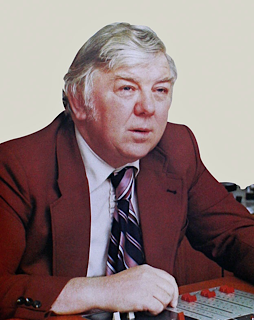
 seamus dubhghaill