seamus dubhghaill

Promoting Irish Culture and History from Little Rock, Arkansas, USA


Leave a comment

Birth of Singer-Songwriter Sinéad O’Connor

Sinéad Marie Bernadette O’Connor, Irish singer-songwriter dubbed the first superstar of the 1990s by Rolling Stone magazine, is born on December 8, 1966, in Dublin. During her career she attracts publicity not only for her voice, which is alternately searing and soothing, but also for her controversial actions and statements.

O’Connor is born at the Cascia House Nursing Home on Baggot Street in Dublin, the third of five children of John Oliver “Seán” O’Connor, a structural engineer later turned barrister and chairperson of the Divorce Action Group, and Johanna Marie O’Grady, who marry in 1960 at the Church of Our Lady of Good Counsel, Drimnagh, Dublin. She is named Sinéad after Sinéad de Valera, the mother of Éamon de Valera, Jnr., the doctor who presides over her delivery, and Bernadette in honour of Saint Bernadette of Lourdes. An older brother is the novelist, Joseph O’Connor. She attends Dominican College Sion Hill school in Blackrock, Dublin.

O’Connor’s parents divorce when she is eight years old, and she and her siblings are sent to live with their abusive mother, who beats the children on a regular basis. Eventually, she leaves to live with her father and stepmother, but the child, who habitually shoplifts, proves to be too troublesome for the couple, and they send her to reform school. Although she hates the reform school, it is there that she makes her first contacts with the music world. A teacher introduces her to the drummer of a local band, In Tua Nua, and for a brief period she works with the band and even cowrites one of their hit singles. After a year and a half at the reform school, she is transferred to a boarding school in Waterford, but it proves unbearable. She eventually returns to Dublin, where she attempts to start her own music career.

In Dublin O’Connor eventually joins the pub rock band Ton Ton Macoute. In 1985, while singing with the group, she attracts the attention of the London-based record label Ensign Records, which asks her for a demo tape. Soon afterward she signs a contract with the label and begins work on her debut album, The Lion and the Cobra, which is released in 1987 to critical praise. She follows the album with the largely autobiographical I Do Not Want What I Haven’t Got (1990). The album is propelled to the top of the U.S. pop charts on the strength of the number one single “Nothing Compares 2 U”—a transcendent cover of a 1985 Prince song.

In the following year O’Connor attracts attention not only for her singing but also for a series of controversial statements, actions, and appearances, including refusing to appear on NBC’s Saturday Night Live because of objections to the week’s guest host, boycotting the 1991 Grammy Awards ceremony and declining to sing there, and refusing to allow the U.S. national anthem to be played before one of her performances. She also attracts criticism for her public support of the Irish Republican Army (IRA) and for tearing up a picture of Pope John Paul II on Saturday Night Live in 1992. Nevertheless, she wins the Grammy Award for Best Alternative Music Album in 1991 for “I Do Not Want What I Haven’t Got” and continues to be highly regarded for her musical abilities.

In 1992 O’Connor releases an album of torch songs, Am I Not Your Girl?, which receives only minor publicity, and she releases a fourth album, Universal Mother, in 1994. Soon afterward she takes a hiatus from public life, spending time with her children and attending therapy in order to work through problems that linger from her harsh childhood. Her struggles with mental health continue throughout her life.

O’Connor occasionally actes, appearing in such films as Hush-a-Bye Baby (1990), Emily Brontë’s Wuthering Heights (1992; as novelist Emily Brontë), and The Butcher Boy (1997; as the Virgin Mary). She is ordained a priest in a controversial religious group led by Bishop Michael Cox, the leader of a religious sect that has broken off from the Roman Catholic Church. In 2000 she releases her fifth album, Faith and Courage, which includes the hit song “No Man’s Woman.” The album is praised by several music reviewers as one of the best albums of the year. Subsequent albums include Sean-Nós Nua (2002), Throw Down Your Arms (2005), Theology (2007), How About I Be Me (and You Be You)? (2012), and I’m Not Bossy, I’m the Boss (2014).

In 2018 O’Connor announces that she has converted to Islam and changes her name to Shuhadāʾ Sadaqat, although she states that she will continue to perform as Sinéad O’Connor. Her memoir, Rememberings (2021), receives broad critical praise, and she is the subject of the documentary Nothing Compares (2022).

O’Connor’s sudden death in her flat in Herne Hill, south London, at the age of 56 on July 26, 2023, prompts a massive outpouring of public grief. Irish President Michael D. Higgins praises her for her “beautiful, unique voice.” A year later, upon the registration of her death certificate, it is revealed that she had died of chronic obstructive pulmonary disease and bronchial asthma.

(From: “Sinéad O’Connor,” written and fact checked by The Editors of Encyclopedia Britannica, http://www.britannica.com, last updated September 30, 2024)


Leave a comment

Birth of William Orpen, Irish-born Artist

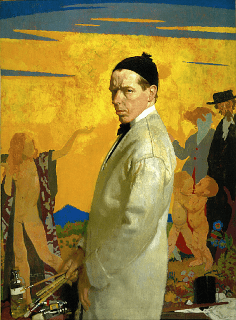
Major Sir William Newenham Montague Orpen, KBE, RA, RHA, Irish artist who mainly works in London and is best known for his vigorously characterized portraits, is born on November 27, 1878, at Oriel, Grove Avenue, Stillorgan, County Dublin. He also works as an official war artist during World War I.

Orpen is the fourth and youngest son of Arthur Herbert Orpen (1830–1926), a solicitor, and his wife, Anne Caulfield (1834–1912), the eldest daughter of the Right Rev. Charles Caulfield (1804–1862), the Bishop of Nassau. Both his parents are amateur painters, and his eldest brother, Richard Caulfield Orpen, becomes a notable architect. His nieces are Bea Orpen and Kathleen Delap. The historian Goddard Henry Orpen is his second cousin. The family lives at “Oriel,” a large house with extensive grounds containing stables and a tennis court. He appears to have a happy childhood there.

Orpen is a naturally talented painter, and six weeks before his thirteenth birthday is enrolled at the Dublin Metropolitan School of Art. During his six years at the college, he wins every major prize there, plus the British Isles gold medal for life drawing, before leaving to study at the Slade School of Fine Art in London between 1897 and 1899. At the Slade he masters oil painting and begins to experiment with different painting techniques and effects.

While at the Slade, Orpen becomes engaged to Emily Scobel, a model and the subject of his painting The Mirror (1900). She ends their relationship in 1901, and he marries Grace Knewstub, the sister-in-law of Sir William Rothenstein. He and Knewstub have three daughters together, but the marriage is not a happy one. By 1908, he has begun a long-running affair with Evelyn Saint-George, a well-connected American millionairess based in London, with whom he also has a child.

Orpen first exhibits at the New English Art Club (NEAC) in 1899, becoming a member in 1900. In 1901, he holds a solo exhibition at the Carfax Gallery in central London. His portraits, which establish his reputation, show the influence of the Realist artist Édouard Manet. He also becomes known as a painter of group portraits such as Homage to Manet (1909), in which he portrays members of the contemporary English art world sitting in conversation beneath a famous portrait by that artist.

At the start of World War I, a number of Irish people living in England return to Ireland to avoid conscription. Among them is Orpen’s studio assistant and former pupil, Seán Keating. Keating encourages him to do likewise, but he refuses and commits himself to supporting the British war effort. In December 1915, he is commissioned into the Royal Army Service Corps and reports for clerical duty at London’s Kensington Barracks in March 1916. Throughout 1916 he continues painting portraits, most notably one of a despondent Winston Churchill, but soon starts using both his own contacts and those of Evelyn Saint-George, to secure a war artist posting.

He is the official painter of the Paris Peace Conference after World War I. Throughout 1919 he paints individual portraits of the delegates to the Conference and these form the basis of his two large paintings, A Peace Conference at the Quai d’Orsay and The Signing of Peace in the Hall of Mirrors. In both pictures, the architecture overwhelms the gathered politicians and statesmen who’s political wranglings and vainglory diminish them in Orpen’s eyes.

Orpen is appointed Knight Commander of the Order of the British Empire in 1918 and is elected an associate of the Royal Academy of Arts in 1919.

Orpen becomes seriously ill in May 1931, and, after suffering periods of memory loss, dies at the age of 52 on September 29, 1931, in South Kensington, London, of liver and heart failure. He is buried at Putney Vale Cemetery in southwest London. A stone tablet in the Island of Ireland Peace Park Memorial at Mesen, Belgium, commemorates him. He is posthumously regarded as a facile and prolific, but somewhat superficial, artist who nevertheless achieves great popularity in his day.

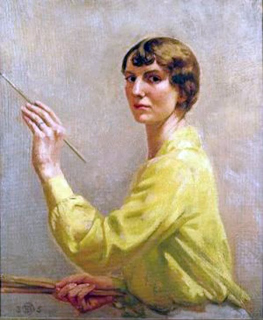
(Pictured: “Self-portrait” (1913), oil on canvas by William Orpen, Saint Louis Art Museum)


Leave a comment

Death of Michele Esposito, Composer, Conductor & Pianist

Michele Esposito, Italian composer, conductor and pianist who spends most of his professional life in Dublin, dies on November 19, 1929.

Esposito is born at Castellammare di Stabia, near Naples, Italy, on September 29, 1855. In 1865, he wins a scholarship to the Naples Conservatory as a piano pupil of Beniamino Cesi, himself a favourite pupil of Sigismond Thalberg, and studies composition there for eight years under Paolo Serrao, teacher of Francesco Cilea and others. He is a near-contemporary of Giuseppe Martucci, and a few years the senior of Alessandro Longo, both taught by these teachers. In 1878, he goes to Paris for several years where he establishes a growing reputation.

In 1879, Esposito marries Natalia Klebnikoff, the only daughter of Pierre Klebnikoff, professor of chemistry and physics at Saint Petersburg University. They have four children, including the noted scholar, Mario Esposito.

On December 24, 1881, Esposito is visited by an old friend, Caracciolo, who is principal professor of singing at the Royal Irish Academy of Music (RIAM) in Dublin. Upon his recommendation, Esposito is offered the position of chief pianoforte professor of piano at the RIAM at Easter 1882.

Esposito remains in Dublin for more than forty years, devoting himself to the encouragement of classical music in Dublin. He inaugurates the Royal Dublin Society (RDS) chamber music recitals, with great success, and gives piano recitals for the Society every year. He establishes the Dublin Orchestral Society in 1898 and is its conductor until its disbandment in 1914. He is also the conductor of the Sunday Orchestral Concerts until they are discontinued in 1914. He conducts concerts of the London Symphony Orchestra at Woodbrook in 1913 and 1914, and also performs his piano concerto with them under the baton of Hamilton Harty. Together with Sir Stanley Cochrane, he founds the music publishing company C. E. Edition.

Esposito receives awards from the Feis Ceoil for his cantata Deirdre, his Irish Symphony and his String Quartet in D major. His Cello Sonata wins a prize from the London Incorporated Society of Musicians in 1899. His Violin Sonata in E minor gains a prize offered by La Société Nouvelle, Paris, in 1907, and his String Quartet in C minor wins another offered by the Accademia Filarmonica di Bologna.

In 1923, King Victor Emmanuel III awards Esposito the Order of the Crown of Italy, with the title “Commendatore,” to mark his contribution to Irish music.

Esposito retires in 1928 and returns to Italy after failing to revive the Dublin Orchestral Society the previous year. He dies on November 19, 1929, in Florence. He is buried at the Cimitero di Trespiano where his gravestone is inscribed with three bars of music by “H. H.” Of his four children, Vera Esposito is involved in Irish theatre, and Mario Esposito becomes a scholar of Latin learning in medieval Ireland.


Leave a comment

Birth of Mick Moloney, Irish American Musician & Scholar

Michael “Mick” Moloney, Irish-born American musician and scholar, is born in Limerick, County Limerick, on November 15, 1944. He is the artistic director of several major arts tours and co-founds Green Fields of America.

Moloney is the son of Michael Moloney, the head air traffic control officer of Shannon Airport, and his wife, Maura, who works as the principal of a Limerick primary school. He first plays tenor banjo during his teenage years. He studies at University College Dublin (UCD), graduating with a bachelor’s degree in economics. He then relocates to London to be a social worker assisting immigrant communities, before joining The Johnstons. After playing with the group for five years, he immigrates to the United States in 1973. He initially settles in Philadelphia, Pennsylvania, and eventually becomes an American citizen.

Three years after moving to the United States, Moloney co-founds Green Fields of America, an ensemble of Irish musicians, singers, and dancers which tour across the country on several occasions. He also serves as the artistic director for several major arts tours. One of these is the 1985 festival in Manhattan titled “Cherish the Ladies” to highlight female musicians in the area of Irish traditional music, which had been dominated by men until that decade. He produces an album for the female group by the same name titled Irish Women Musicians in America. The group’s leader, Joanie Madden, is one of several future fellows of the National Endowment for the Arts (NEA) to be mentored by Moloney. He produces and performs on over 70 albums and serves as advisor for numerous festivals and concerts across America, with ethnomusicologist and musician Daniel T. Neely putting the figure as high as 125 albums.

Moloney undertakes postgraduate studies at the University of Pennsylvania, obtaining a master’s degree before being awarded a Doctor of Philosophy in folklore and folk life in 1992. He goes on to teach ethnomusicology, folklore, and Irish studies at Penn, Georgetown University, and Villanova University. He is also global distinguished professor of music and Irish studies at New York University (NYU) until his death. In recognition of his work in public folklore, he receives a 1999 National Heritage Fellowship from the NEA.

In addition to music performance, Moloney writes Far from the Shamrock Shore: The Story of Irish American History Through Song, which is published by Crown Publications in February 2002 with a supplementary CD on Shanachie Records. He hosts three nationally syndicated series covering folk music on American Public Television (APT). He works as a consultant, performer, and interviewee on the RTÉ special Bringing It All Back Home, and is also a participant, consultant, and music arranger for Out of Ireland, a documentary film by PBS. He performs on the PBS special The Irish in America: Long Journey Home.

Moloney is married three times over the course of his life. His first marriage is to Miriam Murphy. His second marriage is to Philomena Murray. Together, they have one child but eventually divorce. His third marriage to Judy Sherman also ends in divorce. He is in a domestic partnership with Sangjan Chailungka at the time of his death. During his later years, he divides his time between Bangkok, where he resides with Chailungka, and his apartment in Greenwich Village. In Bangkok, he volunteers as a music therapist and teacher for abandoned children with HIV at the Mercy Center in the Khlong Toei district, which is founded by the Redemptorist priest Joseph H. Maier.

Moloney dies at the age of 77 on July 27, 2022, at his home in Manhattan, having played at the Maine Celtic Festival less than a week before. The cause of death is not announced.


Leave a comment

Death of Patrick Michael Clancy, Irish Folk Singer

Patrick Michael Clancy, Irish folk singer best known as a member of The Clancy Brothers and Tommy Makem, dies of lung cancer at home on November 11, 1998. In addition to singing and storytelling, Clancy plays the harmonica with the group, which is widely credited with popularizing Irish traditional music in the United States and revitalizing it in Ireland. He also starts and runs the folk music label Tradition Records, which records many of the key figures of the American folk music revival.

Clancy is born on March 7, 1922, at Carrick-on-Suir, County Tipperary, one of eleven children and the eldest of four boys born to Johanna McGrath and Bob Clancy. During World War II he serves as a flight engineer in the Royal Air Force in India. After his demobilization, Clancy works as a baker in London. In 1947 he emigrates to Toronto, Canada with his brother Tom Clancy. The following year, the two brothers move to Cleveland, Ohio to stay with relatives. Later, they attempt to move to California, but their car breaks down and they relocate to the New York City area instead.

After moving to Greenwich Village in 1951, both Patrick and Tom devote themselves primarily to careers in the theater. In addition to appearing in various Off-Broadway productions and television shows, they produce and star in plays at the Cherry Lane Theatre in Greenwich Village and at a playhouse in Martha’s Vineyard. After losing money on some unsuccessful plays, the brothers begin singing concerts of folk songs after their evening acting jobs are over. They soon dub these concerts “Midnight Specials” and the “Swapping Song Fair.” Patrick and Tom are often joined by other prominent folk singers of the day, including Pete Seeger, Woody Guthrie, and Jean Ritchie.

In 1956 their younger brother, Liam Clancy, immigrates to New York, where he teams up with Tommy Makem, whom he had met while collecting folk songs in Ireland. The two begin singing together at Gerde’s Folk City, a club in Greenwich Village. Patrick and Tom sing with them on occasion, usually in informal folk “sing-songs” in the Village. Around the same time, Patrick founds Tradition Records with folk-song collector and heiress Diane Hamilton, and in 1956 the Clancy Brothers and Tommy Makem release their first album, The Rising of the Moon, with only Patrick’s harmonica as musical accompaniment. However, the Clancys and Makem do not become a permanent singing group until 1959.

In the late 1950s, Clancy with his brothers and Makem begin to take singing more seriously as a permanent career, and soon they record their second album, Come Fill Your Glass with Us. This album proves to be more successful than their debut album, and they begin receiving job offers as singers at important nightclubs, including the Gate of Horn in Chicago and the Blue Angel in New York City. The group garners nationwide fame in the United States after an appearance on The Ed Sullivan Show, which leads to a contract with Columbia Records in 1961. Over the course of the 1960s, the Clancy Brothers and Tommy Makem record approximately two albums a year for Columbia. By 1964, Billboard magazine reports that the group was outselling Elvis Presley in Ireland.

The group performs together on stage, recordings, and television to great acclaim in the United States, Ireland, the United Kingdom, Canada, and Australia until Tommy Makem leaves to pursue a solo career in 1969. They continue performing first with Bobby Clancy and then with Louis Killen until Liam leaves in 1976 also to pursue a solo career. In 1977 after a short hiatus, the group reforms with Patrick, Tom, and Bobby Clancy and their nephew Robbie O’Connell. Liam returns in 1990 after the death of Tom Clancy.

In 1968, after two decades in North America, Clancy returns to live in Carrick-on-Suir, where he purchases a dairy farm and breeds exotic cattle. When not on tour or working on his farm, he spends much of his time fishing, reading, and doing crossword puzzles. In the late 1990s, he is diagnosed with a brain tumor. The tumor is successfully removed, but he is also stricken with terminal lung cancer around the same time. He continues performing until his failing health prevents him from doing so any longer.

Patrick Clancy dies at home of lung cancer on November 11, 1998, at the age of 76. He is buried, wearing his trademark white cap, in the tiny village of Faugheen, near Carrick-on-Suir.


Leave a comment

Birth of Kate Thompson, Author & Accomplished Fiddler

Katharine Anna Thompson, British-Irish author best known for children’s novels, is born in Halifax, West Yorkshire, England, on November 10, 1956. Most of her children’s fiction is fantasy but several of her books also deal with the consequences of genetic engineering.

Thompson is the youngest child of the social historians and peace activists E. P. Thompson and Dorothy Towers. She has lived in Ireland since 1981 and many of her books are set there. She trains racehorses in the UK and United States and travels extensively in India before settling in 1984 in Inagh, County Clare, in the west of Ireland with her partner Conor Minogue. They have two daughters, Cliodhna and Dearbhla. She is an accomplished fiddler with an interest in Irish traditional music, which is reflected in The New Policeman (2005).

Thompson wins two major annual awards for The New Policeman (Bodley Head, 2005), set in modern Kinvara and the Irish mythological Tír na nÓg: the Guardian Children’s Fiction Prize and the Whitbread Children’s Book Award. It also wins the Dublin Airport Authority Children’s Book of the Year Award for 2005.

Thompson wins the Bisto Children’s Book of the Year Award four times, for The Beguilers (2001), The Alchemist’s Apprentice (2002), Annan Water (2004) and The New Policeman. Creature of the Night (2008) is shortlisted for the 2008 Booktrust Teenage Prize and the 2009 Carnegie Medal.

Thompson holds an MA in Irish traditional music performance from the University of Limerick.


Leave a comment

Death of Máirín Cregan, Playwright & Novelist

Máirín Cregan, Irish nationalist who is involved in the 1916 Easter Rising and Irish War of Independence, dies in Dublin on November 9, 1975. She makes her name writing for children, as well as writing plays and novels for adults.

Mary Ellen Cregan is born in Killorglin, County Kerry, on March 27, 1891, to Morgan Cregan and Ellen O’Shea. Her father is a stonemason from Limerick. The family are strong believers in the Gaelic revival movement and Cregan herself learns the Irish language and performs songs at Gaelic League concerts. Although she goes to primary school locally, she goes away to secondary school to St. Louis Convent in Carrickmacross, County Monaghan. After finishing school, she becomes a teacher, working in Goresbridge, County Kilkenny from 1911 to 1914.

In September 1914 Cregan goes to Dublin to study music in the Leinster School of Music, under Madame Coslett Heller. It is while she is in Dublin that she becomes friends with the Ryan family, who are strong nationalists as well as interested in the Gaelic League and Sinn Féin. She begins to sing for concerts which are fundraisers for the Irish Volunteers. The last concert is just two weeks before the Easter Rising.

During Easter week Cregan is sent to Tralee with “automatics and ammunition” by Seán Mac Diarmada. While she is carrying a violin case of munitions, she is also carrying details for the wireless technology needed for communicating with the SS Aud, the boat which is carrying more weapons for the rebellion. The communications with the SS Aud go wrong when the car carrying the Volunteers goes off a pier and the occupants are drowned. She is still in the area to assist with the surviving Volunteer, who unfortunately knows nothing of the details for the SS Aud. She is not easily able to get back to Dublin, because owing to the Rising the city is cut off. By the time she gets back, her friends have been arrested.

When Cregan is going to school in Dublin she is also working in a school in Rathmines. Like many of the teachers, she loses her job after the rising because of her connection to the rebels. However, she is able to get new positions over the next few years in both Ballyshannon and Portstewart until she marries. In Ballyshannon she experiences the early expressions of support and sympathy, but Portstewart is a Unionist enclave with many houses flying union flags on polling day in 1918.

Cregan is a member of Cumann na mBan and with them is active during the Irish War of Independence. She is given a medal for her participation. On July 23, 1919, she marries Dr. James Ryan in Athenry, County Galway. His entire family had been deeply involved in the Easter Rising, as well as the Irish War of Independence and the Irish Civil War. They have three children, Eoin, who becomes a Senator, Nuala (Colgan) and Seamus.

The family is initially based in Wexford during the War. The house is often raided when the British soldiers are looking for her husband and Cregan herself is arrested in February 1921 for refusing to put up martial law posters. Later the family sells the house and remains mobile while she works for the Sinn Féin government, and her husband is in prison. It is during this time that she works as a courier to the continent and to London. After the war, they purchase Kindlestown House in Delgany, County Wicklow, where they remain for the rest of their lives.

Cregan works as a journalist for The Irish Press and The Sunday Press. Her political awareness and involvement mean that her work there is on political articles.

Cregan’s first book for children is Old John and gains her considerable international success and attention. Sean Eoin is also published in Irish and is illustrated by Jack Butler Yeats. Her work is also aired on the BBC and RTÉ. Rathina wins the Downey Award in the United States in 1943. She also writes two plays: Hunger strike (1933), based on experience of her husband’s involvement in such a strike, which is broadcast on Radio Éireann on May 5, 1936, and Curlew’s call (1940).

Cregan dies on November 9, 1975, in St. Vincent’s Hospital, Dublin, and is buried in Redford cemetery near her home in County Wicklow.

(Pictured: Máirín Cregan and her husband, Dr. James Ryan)


Leave a comment

The Conradh na Gaeilge Bans All Forms of Jazz Music

On November 6, 1929, Conradh na Gaeilge (English: Gaelic League) announces expulsion for anyone who attends “foreign jazz dances.”

Conradh na Gaeilge, a cultural organisation which promotes the Irish language, implements a ban against all forms of jazz music. Taken by the executive of the Conradh na Gaeilge, it is an issue, which has festered for many months prior to the ban and will for some time afterward.

It is claimed that jazz music has taken hold in Ireland in the wake of World War I and has spread from Dublin to the music halls which have sprung up in towns and villages across the country. Detractors claim that jazz music and dancing is just a “passing phase” and that it is the “natural reaction” to the post-war phase that Ireland finds itself in.

All branches of Conradh na Gaeilge are sent a warning as to their conduct going forward with particular regard to attending or promoting jazz. The idea is to follow the Gaelic Athletic Association’s bans on the playing of foreign games, something which has proved popular across the country. While the debate had begun earlier in 1929 in Wexford and other centres, it is in Leitrim that the most vocal opponents of jazz are to be found. Here the parish priest of Cloone, Fr. Conferey, openly criticises jazz from the pulpit and tells the people that they should sing Irish songs only. In nearby Mohill it is reported that 3,000 people demand that jazz be banned and they carry banners with slogans such as “Down with Jazz” and “Out with paganism.”

Ultimately, the ban sparks outrage across the country but it speaks volumes about post-independent Ireland and attitudes towards culture and pastimes, which are not Irish.

(From: Gaelic League Bans ‘Jazz’ – 6 November 1929, Sunday Independent, Irish Newspaper Archives, http://www.irishnewsarchives.com, November 10, 1929)


Leave a comment

Death of Charles Jervas, Painter, Translator & Art Collector

Charles Jervas, Irish portrait painter, translator, and art collector of the early 18th century, dies at his home at Cleveland Court, London, on November 2, 1739.

Born in Shinrone, County Offaly, around 1675, Jervas is one of seven children (five sons and two daughters) of John Jervas of Clonlisk, Shinrone, and his wife Elizabeth, daughter of Captain John Baldwin, High Sheriff of County Offaly, of Shinrone. He studies in London as an assistant under Sir Godfrey Kneller between 1694 and 1695.

After selling a series of small copies of the Raphael Cartoons around 1698 to Dr. George Clarke of All Souls College, Oxford, the following year, he travels to Paris and Rome (while financially supported by Clarke and others) remaining there for most of the decade before returning to London in 1709 where he finds success as a portrait painter.

Painting portraits of the city’s intellectuals, among them such personal friends as Jonathan Swift and the poet Alexander Pope, both of which are now in the National Portrait Gallery, London, Jervas becomes a popular artist often referred to in the works of literary figures of the period.

Jervas gives painting lessons to Pope at his house in Cleveland Court, St. James’s, which Pope mentions in his poem, To Belinda on the Rape of the Lock, written in 1713 and published in 1717 in Poems on Several Occasions.

Pope’s verse Epistle to Mr. Jervas, written around 1715, is published in the 1716 edition of John Dryden‘s 1695 translation of Fresnoy’s Art of Painting (Charles Alphonse du Fresnoy‘s De arte graphica, 1668). In it, Pope refers to Jervas’s skill as an artist:

O, lasting as those colours may they shine,
Free as they stroke, yet faultless as thy line;
New graces yearly like thy works display,
Soft without weakness, without glaring gay!

With his growing reputation, Jervas succeeds Kneller as Principal Painter in Ordinary to King George I in 1723, and subsequently King George II. In 1727 he marries Penelope Hume, a wealthy widow with a supposed fortune of £20,000, and moves to Hampton, London. He continues to live in London until his death on November 2, 1739.

Jervas’s translation of Miguel de Cervantes‘s novel Don Quixote, published posthumously in 1742 as being made by Charles “Jarvis” due to a printer’s error, has since come to be known as “the Jarvis translation.” He is first to provide an introduction to the novel including a critical analysis of previous translations of Don Quixote. It has been highly praised as the most accurate translation of the novel up to that time, but also strongly criticised for being stiff and humourless, although it goes through many printings during the 19th century.

As principal portraitist to the King of England, Jervas is known for his vanity and luck, as mentioned in the Imperial Biographical Dictionary, “He married a widow with $20,000; and his natural self-conceit was greatly encouraged by his intimate friend [Alexander] Pope, who has written an epistle full of silly flattery.”

According to one account, after comparing a painting he had copied from Titian, Jervas is said to have stated, “Poor little Tit, how he would starve!”

Upon being told that Jervas had set up a carriage with four horses, Godfrey Kneller replies, “Ach, mein Gott, if his horses do not draw better than he does, he will never get to his journey’s end.”


Leave a comment

Death of Character Actor Liam Redmond

Liam Redmond, Irish character actor known for his stage, film and television roles, dies in Dublin on October 28, 1989, following a lengthy illness.

Redmond is born in Limerick, County Limerick, on July 27, 1913, one of four children born to cabinet-maker Thomas and Eileen Redmond. Educated at the Christian Brothers schools in Dublin, he later attends University College Dublin (UCD) and initially reads medicine before moving into drama.

While Director of the Dramatic Society, Redmond meets and marries the society’s secretary, Barbara MacDonagh, sister of Donagh MacDonagh and daughter of 1916 Easter Rising leader Thomas MacDonagh and Muriel Gifford. They have four children.

Redmond is invited to join the Abbey Theatre in 1935 as a producer by William Butler Yeats, the Irish poet. Yeats writes his play Death of Cú Chulainn for Redmond to star as Cú Chulainn, hero of one of Ireland’s foundational myths.

Redmond makes his acting debut at the Abbey Theatre in 1935 in Seán O’Casey‘s The Silver Tassie. His first stage appearance is in 1939 in New York City in The White Steed. After returning to Britain at the outbreak of World War II he is a regular on the London stage. He is one of the founders of the Writers’, Artists’, Actors’ and Musicians’ Association (WAAMA), a precursor of the Irish Actors’ Equity Association. His insistence that “part-time professionals” – usually civil servants who act on the side – should be paid a higher rate than professional actors for both rehearsal time and performance, effectively wiping out this class, raising the wages and fees of working actors.

Redmond stars in Broadway, among other plays starring in Paul Vincent Carroll‘s The White Steed in 1939, playing Canon McCooey in The Wayward Saint in 1955, winning the George Jean Nathan Award for Dramatic Criticism for his performance, and starring in 1968 in Joe Orton‘s Loot and Brian Friel‘s The Loves of Cass Maguire.

Redmond works in television and film throughout the 1950s to the 1980s and is regularly seen in television series such as The Avengers, Daniel Boone, The Saint and Z-Cars. He is often called upon as a character actor in various military, religious and judicial roles in films such as I See a Dark Stranger (1946), Captain Boycott (1947), High Treason (1951), The Cruel Sea (1953), The Playboy of the Western World (1962), Kid Galahad (1962), The Luck of Ginger Coffey (1964), Tobruk (1967), The Ghost and Mr. Chicken (1966) and Barry Lyndon (1975). His performance as the kindly occult expert in the cult horror film Night of the Demon (1957) is a favourite of fans of the film.

Redmond retires to Dublin and dies at age 76, after a long period of ill health, on October 28, 1989. His wife Barbara predeceases him in 1987.