seamus dubhghaill

Promoting Irish Culture and History from Little Rock, Arkansas, USA


Leave a comment

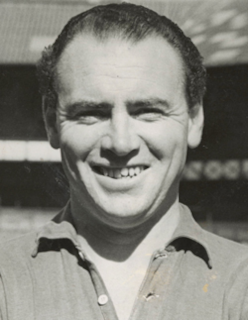
Birth of Peter Farrell, Irish Footballer

Peter Desmond Farrell, Irish footballer who plays as a right-half for, among others, Shamrock RoversEverton and Tranmere Rovers, is born in Dalkey, County Dublin, on August 16, 1922. As an international, he also plays for both Ireland teams – the FAI XI and the IFA XI. His playing career follows a similar path to that of Tommy Eglington. As well as teaming up at international level, they also play together at three clubs.

Farrell is born and raised in the Convent Road area of Dalkey and is educated at Harold Boy’s National School and the Christian Brothers in Dún Laoghaire, from which he wins a scholarship. He is playing football with Cabinteely Schoolboys when spotted by a Shamrock Rovers scout and subsequently joins Rovers on his 17th birthday in August 1939. Among his early teammates is the veteran Jimmy Dunne. With a team that also includes Jimmy Kelly, Tommy Eglington, Jimmy McAlinden and Paddy Coad, he later helps Rovers reach three successive FAI Cup finals. They win the competition in 1944 and 1945 and finish as runners up in 1946.

In July 1946, together with Tommy Eglington, Farrell signs for Everton. In eleven seasons with the club, he plays 421 league games and scores 14 goals. He also plays a further 31 games in the FA Cup and scores an additional four goals. In 1951 he is appointed Everton captain and during the 1953–54 season leads them to the runners up place in the Second Division, thus gaining promotion to the First Division. During his time with the club his teammates, apart from Eglington, also include Alex StevensonPeter CorrHarry CatterickWally FieldingTommy E. JonesBrian Labone and Dave Hickson. He is never sent off during his time at Goodison Park.

Farrell leaves Everton in October 1957 and follows Tommy Eglington to Tranmere Rovers where he becomes player-manager. He plays 114 league games for Tranmere, before leaving in December 1960. After a time as manager at Sligo Rovers, he becomes manager of Holyhead Town and, helped by a number of former Everton and Tranmere players, guides them to the Welsh Football League (North) title.

In September 1967, Farrell signs a one-year contract to manage St. Patrick’s Athletic F.C. He manages the Pats in their 1967–68 Inter-Cities Fairs Cup ties against FC Girondins de Bordeaux but resigns in March 1968.

When Farrell begins his international career in 1946 there are, in effect, two Ireland teams, chosen by two rival associations. Both associations, the Northern Ireland–based IFA and the Ireland–based FAI claim jurisdiction over the whole of Ireland and select players from the entire island. As a result, several notable Irish players from this era, including Farrell, play for both teams.

Farrell makes 28 appearances and scores three goals for the FAI XI. While still at Shamrock Rovers, he captains the FAI XI on his international debut on June 16, 1946, against Portugal. On September 21, 1949, together with Johnny Carey and Con Martin, he is a member of the FAI XI that defeats England 2–0 at Goodison Park, becoming the first non-UK team to beat England at home. After Martin puts the FAI XI ahead with a penalty in the 33rd minute, Farrell makes victory certain in the 85th minute. Tommy O’Connor slips the ball to Farrell and as the English goalkeeper Bert Williams advances, he lofts the ball into the unguarded net. He scores his second goal for the FAI XI on October 9, 1949, a in 1–1 draw with Finland, a qualifier for the 1950 FIFA World Cup. His third goal comes on May 30, 1951, as Farrell scores the opening goal in a 3–2 win against Norway.

Farrell also makes seven appearances for the IFA XI between 1946 and 1949. On November 27, 1946, he makes his debut for the IFA XI in a 0–0 draw with Scotland. Together with Johnny Carey, Con Martin, Bill Gorman, Tommy Eglington, Alex Stevenson and Davy Walsh, he is one of seven players born in the Irish Free State to play for the IFA XI on that day. The draw helps the team finish as runners-up in the 1946-47 British Home Championship. He also helps the IFA XI gain some other respectable results, including a 2–0 win against Scotland on October 4, 1947, and a 2–2 draw with England at Goodison Park on November 5, 1947.

After returning to Ireland following his retirement, Farrell settles in Dublin and follows his father into the insurance business. He dies on March 16, 1999, following a long illness. He is buried in Dean’s Grange Cemetery in DeansgrangeDún Laoghaire–Rathdown, County Dublin.


Leave a comment

Death of Peter Farrell, Irish Footballer

Peter Desmond Farrell, Irish footballer who plays as a right-half for, among others, Shamrock Rovers, Everton and Tranmere Rovers, dies in Dublin on March 16, 1999. As an international, he also plays for both Ireland teams – the FAI XI and the IFA XI. His playing career follows a similar path to that of Tommy Eglington. As well as teaming up at international level, they also play together at three clubs.

Farrell is born on August 16, 1922, and raised in the Convent Road area of Dalkey, County Dublin, and is educated at Harold Boy’s National School and the Christian Brothers in Dún Laoghaire, from which he wins a scholarship. He is playing football with Cabinteely Schoolboys when spotted by a Shamrock Rovers scout and subsequently joins Rovers on his 17th birthday in August 1939. Among his early teammates is the veteran Jimmy Dunne. With a team that also includes Jimmy Kelly, Tommy Eglington, Jimmy McAlinden and Paddy Coad, he later helps Rovers reach three successive FAI Cup finals. They win the competition in 1944 and 1945 and finish as runners up in 1946.

In July 1946, together with Tommy Eglington, Farrell signs for Everton. In eleven seasons with the club, he plays 421 league games and scores 14 goals. He also plays a further 31 games in the FA Cup and scores an additional four goals. In 1951 he is appointed Everton captain and during the 1953–54 season leads them to the runners up place in the Second Division, thus gaining promotion to the First Division. During his time with the club his teammates, apart from Eglington, also include Alex Stevenson, Peter Corr, Harry Catterick, Wally Fielding, Tommy E. Jones, Brian Labone and Dave Hickson. He is never sent off during his time at Goodison Park.

Farrell leaves Everton in October 1957 and follows Tommy Eglington to Tranmere Rovers where he becomes player-manager. He plays 114 league games for Tranmere, before leaving in December 1960. After a time as manager at Sligo Rovers, he becomes manager of Holyhead Town and, helped by a number of former Everton and Tranmere players, guides them to the Welsh Football League (North) title.

In September 1967, Farrell signs a one-year contract to manage St. Patrick’s Athletic F.C. He manages the Pats in their 1967–68 Inter-Cities Fairs Cup ties against FC Girondins de Bordeaux but resigns in March 1968.

When Farrell begins his international career in 1946 there are, in effect, two Ireland teams, chosen by two rival associations. Both associations, the Northern Ireland–based IFA and the Ireland–based FAI claim jurisdiction over the whole of Ireland and select players from the entire island. As a result, several notable Irish players from this era, including Farrell, play for both teams.

Farrell makes 28 appearances and scores three goals for the FAI XI. While still at Shamrock Rovers, he captains the FAI XI on his international debut on June 16, 1946, against Portugal. On September 21, 1949, together with Johnny Carey and Con Martin, he is a member of the FAI XI that defeats England 2–0 at Goodison Park, becoming the first non-UK team to beat England at home. After Martin puts the FAI XI ahead with a penalty in the 33rd minute, Farrell makes victory certain in the 85th minute. Tommy O’Connor slips the ball to Farrell and as the English goalkeeper Bert Williams advances, he lofts the ball into the unguarded net. He scores his second goal for the FAI XI on October 9, 1949, a in 1–1 draw with Finland, a qualifier for the 1950 FIFA World Cup. His third goal comes on May 30, 1951, as Farrell scores the opening goal in a 3–2 win against Norway.

Farrell also makes seven appearances for the IFA XI between 1946 and 1949. On November 27, 1946, he makes his debut for the IFA XI in a 0–0 draw with Scotland. Together with Johnny Carey, Con Martin, Bill Gorman, Tommy Eglington, Alex Stevenson and Davy Walsh, he is one of seven players born in the Irish Free State to play for the IFA XI on that day. The draw helps the team finish as runners-up in the 1946-47 British Home Championship. He also helps the IFA XI gain some other respectable results, including a 2–0 win against Scotland on October 4, 1947, and a 2–2 draw with England at Goodison Park on November 5, 1947.

After returning to Ireland following his retirement, Farrell settles in Dublin and follows his father into the insurance business. He dies on March 16, 1999, following a long illness. He is buried in Dean’s Grange Cemetery in Deansgrange, Dún Laoghaire–Rathdown, County Dublin.


Leave a comment

Birth of Lilian Davidson, Artist, Teacher & Writer

Lilian Davidson ARHA, Irish landscape and portrait artist, teacher and writer, is born on January 26, 1879, at Castle Terrace, Bray, County Wicklow.

Davidson is the sixth of ten children of clerk of petty session, Edward Ellice Davidson, and Lucy Rising Davidson (née Doe). Her mother dies in 1888, and it is presumed that she receives a private education but as the family are not affluent, the details are unclear. She goes on to attend the Dublin Metropolitan School of Art (DMSA) from 1895 to 1905. While at the DMSA, she wins prizes in 1895 and 1896 and is awarded a scholarship and free studentship at the Royal Dublin Society (RDS) in 1897, the same year her father dies. She completes her studies in 1905. In the early 1910s, she is living in Rathmines and spends some time in England and Wales.

Davidson is commissioned by Switzer’s department store on Grafton Street to draw costumes in 1899. In 1909, her painting After Rain is exhibited by the Dublin Sketching Club, with her continuing to show work there until 1920. She exhibits The Bonfire with the Water Colour Society of Ireland in 1912, becoming a committee member in 1934 and continuing to exhibit with them until 1954. In 1914, she is one of the artists included in a sale of paintings to aid Belgian refugees. She is first exhibited at the Royal Hibernian Academy (RHA) in 1914, with The Student. Her painting exhibited by the RHA in 1916, The Harbour, St. Ives, demonstrates an influence from Stanhope Forbes and the Newlyn School, with a bright palette and contrasting illumination, which become characteristic of her work. She illustrates C. H. Bretherton’s collection of humorous poems and recollections about London Zoo, A Zoovenir (1919).

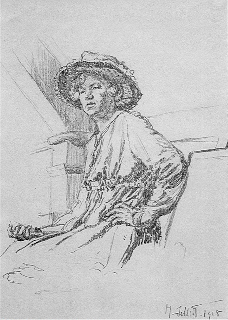
Davidson holds a joint exhibition with Mainie Jellett in 1920, at Mill’s Hall, Merrion Row, Dublin. Jellett produces a pencil portrait of Davison (pictured above), which shows her in a straw hat she frequently wears. The RHA exhibits Davidson’s oil painting, The Flax Pullers, in 1921. This work shows an influence from Paul Henry and French Impressionism in her use of colour-blocking. In the early 1920s, she travels to Switzerland, Belgium, and France, producing works such as Fish Market, Bruges. She lives in Paris in the late 1920s, exhibiting at the Salon de la Societé Nationale in 1924 and 1930. She places a self-portrait in her depiction of a peasant gathering, The Country Races. Reproductions of her drawing of Leinster House and Christ Church Cathedral by Bulmer Hobson are included in A Book of Dublin (1929). Her landscape, Low Tide, Wicklow, which is exhibited at the RHA in 1934, and Boats at Wicklow, Dusk show her ability to depict reflections in water. She continues to paint scenes of rural life, including Cottages – Keel, Achill, which shows an influence from Jack Butler Yeats in her use of space and colour. The fact that her family is not wealthy likely influences her choice of poorer people as her subjects, depicting them in a sympathetic manner. Her work is part of the painting event in the art competitions at the 1928 Summer Olympics.

Davidson’s paintings are exhibited at the Contemporary Picture Galleries, Dublin in 1930, alongside Yeats, Evie Hone, and Harry Kernoff. She is a member of the Picture Hire Club, 24 Molesworth Street, Dublin from 1941 to 1942, and is a frequent contributor to the Munster Fine Arts Club. Her work is exhibited at the Salon des Beaux Arts, Paris, the Royal Academy of Arts, London, and in Amsterdam. A large number of her works from the 1930s show the Irish-speaking area of Galway, Claddagh, such as Night in Claddagh, exhibited with the RHA in 1933. Her Irish landscapes, such as Claddagh Cottages, are included in the Oireachtas Art Exhibitions from 1932 to 1946. From around 1934, she is a member of the Society of Dublin Painters, exhibiting with them from 1939 to 1954. She influences the Society’s move toward the avant-garde in the 1940s. She is elected associate to the RHA in 1940 and continues to exhibit there until her death. Her 1946 work, Gorta, shows influence from Zola, Rilke, Dostoyevsky and Picasso.

Davidson teaches drawing at her studio at 1 Earlsfort Terrace, Dublin. Her pupils include Bea Orpen, Anne Yeats, and Mo Irwin. She also is a teacher at a number of Dublin schools, such as Belgrave school, Rathmines, Wesley College, St. Stephen’s Green, and Castle Park School, Dalkey. She travels to Abbeyleix, County Laois, once a week to teach at Glenbawn boarding school.

As well as painting, Davidson writes a number of plays, short stories, and monologues under a pseudonym, “Ulick Burke.” In 1927, a collection of her poems and Donegal rhymes is published. In 1931, Hilton Edwards directs her stage play Bride, at the Gate Theatre. Her short story, Her Only Son, is published in The Bell under a pseudonym in 1942. In 1935, she is a founder-member of the Torch Theatre, Dublin. She designs scenery, and is the co-director with Hugh Hyland in 1936, under the stage name “Jennifer Maude.”

Davidson dies at her home at 4 Wilton Terrace, Dublin on March 29, 1954. She is buried in an unmarked grave in Mount Jerome Cemetery. The National Gallery of Ireland (NGI) holds her 1938 portrait of Yeats, as well as her crayon drawing of Sarah Purser. She is a regular attendee at Purser’s “Second Tuesdays” gatherings. The Abbey Theatre holds her portrait of Joseph Holloway. She bequeaths The Golden Shawl to the Hugh Lane Gallery, which is a large self-portrait. Two of her works are included in the NGI’s 1987 exhibition, Irish Women Artists from the Eighteenth Century to the Present Day.


Leave a comment

Birth of Máire Ní Chinnéide, Language Activist & Playwright

Máire Ní Chinnéide (English: Mary or Molly O’Kennedy) Irish language activist, playwright, first president of the Camogie Association and first female president of Oireachtas na Gaeilge, is born in Rathmines, an affluent inner suburb on the Southside of Dublin, on January 17, 1879.

Ní Chinnéide attends Muckross Park College and the Royal University of Ireland (later the National University of Ireland) where she is a classmate of Agnes O’Farrelly, Helena Concannon, and Hanna Sheehy-Skeffington. She learns the Irish language on holiday in Ballyvourney, County Cork, and earns the first scholarship in Irish language from the Royal University of Ireland, worth £100 a year, which is spent on visits to the Irish college in Ballingeary.

She studies in the school of Old Irish established by Professor Osborn Bergin and is strongly influenced by the Irish Australian professor O’Daly. She later teaches Latin through Irish at Ballingeary and becomes proficient in French, German, Italian and Spanish.

She spends the last £100 of her scholarship on a dowry for her marriage to Sean MacGearailt, later first Accountant General of Revenue in the Irish civil service, with whom she lives originally in Glasnevin and then in Dalkey.

She is a founder member of the radical Craobh an Chéitinnigh, the Keating branch of Conradh na Gaeilge, composed mainly of Dublin-based Kerry people and regarded, by themselves at least, as the intellectual focus of the League.

In August 1904, some six years after the establishment of the earliest women’s hurling teams, the rules of camogie (then called camoguidheacht), first appears in Banba, a journal produced by Craobh an Chéitinnigh. Camogie had come to public attention when it was showcased at the annual Oireachtas (Conradh na Gaeilge Festival) earlier that year, and it differed from men’s hurling in its use of a lighter ball and a smaller playing-field. Ní Chinnéide and Cáit Ní Dhonnchadha, like Ní Chinnéide, an Irish-language enthusiast and cultural nationalist, are credited with having created the game, with the assistance of Ní Dhonnchadha’s scholarly brother Tadhg Ó Donnchadha, who drew up its rules. She is on the first camogie team to play an exhibition match in Navan, County Meath, in July 1904, becomes an early propagandist for the game and, in 1905, is elected president of the infant Camogie Association.

Ní Chinnéide later serves as Vice-President of Craobh an Chéitinnigh, to Cathal Brugha. She is active in Cumann na mBan during the Irish War of Independence and takes the pro-treaty side during the Irish Civil War and attempts to set up a woman’s organisation “in support of the Free State” alongside Jennie Wyse Power.

She first visits the Blasket Islands in 1932 with her daughter Niamh, who dies tragically young. In the summer of 1934, she puts the idea into Peig Sayers‘s head to write a memoir. According to a later interview with Ní Chinnéide “she knew and admired her gift for easy conversation, her gracious charm as a hostess, her talent for illustrating a point she was making by a story out of her own experience that was as rich in philosophy and thought as it was limited geographically.” Peig answers that she has “nothing to write.” She had learned only to read and write in English at school and most of it has been forgotten.

Ní Chinnéide suggests Peig should dictate her memoir to her son Micheal, known to everyone on the island as An File (“The Poet”), but Peig “only shook her head doubtfully.” At Christmas, a packet arrives from the Blaskets with a manuscript, she transcribes it word for word and the following summer brings it back to the Blaskets to read it to Peig. She then edits the manuscript for the Talbot Press. Peig becomes well known as a prescribed text on the Leaving Certificate curriculum in Irish.

Ní Chinnéide has an acting part in the first modern play performed in Irish on the stage, Casadh an tSugáin by Douglas Hyde in 1901. She is later author of children’s plays staged by An Comhar Drámuidhachta at the Oireachtas and the Peacock Theatre, of which Gleann na Sidheóg and An Dúthchas (1908) are published. She is a broadcaster in Irish on 2RN, a wholly owned subsidiary of Raidió Teilifís Éireann, after its foundation in 1926 and author of a translation of Grimms’ Fairy Tales (1923). She is president of the Gaelic Players Dramatic group during the 1930s and a founder of the Gaelic Writers Association in 1939.

She soon becomes interested in writing children’s plays, including Gleann na Sidheóg (Fairy Glen, 1905) and Sidheoga na mBláth (Flower Fairies, 1909. Although there is little information available on the staging of her first play, by the time her second children’s play, Sidheóga na mBláth, is published in An Claidheamh Soluis in December 1907, “Éire Óg” (“Young Ireland”) branches of Conradh na Gaeilge have been established in conjunction with adults’ branches. Patrick Pearse in particular voices the expectation that this play will be staged by many “Éire Óg” branches “before the New Year is very old,” thus indicating the immediate take up of such plays. Indeed, a week after the play’s publication, it is staged in the Dominican College in Donnybrook, Dublin, where Ní Chinnéide had spent several years as an Irish teacher.

Ní Chinnéide dies on April 25, 1967, and is buried in Dean’s Grange Cemetery.

In 2007 the camogie trophy (Máire Ní Chinnéide Cup) for the annual inter-county All-Ireland Junior Camogie Championship is named in her honour.

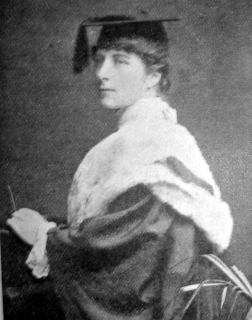
(Pictured: Máire Ní Chinéide at her graduation, photograph from Banba, 1903)


Leave a comment

Death of Actress Betty Chancellor

Betty Chancellor, Irish actress, dies in Dún Laoghaire, County Dublin, at the age of 74 on April 27, 1984.

Chancellor is born at 8 Fitzwilliam Place, Dublin, on January 9, 1910. Her parents are John William Chancellor, a Dublin clockmaker, jeweler, and photographer, and Cicely Chancellor (née Granger). They marry in Billericay, Essex, in 1904. She has an elder sister, Joyce Fanny, who also becomes an actress. She attends Nightingale Hall and Alexandra College, going on to train as a secretary.

Chancellor’s first appearance on stage is as a fairy in a benefit performance at the Gaiety Theatre in 1914. She appears again at the Gaiety in 1922 as Gwennie in F. Anstey‘s The Man from Blankley’s, and then studies drama under Frank Fay. In the 1920s, she acts in the Dublin Drama League’s productions in the Abbey Theatre. Once she joins the Gate Theatre her career progresses, establishing her as one of the principal actresses in the Gate by the early 1930s.

Chancellor plays Naomi alongside Orson Welles in a production of Jud Süss in October 1931. Welles becomes infatuated with her and later describes her as “the sexiest thing that ever lived.” In 1931, she debuts in J. B. Fagan‘s production of The New Gossoon by George Shiels as Biddy Henley at the Apollo Theatre. Her most noted roles are as Toots in Youth’s the Season in 1932 by Mary Manning, Laura in a production of Carmilla in 1932, based on the Gothic novella by Sheridan Le Fanu, Ophelia in 1932 and Cicely in The Importance of Being Earnest in 1933. Touring with the Gate company in 1935, she plays Stella in its production of Lord Longford‘s Yahoo performed in the Westminster Theatre, London. She stars with James Mason in the Gate’s production of Pride and Prejudice in 1937. Disappointed with the parts she is getting at the Gate after that and much to the annoyance of Micheál Mac Liammóir and Hilton Edwards, she joins Lord Longford’s first provincial tour in 1937.

In the late 1930s, Chancellor works more often in London. Following her appearance as Baby Furze in the 1938 production of Spring Meeting by Molly Keane and John Perry, she is nominated as “Star of the Future” by the Daily Mail. She acts alongside Alec Guinness and Peggy Ashcroft in 1940 in Clemence Dane‘s Cousin Muriel at the Globe Theatre, directed by John Gielgud.

Chancellor returns to the Gaiety Theatre in 1941 to act with Hilton Edwards in a production of Caesar and Cleopatra by George Bernard Shaw, a production that marks the 75th anniversary of the Gaiety. The press welcomes her return to the company, but her fellow actors are disturbed by the fact she is then living with Denis Johnston, the husband of fellow actress Shelah Richards. After Johnston’s divorce, they marry in March 1945 in Dungannon, County Tyrone. She partly retires from acting to raise their sons, but also due to her increasing deafness that had begun in her teens.

In 1947, Chancellor appears in Johnston’s The Moon in the Yellow River at the Arts Theatre in London with Jack Hawkins. The family moves to the United States in November 1948, where she has the lead role in Shaw’s Candida at Amherst College, Massachusetts in 1950.

In 1969, Chancellor returns to Ireland with her family and settles in Dalkey, County Dublin. She dies in Dún Laoghaire on April 27, 1984, and is buried in the close of St. Patrick’s Cathedral, Dublin.


Leave a comment

Birth of Theatre Producer Pádraig Cusack

Pádraig Cusack, Irish theatre producer who has worked with the National Theatre of Great Britain, the Abbey Theatre in Dublin, the National Centre for the Performing Arts (NCPA) in Mumbai and numerous international festivals, is born on March 16, 1962, in Dalkey, County Dublin.

Cusack, the youngest son of the Irish actor Cyril Cusack and actress Maureen Cusack, is the brother of actresses Niamh Cusack, Sinéad Cusack and Sorcha Cusack, and half-brother of Catherine Cusack. He has one brother, Paul Cusack, who is a television producer. He is married and has two daughters, Megan, an actress, who in 2020 joins the leading cast in the Netflix/BBC popular series Call the Midwife in the recurring role of Nurse Nancy Corrigan, and Kitty, a psychology student. Two of his nephews are also actors, Max Irons and Calam Lynch.

Cusack is educated bi-lingually in Irish and English, initially at Scoil Lorcáin in Monkstown, County Dublin, and subsequently at Coláiste Eoin, Booterstown, County Dublin. He is a Taylor Exhibition music scholar at Trinity College Dublin (TCD), before winning a scholarship to train to be a professional cellist at the Royal Northern College of Music in Manchester, England. In 1995, he returns to education to take a post-graduate degree in Business at University College Cork (UCC).

Having begun his career as a freelance musician, playing with the BBC Philharmonic orchestra and English National Opera North, an accident ends Cusack’s career as a musician, resulting in him pursuing a career in arts administration. Initially he focuses on the classical music sector, working at two leading concert venues in London, the Wigmore Hall and the Southbank Centre.

In 1992, Cusack makes his first move into theatre following his appointment as Administrative Director of West Yorkshire Playhouse in Leeds, alongside Jude Kelly, where he produces a number of plays including the touring production of Five Guys Named Moe for Cameron Mackintosh Limited. In 1996, he is appointed Head of Planning of the Royal National Theatre under the outgoing artistic director, Sir Richard Eyre, and subsequently with Sir Trevor Nunn and Sir Nicholas Hytner. In 2009, he becomes the National Theatre’s Associate Producer. During this period, he produces numerous productions for tour both in the UK and internationally, taking the work of the National Theatre to five continents. Alongside this, he works as a touring consultant for the Abbey Theatre in Dublin, the Royal Court Theatre, London, Fiery Angel in London’s West End, Canadian Stage in Toronto, Bangarra Dance Theatre in Sydney, TheEmergencyRoom and Corn Exchange in Dublin and Galway International Arts Festival. In June 2016, he is appointed Executive Producer of Wales Millennium Centre in Cardiff. In addition to this, he is Consultant Producer to the National Centre for the Performing Arts (India) in Mumbai.

As well as his theatre producing work, Cusack offers representation to a number of Irish artists including the director Annie Ryan, the composer Mel Mercier and the British playwright Matt Wilkinson.

In 2023, Cusack is the recipient of the Olwen Wymark Award from the Writers’ Guild of Great Britain for his championing of new writing which is presented at the 18th Annual Awards Ceremony in London.


Leave a comment

Birth of Irish Actress Sinéad Cusack

Sinéad Moira Cusack, award winning Irish actress, is born Jane Moira Cusack in Dalkey, County Dublin, on February 18, 1948.

Cusack is the daughter of actress Maureen Cusack and actor Cyril Cusack. She is the sister of actresses Sorcha Cusack, Niamh Cusack, and half-sister to Catherine Cusack. Her father is born in South Africa, to an Irish father and an English mother, and had worked with Micheál Mac Liammóir at Dublin‘s Gate Theatre.

Cusack’s first acting roles are at the Abbey Theatre in Dublin. In 1975, she moves to London and joins the Royal Shakespeare Company (RSC) starring in Dion Boucicault‘s London Assurance in the West End. Her work with the RSC continues with an award-winning performance as Celia in As You Like It which includes the Clarence Derwent Award and her first Laurence Olivier Award nomination. She secures a second Olivier Award nomination for her performance in The Maid’s Tragedy by Francis Beaumont and John Fletcher in 1981, followed two years later with a third Olivier Award nomination as Kate in The Taming of the Shrew.

Cusack makes her Broadway debut in 1984 performing in repertory with the Royal Shakespeare Company. Starring opposite Derek Jacobi, she plays Roxane in Anthony Burgess‘s translation of Edmond Rostand‘s Cyrano de Bergerac and Beatrice in William Shakespeare‘s Much Ado About Nothing, directed by Terry Hands. Much Ado is first produced at the Royal Shakespeare Theatre in Stratford-upon-Avon in 1982–83, then moves to London’s Barbican Centre for the 1983–1984 season where it is joined by Cyrano, before both plays transfer to New York‘s Gershwin Theatre from October 1984 to January 1985, for which Cusack received a Tony Awards nomination for her performance as Beatrice, and costar Derek Jacobi wins the award for his Benedick. The production of Cyrano de Bergerac is later filmed in 1985.

During this period, Cusack and her husband, Jeremy Irons, appear in a Shakespeare Winter’s Eve, a major fundraiser for the Riverside Shakespeare Company in New York, along with other members of the Royal Shakespeare Company. Following the Broadway run, the plays tour the United States, making stops in Washington, D.C. and Los Angeles. Her connection with the Royal Shakespeare Company continues with a series of leading roles include Portia in The Merchant of Venice opposite David Suchet, Lady Macbeth opposite Jonathan Pryce in Macbeth and Cleopatra in Antony and Cleopatra in Stratford-upon-Avon and at London’s Theatre Royal Haymarket in the West End.

In 1990, Cusack, in the role of Masha, joins two of her sisters, Niamh (as Irina) and Sorcha (as Olga), and her father, Cyril Cusack (as Chebutykin) for a well-received production of Anton Chekhov‘s tragicomedy Three Sisters in a new version by Frank McGuinness, directed by Adrian Noble at the Gate Theatre, Dublin, before transferring to the Royal Court Theatre in London. The production also features Niamh’s husband, Finbar Lynch, as Solenyi and Lesley Manville as Natasha. The production wins the three real-life sisters the Irish Life Award in 1992.

One of Cusack’s best known stage roles is Our Lady of Sligo by Sebastian Barry in 1998, in which she plays the principal role of Mai O’Hara in performances in Ireland, on Broadway and at the National Theatre. For this she wins the 1998 Evening Standard Theatre Award for Best Actress, the 1998 Critics’ Circle Theatre Award for Best Actress and her fourth Olivier Award nomination for Best Actress. In 2006-07 she stars with Rufus Sewell in Tom Stoppard‘s Rock ‘n’ Roll at the Royal Court Theatre in London which transfers to the West End and Broadway, winning Cusack her fifth Olivier Award nomination and her second Tony Award nomination.

In 2015, Cusack returns to Ireland’s Abbey Theatre, where she begins her theatre career. She appears in the world première of Mark O’Rowe‘s play Our Few and Evil Days, acting opposite long-time collaborator Ciarán Hinds. She wins the Irish Times Irish Theatre Award for Best Actress.

Cusack stars with Peter Sellers in the film Hoffman (1970). She guest stars in an episode of The Persuaders! (1971), a TV series starring Tony Curtis and Roger Moore, as Jenny Lindley, a wealthy heiress who suspects that a man claiming to be her dead brother is in fact an impostor. In 1975, she makes three appearances in the TV series Quiller as the character Roz.

Cusack and her husband appear together in the film Waterland (1992), in a television adaptation of Christopher Hampton‘s Tales from Hollywood (also 1992), and again in Bernardo Bertolucci‘s Stealing Beauty (1996). Further film work includes Passion of Mind (2000), V for Vendetta (2005), and Eastern Promises (2007), a thriller directed by David Cronenberg. Her performance in The Tiger’s Tail (2007) wins her a first Irish Film & Television Academy (IFTA) Award nomination for Best Actress in a Supporting Role. She wins the IFTA Award for her performance in The Sea (2013), adapted from the novel by John Banville. She is nominated once more for an IFTA Award for her performance in John Boorman‘s drama film Queen and Country (2014), which premières at the Cannes Film Festival.

Further starring roles include lead roles in Oliver’s Travels (1995), Have Your Cake and Eat It (1997) for which Cusack wins the Royal Television Society‘s RTS Award for Best Actress and Frank McGuinness’s The Hen House (1989) for BBC Television. She stars in the title role of George du Maurier‘s Trilby (1976), in an adaptation for the BBC’s Play of the Month, with Alan Badel as Svengali. She also stars in the BBC mini-series North & South (2004, from the novel by Elizabeth Gaskell) as Mrs. Thornton. She stars in the BBC sitcom Home Again (2006) and appears in the TV series Camelot (2011), which runs for one season. She has featured roles in the mini-series The Deep (2014) and the series Marcella (2016), an eight-episode murder mystery.

Along with other actresses, including Paola Dionisotti, Fiona Shaw, Juliet Stevenson and Harriet Walter, Cusack contributes to a book by Carol Rutter called Clamorous Voices: Shakespeare’s Women Today (1994). The book analyses modern acting interpretations of female Shakespearean roles.

Cusack marries British actor Jeremy Irons in 1978, and they have two sons, Samuel James and Maximilian Paul. Prior to marrying Irons, she gives birth to a son in 1967 and places the boy for adoption. In 2007, a journalist for the Irish Sunday Independent, Daniel McConnell, reveals that Cusack is the mother of left-wing general election candidate and now member of Irish parliament Richard Boyd Barrett. The two have since been reunited.

Cusack is a patron of the Burma Campaign UK, the London-based group campaigning for human rights and democracy in Burma. In 1998, she is named, along with her husband, in a list of the biggest private financial donors to the British Labour Party. In August 2010, she signs the “Irish artists’ pledge to boycott Israel” initiated by the Palestine Solidarity Campaign.

(Pictured: Sinéad Cusack reciting poetry for the British Library in October 2021)


Leave a comment

Birth of Patrick Campbell, 3rd Baron Glenavy

Patrick Gordon Campbell, 3rd Baron Glenavy, Irish journalist, humorist and television personality, is born in Dublin on June 6, 1913. He writes sixteen books, including Life in Thin Slices, Rough Husbandry, and How to Become a Scratch Golfer.

Campbell is the first son of Charles Campbell, 2nd Baron Glenavy, and Beatrice, Lady Glenavy (the artist Beatrice Elvery). He is educated Crawley’s preparatory school (St. Stephen’s Green, Dublin), Castle Park preparatory school (Dalkey), Rossall School (Lancashire), and, briefly, Pembroke College, Oxford. He leaves Oxford without completing his degree. In 1935, he is taken on by The Irish Times by R. M. “Bertie” Smyllie and reports on “Courts Day by Day.” During World War II, he serves as a chief petty officer in the Irish Marine Service. After the war he re-joins The Irish Times, using the pseudonym “Quidnunc,” and is given charge of the column “Irishman’s Diary.” He has a weekly column for the Irish edition of the Sunday Dispatch before working on the paper in London from 1947 to 1949. He is assistant editor of Lilliput from 1947 to 1953. His writings also appear in The Sunday Times.

Campbell’s books, mostly collections of humorous pieces that were originally published in newspapers and magazines, include A Long Drink of Cold Water (1949), A Short Trot with a Cultured Mind (1950), An Irishman’s Diary (1950), Life in Thin Slices (1951), Patrick Campbell’s Omnibus (1954), Come Here Till I Tell You (1960), Constantly in Pursuit (1962), How to Become a Scratch Golfer (1963), Brewing Up in the Basement (1963), Rough Husbandry (1965), The P-P-Penguin Patrick Campbell (1965), All Ways on Sundays (1966), A Bunch of New Roses (1967), an autobiography My Life and Easy Times (1967), The Coarse of Events (1968), Gullible Travels (1969), The High Speed Gasworks (1970), Waving All Excuses (1971), Patrick Campbell’s Golfing Book (1972), Fat Tuesday Tails (1972), 35 Years on the Job (1973), and The Campbell Companion (1987). Many of his books are illustrated by Quentin Blake.

Campbell is married three times, first in 1941 to Sylvia Alfreda Willoughby Lee, whom he divorces in 1947. He then marries Chery Louise Munro in 1947. The two divorce in 1966, the year he marries Vivienne Orme.

Campbell speaks with a stammer, but nevertheless delights television audiences with his wit, notably as a regular team captain on the long-running show Call My Bluff, opposite his longtime friend, Frank Muir. Muir notes that “When he was locked solid by a troublesome initial letter he would show his frustration by banging his knee and muttering ‘Come along! Come along!'” Some of his funniest short stories describe incidents involving his stammer. He stands six feet five inches tall, and several of his funniest pieces deal with the problems faced by a man of his build in merely finding shoes or clothes that fit him. He also makes regular appearances in That Was The Week That Was.

Campbell lives for many years in the South of France, commuting to England for his television work and continuing to produce his weekly column in The Sunday Times, which he drops in 1978.

In 1972 a period of illness leads to the discovery that Campbell had suffered an undetected heart attack some years previously and has a permanent heart weakness. An attack of viral pneumonia in 1980 exacerbates this condition, and he dies suddenly on November 9, 1980 while talking to a nurse at University College Hospital, London. He is succeeded as the 4th and last Lord Glenavy by his novelist brother Michael.


Leave a comment

Birth of Novelist Pamela Hinkson

Pamela Hinkson, novelist, is born on November 19, 1900, in Ealing, London, England, the only daughter among five children of Katharine Tynan Hinkson, novelist and poet, and Henry Albert Hinkson, a novelist, barrister, and classical scholar.

Married in 1893, Hinkson’s parents initially settle in England, where he studies law and is called to the Inner Temple in 1902. After suffering the loss of their first two sons in infancy, they have two more sons in addition to their daughter, Pamela. During this time her mother earns the main family income, and it is likely that she determines their return to Ireland in 1911. The Hinksons initially settle in Dalkey, County Dublin, before moving to a house called Clarebeg in Shankill. When Henry Hinkson is appointed resident magistrate for south Mayo (Castlebar) in October 1914, the family moves to Claremorris, County Mayo.

Hinkson is educated privately in England and on the Continent, and in Ireland attends a local convent day-school. She is exposed to her mother’s literary milieu which includes prominent writers of the Irish revival, including George William Russell, James Stephens, and Padraic Colum. Her mother’s memoir, The Years of the Shadow (1919), recalls Pamela’s developing talent for writing poetry and her predilection for war themes, as evidenced by The Blind Soldier, one of her first published poems. By the time she turns her hand to short stories, her earnings from writing enable her to buy the latest fashions.

Two key events that consumed Hinkson’s life and later spark her creativity are World War I and the Easter Rising. H. G. Wells describes in the foreword to his war novel Mr. Britling Sees It Through (1916) a conversation he had with her when she was 12, recalling how she had boldly set him straight on the “Irish question.” Her parents send her away to boarding school in County Wicklow in the hope that she will be distracted from her gloomy preoccupations, which are accentuated by the absence of her brothers, serving in the British Army. After the war she is deeply concerned by the redundancy experienced by demobilised and often maimed soldiers and contributes to the welfare work of the Irish servicemen’s Shamrock Club in London. These issues inform two early novels, The Victors (1925) and Harvest (1926), both written in the guise of an ex-serviceman under the pseudonym “Peter Deane.” By masking her identity, she avoids the possibility of her works being discredited because of her gender and lack of first-hand experience of war. Subsequently she writes under her own name for thirty years.

In contrast to her close relationship with her mother, Hinkson deeply dislikes her father. With the exception of her beloved brother Giles A. Hinckson, a correspondent for The Times in Buenos Aires and Santiago, she never meets a man who matches her high ideals. Though briefly engaged to be married, she is ultimately disillusioned by all men, dismissing them as she had her father. After his death early in 1919, she and her mother are left in financial difficulties, and have to resort to friends and boarding houses for accommodation. Without the financial means to embark on a university degree, she remains at her mother’s side. Though she continues to write, she leads a somewhat stifled life. From 1922 onwards they spend several years on the Continent.

Hinkson’s first novel, The End of All Dreams (1923), addresses the decline of the “big house” amid the revolutionary upheavals of recent Irish history, a theme to which she returns in later works, such as The Deeply Rooted (1935) and her last book, The Lonely Bride (1951). During the 1920s she writes much girls’ school fiction, while her novel Wind from the West (1930) is informed by a period spent in France, where she works as a governess. Her transcription of the memoirs of Lady Fingall (Elizabeth Burke-Plunkett), published under the title Seventy Years Young (1937), illustrates the decline of the Anglo-Irish ascendancy. Informed by war and the Irish troubles, her novels characteristically are solemn, and reflect her ambivalent relationship with Ireland. Inspired by the Irish landscape, but never an ardent supporter of Irish independence, she maintains an abiding attachment to England.

The death of Hinkson’s mother in 1931 is a devastating blow that triggers her most forceful and first truly successful novel, The Ladies’ Road (1932). Documenting the lives of the Irish and English ascendancies before, during, and after World War I, this novel, without being explicitly autobiographical, contains many motifs that resonate with her own life story. When published in the United States in 1946 it proves a massive success, selling 100,000 copies in the Penguin Books edition, a rare feat for a World War I novel appearing immediately after World War II. Other notable works are The Light on Ireland (1935) and her sketches of Irish life, Irish Gold (1939), written while she lodges with friends near Lough Derg, County Tipperary.

Hinkson’s visit to India in the late 1930s as a guest of the viceroy, which she recounts in Indian Harvest (1941), results in her appointment to the Ministry of Information in London (1939–45). She lectures on India in the United States during World War II, and also lectures to British troops and local audiences in Germany (1946–47), broadcasts on radio, and contributes to The Observer, The Spectator, New Statesman, The Manchester Guardian, and Time and Tide. Her novel Golden Rose (1944), written in London during The Blitz, romanticises the British colonial presence in India. Forthright in the expression of her numerous strongly held opinions, she argues ardently and controversially for women’s rights, animal welfare, and retention of Northern Ireland in the UK. Devout in her Catholicism, she is none the less critical of certain Catholic precepts.

Hinkson returns to Ireland in 1959 where she suffers poor health for twenty years until her death in Dublin on May 26, 1982.

(From: “Hinkson, Pamela” by Jessica March, Dictionary of Irish Biography, http://www.dib.ie)


Leave a comment

Birth of Margaret Hassan, Irish-born Aid Worker in Iraq

Margaret Hassan, Irish-born aid worker also known as “Madam Margaret,” is born Margaret Fitzsimons in Dalkey, County Dublin on April 18, 1945. She works in Iraq for many years until she is abducted and murdered by unidentified kidnappers in Iraq in 2004. Her remains have never been recovered.

Soon after the end of World War II Hassan’s family moves to London, where she spends most of her early life and where her younger siblings are born. At the age of 27, she marries Tahseen Ali Hassan, a 29-year-old Iraqi studying engineering in the United Kingdom. She moves to Iraq with him in 1972, where she begins work with the British Council of Baghdad, teaching English. Eventually she learns Arabic and becomes an Iraqi citizen.

During the early 1980s, Hassan becomes the assistant director of studies at the British Council, later becoming director. Meanwhile, her husband works as an economist. She remains in Baghdad during the 1991 Gulf War, although the British Council suspends operations in Iraq, and she is left jobless at the end of it.

Hassan joins humanitarian relief organisation CARE International in 1991. Sanitation, health, and nutrition become major concerns in the sanctioned Iraq. She is crucially involved in bringing leukemia medicine to child cancer victims in Iraq in 1998. She becomes a vocal critic of the United Nations restrictions. She is opposed to the United States invasion of Iraq in 2003, arguing that the Iraqis are already “living through a terrible emergency. They do not have the resources to withstand an additional crisis brought about by military action.”

By 2004, Hassan is head of Iraqi operations for CARE. Well known in many of Baghdad’s slums and other cities, she is especially interested in Iraq’s young people, whom she calls “the lost generation.” Her presence draws large crowds of locals.

Hassan is kidnapped in Baghdad on October 19, 2004, and is killed some weeks later on November 8. In a video released of her in captivity she pleads for help and begs British Prime Minister Tony Blair to remove British troops from Iraq. She adds that she does not “want to die like Mr. Bigley,” a reference to Kenneth Bigley, who had been executed in Iraq only weeks earlier.

Patients of an Iraqi hospital take to the streets in protest against the hostage takers’ actions. On October 25, between 100 and 200 Iraqis protest outside CARE’s offices in Baghdad, demanding her release. Prominent elements of the Iraqi insurgency and Iraqi political figures condemn the kidnapping and call for her release. On November 2, Al Jazeera reports that the kidnappers threatened to hand her over to the group led by Abu Musab al-Zarqawi and who is responsible for the execution of Bigley. On November 6, a statement purportedly from al-Zarqawi appears on an Islamist website calling for the release of Hassan unless the kidnappers have information she is aligned with the invading coalition. The statement cannot be authenticated and Hassan’s whereabouts in the video are unknown.

On 15 November, U.S. Marines in Fallujah uncover the body of an unidentified blonde- or grey-haired woman with her legs and arms cut off and throat slit. The body cannot be immediately identified, but is thought unlikely to be Hassan, who has brown hair. There is one other western woman known missing in Iraq at the time the body is discovered, Teresa Borcz Khalifa, a Polish-born long-time Iraqi resident. Khalifa is released by her hostage takers on November 20.

On November 16, CNN reports that CARE has issued a statement indicating that the organisation is aware of a videotape showing Hassan’s execution. Al-Jazeera reports that it has received a tape showing Hassan’s murder but is unable to confirm its authenticity. The video shows Hassan being shot with a handgun by a masked man. It is not known who is responsible for Hassan’s abduction and murder. The group holding her never identifies itself in the hostage videos.

She remains a Roman Catholic throughout her life and never converts to Islam as is widely reported after her death. A Requiem Mass is held for her, after her death is confirmed, at Westminster Cathedral by Cardinal Cormac Murphy-O’Connor.

CARE International suspends operations in Iraq because of Hassan’s kidnapping. At least eight other women kidnapped by insurgents during the conflict are released unharmed by their captors. It is unclear why Hassan, who was opposed to the war, lived in Iraq for many years, held Iraqi citizenship, was married to an Arab Muslim and spoke fluent Arabic was killed.

On May 1, 2005, three men are questioned by Iraqi police in connection with the murder. On June 5, 2006, news reports emerge that an Iraqi man by the name of Mustafa Salman al-Jubouri has been sentenced to life imprisonment for “aiding and abetting the kidnappers” but two other men are acquitted. Al-Jubouri appeals this sentence and is given a shorter imprisonment.

An Iraqi man named Ali Lutfi Jassar al-Rawi, also known as Abu Rasha, an architect from Baghdad, is arrested by Iraqi and U.S. forces in 2008 after contacting the British Embassy in Baghdad and attempting to extort 1 million dollars in return for disclosing the location of Hassan’s body. Though Jassar signs statements confessing to the charges, he pleads not guilty, stating he was forced to sign them after receiving beatings and electrical shocks during questioning.

On June 2, 2009, the Press Association reports that Jassar is given a life sentence by Baghdad’s Central Criminal Court for being involved in Hassan’s abduction and murder, and for attempting to blackmail the British Embassy. Hassan’s family welcomes the court’s decision but pleads with Jassar to tell them where her body is so they can return her to Britain for burial. On July 14, 2010, a day before Jassar is due to appear in court for retrial, it is reported that he could not be located in the prison facility where he was being held. He had been missing for a month.