seamus dubhghaill

Promoting Irish Culture and History from Little Rock, Arkansas, USA


2 Comments

Birth of Anna Haslam, Campaigner for Women’s Rights

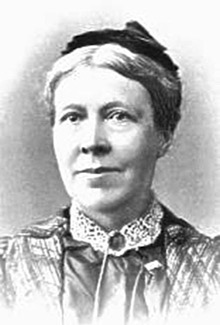
Anna Maria Haslam (née Fisher), a suffragist and a major figure in the 19th and early 20th century women’s movement in Ireland, is born in Youghal, County Cork, on April 6, 1829.

Fisher is the sixteenth of seventeen children to Jane and Abraham Fisher. The Fishers are a Quaker family with a business in Youghal. They are noted for their charitable works, especially during the Great Famine.

Fisher helps in soup kitchens and becomes involved in setting up cottage industries for local girls in lace-making, crocheting and knitting. She is brought up believing in equality for men and women and also supporting the campaign against slavery and for temperance and pacifism. She attends Quaker boarding schools, Newtown School in County Waterford and Castlegate School in York, England, which later becomes The Mount School, York. She then becomes a teaching assistant in Ackworth School, Yorkshire. She meets Thomas Haslam who is teaching there and who is from Mountmellick, County Laois. He is born into a Quaker family in 1825. He is a feminist theorist and from 1868 he write about many topics concerning female rights and issues such as prostitution, birth control and women’s suffrage.

Fisher and Haslam marry on March 20, 1854, in Cork Registry Office. Their marriage is mainly celibate as a result of them not wanting to have children. In later writings Thomas argues in favour of chastity for men. The couple shares a belief in equality for men and women and he supports her campaigns.

Both of the Haslams are expelled from the Society of Friends due to their interests in social reform but both maintain links with the community. Thomas is said to have been disowned for harbouring ideas contrary to Quaker teachings. In 1868, he publishes a pamphlet called “The Marriage Problem,” in which he raises and supports the idea of family limitation and outlines a number of contraceptive methods including the safe period. He dies on January 30, 1917, in his ninety-second year.

Haslam is best remembered today for her work for votes for women. She is a pioneer in every 19th century Irish feminist campaign and fights for votes for women from the year 1866. In 1872, she organises the “General Meeting of the members and friends of the Irish Society for Women’s Suffrage” in Blackrock, Dublin, which is chaired by George Owens and attended by MPs Maurice Brooks (a Home Ruler) and William Johnston (a northern Orangeman) and by the future Liberal Unionist Party MP Thomas Spring Rice, 2nd Baron Monteagle of Brandon. The Haslams are founding members of the Dublin Women’s Suffrage Association (DWSA) in 1876. This marks the start of a remarkable campaign in Dublin for votes for women. Haslam, along with the writing of her husband, continues the campaign and in 1896 women in Ireland win the right to be elected as Poor Law Guardians, members of the official bodies which administer the Poor Law. Ireland’s early women’s rights activists have a close relationship with their English correlatives and share the same discrimination in education, employment, sexual freedom and political participation. The DWSA organises the introduction of a private member’s bill to remove disqualification “by sex or marriage” for election or serving as a poor law guardian. The bill passes in 1896 and the association immediately writes to the newspapers and publishes leaflets explaining the process on how to register to vote and stand for election and encouraged qualified women to go forward as candidate.

By 1900, there are nearly 100 women guardians. Haslam then leads a campaign to encourage qualified women to stand for election in 1898. Women win eligibility to vote in local government elections, and to stand for elections as rural and urban district councillors. In 1913, she steps down as secretary of the Association and is elected life-president.

One of Haslam’s longest campaigns, working alongside the Belfast suffragist Isabella Tod, is for repeal of the Contagious Diseases Acts of 1864. The acts allow for state regulation of prostitutes in areas in which the army is stationed. The act permits compulsory internment of women for up to three months, which is later extended to one year. Medical treatment is also enforced on the women. The act seeks only to reduce the spread of sexually transmitted diseases among the military. She opposes the act as she feels it legitimises prostitution, commoditises women and undermines family life. It is finally repealed following eighteen years of campaigning.

Haslam is involved in the 1866 petition and gathers 1,499 signatures to extend suffrage to women as well as men. In 1867, male suffrage is extended but it is not until 1911 that the Suffrage movement achieves the significant victory of securing the right of women to stand for election as local councillors.

In 1918, a woman of almost ninety, Haslam goes to the polls “surrounded by flowers and flags,” with women who unite in her honour to celebrate the victory of the vote. This display of unity by activist women from all shades of political opinion acknowledge her role in the fight for the right to vote. The same year in which she dies, in 1922, the Irish Free State extends the vote to all men and women over the age of 21.

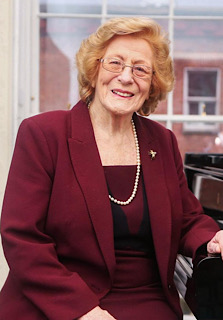
Haslam dies on November 28, 1922, at her home in Carlton Terrace, Dublin, of “cardiac dropsy” at the age of 93. She is buried next to her husband in the Quaker burying ground at the Friends Burial Ground in Temple Hill, Blackrock, Dublin.

A memorial seat to Anna and Thomas Haslam is erected in 1923 in St. Stephen’s Green, Dublin, with the inscription “in honour of their long years of public service chiefly devoted to the enfranchisement of women.” 

Haslam’s name and picture, as well as those of 58 other women’s suffrage supporters, are on the plinth of the statue of Millicent Fawcett in Parliament Square, London, unveiled in 2018.

Leave a comment

Death of Veronica Dunne, Operatic Soprano & Voice Teacher

Veronica Dunne, Irish operatic soprano and voice teacher also known as Ronnie Dunne, who is described as “an Irish national treasure,” dies on April 5, 2021. After a successful operatic career at the Dublin Opera and the Royal Opera House in London, she focuses on voice teaching in Dublin, where she trains future international singers. The triennial Veronica Dunne International Singing Competition is established in 1995. She receives the National Concert Hall Lifetime Achievement Award in 2014.

Dunne is born in Dublin on August 20, 1927. She is the youngest of three children of a well-to-do family. Her father works as a master builder whose construction firm builds the church in Foxrock, Dublin, in the early 1930s. She begins singing when she is 11 years old. She studies initially in Dublin with Hubert Rooney. She then sells her pony for £125 in order to fund her dream of studying music in Italy. She goes to Rome in 1946 to study with Soldini Calcagni and Francesco Calcatelli. Her family meets with Sarsfield Hogan, the secretary of the Department of Finance at the time, to discuss the issue of her monthly allowance, which would breach foreign exchange controls. Sarsfield permits her to receive the money on the condition that she return to Ireland in the future and teach her young compatriots to sing.

Dunne makes her operatic debut in Dublin in 1948 as Micaëla in Georges Bizet‘s Carmen with the Dublin Grand Opera Society, and appears there in 1949 as Marguerite in Charles Gounod‘s Faust. She wins the Concorso Lirico Milano in 1952, which brings her the role of Mimì in Ruggero Leoncavallo‘s La bohème at the Teatro Nuovo in Milan, which in turn brings her a contract from the Royal Opera House in London, where she first appears as Sophie in Der Rosenkavalier by Richard Strauss. She performs at the house alongside Joan Sutherland and Kathleen Ferrier. In 1958, she appears as Blanche in the first performance at the house of Francis Poulenc‘s Dialogues of the Carmelites. She also performs with the Welsh National Opera, Scottish Opera, and Wexford Festival Opera. She returns to the stage in 2002 to appear as Countess in Pyotr Ilyich Tchaikovsky‘s The Queen of Spades at the Gaiety Theatre in Dublin.

Dunne gives a number of world premieres of works by contemporary Irish composers including Never to Have Lived is Best (1965) by Seóirse Bodley, as well as Irish Songs (1971) and The Táin (1970) by James Wilson.

Dunne is appointed a voice teacher at the then Dublin College of Music (today Technical University Conservatory of Music and Drama) in 1962. She is awarded an honorific doctorate in 1987. She retires in 1992, but continues to teach at the Leinster School of Music and the Royal Irish Academy of Music. Her students include Patricia Bardon, Orla Boylan, Mary Brennan, Tara Erraught, Lynda Lee, Colette McGahon, Anthony Kearns, Suzanne Murphy, and Finbar Wright, who have all sung in the major international opera houses. In 2014, at the age of 87, she continues to teach 39 hours per week.

The triennial Veronica Dunne International Singing Competition, established by the Friends of the Vocal Arts in Ireland in 1995, awards bursaries in her name. Recipients included Orla Boylan, Sarah-Jane Brandon, Tara Erraught, Pumeza Matshikiza and Simon O’Neill. She receives the National Concert Hall Lifetime Achievement Award in 2014.

Dunne marries Peter McCarthy in 1953. The couple has two children.

Dunne dies at the age of 93, on April 5, 2021. Irish President Michael D. Higgins pays tribute to Dunne, saying that she “captivated millions with her singing” and adding, “The legacy she leaves lies in the talents of those scores of others whose talents and performances she unlocked with her enthusiasm, energy and commitment as a teacher and friend.”


Leave a comment

Death of Walter Beckett, Composer & Music Critic

Walter Beckett, Irish composer, teacher and music critic, dies in Dublin on April 3, 1996. He is a cousin of the writer Samuel Beckett.

Beckett is born in Dublin on July 27, 1914. He studies organ with George Hewson and harmony with John Francis Larchet at the Royal Irish Academy of Music (RIAM), in addition to music at Trinity College Dublin (TCD) where he is conferred with a Mus.D. (Doctor of Music) in 1942. He lives from 1946 to 1963 in Venice, where he teaches English and piano. He also writes reviews from abroad for The Irish Times and makes a series of orchestral arrangements of Irish traditional music for Radio Éireann.

In addition to Beckett’s activity as a music critic for The Irish Times, he also writes biographical articles for dictionaries, in particular for the first edition of Die Musik in Geschichte und Gegenwart. His books include studies on Franz Liszt and ballet music.

Beckett’s more ambitious musical works from the 1940s and 1950s are a Suite for Orchestra (1945), Four Higgins Songs (1946), The Falaingin Dances (1958) and a Suite of Planxties (1960) for harp and orchestra.

In 1963 Beckett moves to England, where he teaches music at various schools before returning to Ireland in 1970 to succeed A. J. Potter at the RIAM as professor of harmony and counterpoint. In the 1980s he produces a number of remarkable works such as Quartet for Strings (1980) and Dublin Symphony (1989) for narrator, chamber choir and large orchestra. While he is never a modernist, his later works nevertheless contain some advanced harmony, particularly in the quartet.

Beckett is forced to retire from the RIAM in 1985 after suffering a stroke. In 1986 he is elected a member of Aosdána and an Honorary Fellow of the RIAM in 1990. He dies in Dublin on April 3, 1996. He is buried in Rathnew Cemetery, County Wicklow.


Leave a comment

Birth of Graham Shillington, Northern Irish Police Officer

Sir Robert Edward Graham Shillington CBE, a senior Northern Irish police officer, is born on April 2, 1911, in Portadown, County Armagh. He serves as Chief Constable of Royal Ulster Constabulary (RUC) from 1970 to 1973.

Shillington is the youngest of six children born to Major David Graham Shillington, who goes on to become a Member of the Parliament of Northern Ireland, and Sarah Louisa (née Collen). He is educated at Castle Park School, a preparatory school in Dublin, and Sedbergh School, a public boarding school in Sedbergh, Cumbria, North West England. He then attends Clare College, Cambridge, where he studies natural sciences. He graduates Bachelor of Arts (BA) in 1932.

Shillington originally plans to join the Northern Ireland Civil Service, however he wants a more varied career. He joins the Royal Ulster Constabulary on February 8, 1933, as a cadet officer. He completes his training at the Newtownards depot in County Down. He is promoted to district inspector in 1935, and serves as officer in charge of D District in Belfast. In 1944, he is promoted to 1st Class District Inspector and is posted to Derry, County Londonderry.

In 1953, after nine years in Derry, Shillington is promoted to County Inspector and returns to Belfast. There, he joins the Inspector General’s Headquarters and serves in an administrative post. On January 16, 1961, he is appointed Commissioner of Belfast City.

In 1969, Shillington is appointed Deputy Inspector-General of the RUC, as second-in-command to the Inspector-General, Anthony Peacocke, who, like Shillington, had been educated at Sedbergh and Cambridge. When the Battle of the Bogside breaks out in Derry in August 1969, he requests permission to use CS gas for the first time in the United Kingdom. When that does not halt the rioting, he requests that the British Army be brought in. He telephones Peacocke on August 13 in order to persuade him of this. Peacocke, who has long denied the need for army involvement, eventually agrees, but his reputation never recovers and following the publication of the Hunt Report in October he resigns as Inspector-General.

Shortly thereafter, Sir Arthur Young is seconded from the City of London Police to be the last Inspector-General and the first Chief Constable of the RUC. James Callaghan, then Home Secretary, sends him to implement the Hunt Report. Young’s measures introduce the standard British rank system for police officers in Northern Ireland and disbands the Ulster Special Constabulary (USC). Shillington remains as Young’s deputy, and when the latter returns to the mainland in 1970 he succeeds him to become the RUC’s second Chief Constable.

In the 1952 New Year Honours, Shillington is appointed Member of the Order of the British Empire (MBE). He is promoted to Officer of the Order of the British Empire (OBE) in the 1959 Queen’s Birthday Honours. He is knighted in the 1972 Queen’s Birthday Honours List.

Shillington marries Mary (Peggy) Bulloch in 1935. They have two sons and a daughter. He dies on August 14, 2001, at the age of 90, in a County Armagh nursing home.


Leave a comment

Birth of Breeda Moynihan-Cronin, Former Labour Party Politician

Breeda Moynihan-Cronin (née Moynihan), former Labour Party politician who serves as a Teachta Dála (TD) for the Kerry South constituency from 1992 to 2007, is born in Cork, County Cork, on March 31, 1953.

Although born in Cork, Moynihan-Cronin is a native of Killarney, County Kerry. She is educated at St. Brigid’s Secondary School in Killarney, Dominican College Sion Hill in Dublin, and Skerry’s College, Cork. Her father, Michael Moynihan, is a TD for Kerry South from 1981 to 1987 and from 1989 to 1992. She works as a bank official before becoming involved in politics in 1991 when she is elected to Kerry County Council. She is first elected to Dáil Éireann at the 1992 Irish general election as a Labour Party TD for Kerry South, succeeding her father. She is re-elected at every election until 2007.

Moynihan-Cronin holds a number of front bench positions in the Labour Party, including, Spokesperson on Justice, Equality and Law Reform (1997–98), Social, Community and Family Affairs(1998–99), Tourism and Recreation (1999–2002), Social, Community and Family Affairs (2002–03), and Equality and Law Reform (2003–07). She is a former chairperson of the Labour Party.

On October 11, 2005, Moynihan-Cronin announces that she will not stand for re-election at the forthcoming general election due to ill-health. Her decision to retire presents considerable difficulties for the Labour Party to retain her seat, as the party performed poorly at the 2004 Kerry County Council election, failing to elect any councillors within the county. However, on October 28, 2006, she announces that she will stand in the forthcoming general election, having overcome her health difficulties. However, she fails to retain her seat.

In June 2011, Moynihan-Cronin returns to politics when she is co-opted onto Kerry County Council to represent the Killarney area, filling the seat left vacant when Marie Moloney is elected to the 24th Seanad. In 2013, she stands down from the council and is replaced by Sean Counihan.


Leave a comment

Birth of Johnny Duhan, Irish Singer-Songwriter

Johnny Duhan, Irish singer-songwriter, is born in Limerick, County Limerick, on March 30, 1950.

Duhan is one of nine children, one of whom dies before Johnny is born. His parents, John and Christina (née Murphy), raise their family on Wolfe Tone Street, Limerick. He attends the Christian Brothers national school on Sexton Street but hates it.

Duhan is writing songs from an early age. He leaves school and starts his career as the 15-year-old frontman of the Irish beat group Granny’s Intentions. After success in Limerick and Dublin, where he shares a flat with Phil Lynott and Gary Moore, the band moves to London and is signed to the Deram Records record label. His girlfriend, Maureen, leaves her job as a teacher to travel to London with him. The band releases several singles and one album, Honest Injun, with Duhan composing eight of the band’s eleven songs. Granny’s Intentions melds a bluesy rock sound with a down-home earthiness. Moore joins the band at the age of 17, and Pete Cummins (later of The Fleadh Cowboys) is also a member. The band has their sights set on a further move to Los Angeles, California, but the deal falls through. The band disbands before Duhan is twenty-one. While in London he is offered a job as lead singer with St. James Gate, but that deal falls through as well.

Duhan and Maureen leave London and return to Maureen’s parents’ farm in Woodlawn, outside Loughrea, County Galway, and he leaves the music industry to start writing folk songs, poetry, and prose.

From there, the couple set about a different kind of life, with Duhan growing his own vegetables and embarking on a path as a solo singer-songwriter in earnest. He has a cry in his voice that is plaintive and highly distinctive. An advance from Arista Records allows him and Maureen to put a deposit on their first home in Sandyvale Lawn on Headford Road in Galway. Later they move to Barna, where he enjoys a quiet but very orderly, some might say even regimental life: rising daily before dawn, attending daily Mass, reading vociferously and enjoying his daily swims on his beloved Silver Strand. He climbs Diamond Mountain most Sundays and Carrauntoohil annually.

Just Another Town, To the Light, Flame, and The Voyage are some of Duhan’s work. These align with the first four sections of his poetic autobiography, To The Light. His songs have been performed by Christy Moore, The Dubliners, Mary Black, and other Irish and international singers. Christy Moore states that his song “The Voyage” has been performed at over a million weddings worldwide.

His daughters, Ailbhe and Niamh, describe Duhan as a kind, gentle and selfless soul. He is a true family man. Headstrong in his beliefs, he never follows trends. He spends his life seeking meaning, delving deeply into philosophical and theological works. Mornings are devoted to reading and studying his favourite writers, making meticulous notes on whether he agrees or disagrees with their thoughts, and more importantly why. He teaches all his children to play music, and Niamh is now a music teacher.

Duhan drowns on November 12, 2024, while swimming off Silver Strand in Galway. His funeral Mass takes place at St. Killian’s New Inn Church in County Galway. He is laid to rest at Killaan Cemetery, Woodlawn.


Leave a comment

Birth of Michael Holohan, Irish Composer

Irish composer Michael Holohan is born on March 27, 1956, in Drumcondra, Dublin.

Holohan receives his primary and secondary education at the O’Connell School on North Richmond Street, Dublin. He then attends University College Dublin (UCD), earning his BA in 1978, and Queen’s University Belfast (QUB). He studies composition with Jane O’Leary, Eric Sweeney and Seóirse Bodley. He also attends master classes by Olivier Messiaen, Iannis Xenakis, Pierre Boulez, Luciano Berio and Helmut Lachenmann in France.

Holohan is chairman of the Association of Irish Composers from 1987 to 1989 and is later appointed chairman of the Droichead Arts Centre in Drogheda, County Louth, where he has lived since 1983.

Holohan is elected to Aosdána in 1999 and later serves as a member and chair of its Toscaireacht, its ten-member steering body.

Holohan has composed for solo instrument, ensemble, orchestra, stage, choir and voice, and has collaborated with poets including Seamus Heaney, Tomas Tranströmer, Ivan Lalić and Paul Durcan.

Holohan’s music has been performed and broadcast in Ireland and internationally. Career highlights in Drogheda include performances of Cromwell (1994), The Mass of Fire (1995) and No Sanctuary (1997).

Holohan’s work has been reviewed in Irish music journalism. Writing in The Journal of Music following a National Concert Hall composers’ showcase, Benedict Schlepper-Connolly describes The Dream of Aengus as demonstrating Holohan’s “orchestrational control,” and characterises Portrait of the Artist as “captivating,” while noting the influence of Irish traditional music within his choral writing.

Regional press coverage has also documented performances and recordings of his work, including reports on the release of the piano album Fields of Blue and Whiteand concerts of his music in Drogheda.


Leave a comment

Birth of Hugh Hamilton, Church of Ireland Bishop

Hugh Hamilton FRS, mathematician, natural philosopher (scientist) and professor at Trinity College Dublin (TCD), and later a Church of Ireland bishop, Bishop of Clonfert and Kilmacduagh and then Bishop of Ossory, is born at Knock, near Balrothery in Fingal, County Dublin, on March 26, 1729.

Hamilton is the eldest son of Alexander and Isabella Hamilton. His father is a solicitor and politician who represents the Killyleagh constituency in the Irish House of Commons from 1739 to 1759. Alexander’s great-grandfather Hugh Hamilton migrates from Scotland to County Down in the early 17th century. The Scottish architect James Hamilton of Finnart is an ancestor. Isabella Hamilton is born Isabella Maxwell, the daughter of Robert Maxwell of Finnebrogue, Downpatrick. Hugh’s siblings include George Hamilton, Baron of the Court of Exchequer (Ireland) and Charles, father of the wealthy Canadian lumber merchant and politician  George Hamilton.

Hamilton enters Trinity College Dublin on November 17, 1742, at the age of 13 with Thomas McDonnell as his tutor. He graduates Bachelor of Arts (BA) in 1747 and Trinity Master of Arts (MA Dubl) in 1750. He takes the competitive examination for a vacant fellowship of the college in 1750, but the position is secured instead by his friend Richard Murray, who is a few years older. Two fellowships become vacant the following year and Hamilton is elected to one of them at the age of 22. He is appointed Erasmus Smith’s Professor of Natural and Experimental Philosophy at Trinity College Dublin in 1759 and that same year graduates Bachelor of Divinity (BD). He is elected a Fellow of the Royal Society on February 19, 1761, and graduates Doctor of Divinity (DD) in 1762.

Trinity College presents him to the rectory of Kilmacrennan in the diocese of Raphoe, County Donegal, in 1764. This is a small benefice in the gift of the college, for which he resigns his fellowship. He retains the Erasmus Smith’s chair, however, being succeeded in that by Thomas Wilson in 1769. He resigns from Kilmacrenan in 1767 and becomes vicar of St. Ann’s Church in Dublin.

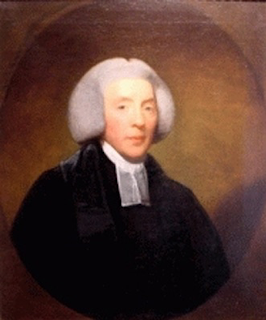
Hamilton then becomes Dean of Armagh, the chief resident cleric of St. Patrick’s Cathedral in Armagh, County Armagh, from April 1768 to 1796. Finding the existing dean’s house inconvenient and poorly situated, he has a new one built in a better location just off Portadown Road, now known as Dean’s Hill. The house, of three stories and a semi-basement, is built in 1772–74. The house is later sold by the church and the present owners provide bed and breakfast accommodation in it. While dean he also acts as treasurer for the infirmary or county hospital, he establishes Sunday schools in the districts of the parish, and he founds a charitable loan for poor tradesmen. He is also instrumental in planning a piped water supply for the town, which is later put into effect. He is one of the 38 original members of the Royal Irish Academy when it is founded in 1785. Gilbert Stuart paints his portrait in about 1790 (pictured above).

Hamilton is promoted to Bishop of Clonfert and Kilmacduagh on January 20, 1796, without seeking it. On January 24, 1799, he is translated to Ossory, where he is bishop until 1805. He dies of a fever at Kilkenny, County Kilkenny, on December 1, 1805. He is buried in the graveyard of St. Canice’s Cathedral at Kilkenny, and there is a memorial to him inside the cathedral.

Hamilton writes a mathematical treatise on conic sections called De Sectionibus Conicis: Tractatus Geometricus, published in 1758. In this book he “was the first to deduce the properties of the conic section from the properties of the cone, by demonstrations which were general, unencumbered by lemmas, and proceeding in a more natural and perspicuous order,” according to writer James Wills in 1847. The work is acclaimed for its lucidity and Leonhard Euler describes it as a perfect book. It is “soon adopted in all the British universities” and is translated from Latin into English as A Geometrical Treatise of the Conic Sections in 1773.

Hamilton also writes Philosophical Essays on Vapours (1767), Four Introductory Lectures on Natural Philosophy (1774), and An Essay on the Existence and Attributes of the Supreme Being (1784). His principal works are collected and republished, with a memoir, as The Works of the Right Rev. Hugh Hamilton by his eldest son, Alexander Hamilton, in two volumes in 1809.

Hamilton marries Isabella, daughter of Hans Widman Wood of Rosmead, County Westmeath, in 1772. Isabella’s mother Frances is the twin sister of Edward King, 1st Earl of Kingston. They have five sons and two daughters. They are Alexander, who was a barrister; Frances; Hans, who is rector of Knocktopher, County Kilkenny, and associated with the Carrickshock incident of 1831; Isabella; Henry; George, who is a biblical scholar; and Hugh, who marries Elizabeth Staples, a daughter of John Staples, a Member of Parliament. The younger Hugh is the great-grandfather of Clive Staples Lewis, better known as C. S. Lewis. Bishop Hugh Hamilton is a great-great-great-grandfather of the mathematicians John Lighton Synge and his brother Edward Hutchinson Synge. Dodgson Hamilton Madden, the High Court judge and noted scholar, is Hamilton’s great-grandson.

(Pictured: “Hugh Hamilton,” oil on canvas by Gilbert Stuart)


Leave a comment

Birth of Martin McAleese, Politician, Dentist & Accountant

Martin McAleese, Irish politician, dentist and accountant who has served as the Chancellor of Dublin City University (DCU) since August 2011, is born in Belfast, Northern Ireland, on March 24, 1951. He serves as a Senator from 2011 to 2013, after being nominated by the Taoiseach. He is the husband of the former president of Ireland, Mary McAleese.

McAleese is educated at St. Mary’s Christian Brothers’ Grammar School, Belfast. He then studies at Queen’s University Belfast (QUB), obtaining an honours Bachelor of Science in Physics. He plays Gaelic football for the Antrim Minors and is captain of the team in 1969. In 1972, after he graduates he moves to Dublin and trains there as an accountant with the chartered accountancy firm of Stokes, Kennedy, Crowley. He later works as financial controller for an Aer Lingus subsidiary.

McAleese marries Mary Leneghan in 1976. The couple resides in Scholarstown, Dublin, for a short period, and then for almost twelve years near Ratoath, County Meath. In 1980, he returns to full-time education at Trinity College Dublin (TCD), to study as a dentist, subsequently moving back, with his family, to Northern Ireland, where he practises as a dentist in Crossmaglen and Bessbrook, County Armagh.

While his wife serves as President of Ireland, McAleese initiates a series of meetings with senior Ulster loyalist paramilitary leaders to pursue peace negotiations. These actions do not take place without controversy, but are widely viewed as instrumental in bringing loyalist paramilitary groups to peace talks.

In May 2011, McAleese is appointed as a Senator by the Taoiseach Enda Kenny. In August 2011, he is appointed the Chancellor of Dublin City University, taking over from David Byrne.

On February 1, 2013, McAleese announces his intention to resign as a member of Seanad Éireann.

McAleese accepts an appointment as Chairman of the Inter-Departmental Committee which is set up by the Government of Ireland to investigate the Magdalene laundries. His findings have been criticised by some survivors and researchers from the Magdalene Names project.

On October 18-19, 2014, McAleese attends the One Young World Summit in Dublin as a keynote speaker. Here, he hosts a special session for the One Young World Peace and Conflict Resolution Project alongside former Ulster Defence Association (UDA) prisoner Jackie McDonald and former Irish Republican Army (IRA) prisoner Sean Murray. They address young people from 191 countries to share and develop ideas to strengthen efforts at conflict resolution in their own countries.

McAleese and his wife Mary have three children. The family moves to Rostrevor, County Down, in 1987, when he sets up practice in County Armagh.


Leave a comment

Death of John Mitchel, Nationalist Activist & Journalist

John Mitchel, Irish nationalist activist, author, and political journalist, dies at Drumalane, his parents’ house in Newry, County Down, on March 20, 1875.

Mitchel is born in Camnish, near Dungiven, County Derry, on November 3, 1815, the son of a Presbyterian minister. At the age of four, he is sent to a classical school, run by an old minister named Moor, nicknamed “Gospel Moor” by the students. He reads books from a very early age. When a little over five years old, he is introduced to Latin grammar by his teacher and makes quick progress. In 1830, not yet 15 years old, he enters Trinity College, Dublin (TCD) and obtains a law degree in 1834.

In the spring of 1836, Mitchel meets Jane Verner, the only daughter of Captain James Verner. Though both families are opposed to the relationship, they become engaged in the autumn and are married on February 3, 1837, by the Rev. David Babington in Drumcree Church, the parish church of Drumcree.

Mitchel works in a law office in Banbridge, County Down, where he eventually comes into conflict with the local Orange Order. He meets Thomas Davis and Charles Gavan Duffy during visits to Dublin. He joins the Young Ireland movement and begins to write for The Nation. Deeply affected by the misery and death caused by the Great Famine, he becomes convinced that nothing will ever come of the constitutional efforts to gain Irish freedom. He then forms his own paper, United Irishmen, to advocate passive resistance by Ireland’s starving masses.

In May 1848, the British tire of Mitchel’s open defiance. Ever the legal innovators in Ireland, they invent a crime especially for the Young Irelanders – felony-treason. They arrest him for violating this new law and close down his paper. A rigged jury convicts him, and he is deported first to Bermuda and then to Australia. However, in June 1853, he escapes to the United States.

Mitchel works as a journalist in New York City and then moves to the South. When the American Civil War erupts, he is a strong supporter of the Southern cause, seeing parallels with the position of the Irish. His family fully backs his commitment to the Southern cause. He loses two sons in the war, one at the Battle of Gettysburg in 1863 and another at the Battle of Fort Sumter in 1864, and another son loses an arm. His outspoken support of the Confederacy causes him to be jailed for a time at Fort Monroe, where one of his fellow prisoners is Confederate President Jefferson Davis.

In 1874, the British allow Mitchel to return to Ireland and in 1875 he is elected in a by-election to be a member of the Parliament of the United Kingdom representing the Tipperary constituency. However, his election is invalidated on the grounds that he is a convicted felon. He contests the seat again in the resulting by-election and is again elected, this time with an increased vote.

Unfortunately, Mitchel, one of the staunchest enemies to English rule of Ireland in history, dies in Newry on March 20, 1875. He is buried in his parents’ grave in the unitarian cemetery, High Street, Newry, where a monument is later erected by his widow. He is also commemorated by a statue in Newry. Thirty-eight years later, his grandson, John Purroy Mitchel, is elected Mayor of New York City.