seamus dubhghaill

Promoting Irish Culture and History from Little Rock, Arkansas, USA


Leave a comment

Birth of Irish Actress Sinéad Cusack

Sinéad Moira Cusack, award winning Irish actress, is born Jane Moira Cusack in Dalkey, County Dublin, on February 18, 1948.

Cusack is the daughter of actress Maureen Cusack and actor Cyril Cusack. She is the sister of actresses Sorcha Cusack, Niamh Cusack, and half-sister to Catherine Cusack. Her father is born in South Africa, to an Irish father and an English mother, and had worked with Micheál Mac Liammóir at Dublin‘s Gate Theatre.

Cusack’s first acting roles are at the Abbey Theatre in Dublin. In 1975, she moves to London and joins the Royal Shakespeare Company (RSC) starring in Dion Boucicault‘s London Assurance in the West End. Her work with the RSC continues with an award-winning performance as Celia in As You Like It which includes the Clarence Derwent Award and her first Laurence Olivier Award nomination. She secures a second Olivier Award nomination for her performance in The Maid’s Tragedy by Francis Beaumont and John Fletcher in 1981, followed two years later with a third Olivier Award nomination as Kate in The Taming of the Shrew.

Cusack makes her Broadway debut in 1984 performing in repertory with the Royal Shakespeare Company. Starring opposite Derek Jacobi, she plays Roxane in Anthony Burgess‘s translation of Edmond Rostand‘s Cyrano de Bergerac and Beatrice in William Shakespeare‘s Much Ado About Nothing, directed by Terry Hands. Much Ado is first produced at the Royal Shakespeare Theatre in Stratford-upon-Avon in 1982–83, then moves to London’s Barbican Centre for the 1983–1984 season where it is joined by Cyrano, before both plays transfer to New York‘s Gershwin Theatre from October 1984 to January 1985, for which Cusack received a Tony Awards nomination for her performance as Beatrice, and costar Derek Jacobi wins the award for his Benedick. The production of Cyrano de Bergerac is later filmed in 1985.

During this period, Cusack and her husband, Jeremy Irons, appear in a Shakespeare Winter’s Eve, a major fundraiser for the Riverside Shakespeare Company in New York, along with other members of the Royal Shakespeare Company. Following the Broadway run, the plays tour the United States, making stops in Washington, D.C. and Los Angeles. Her connection with the Royal Shakespeare Company continues with a series of leading roles include Portia in The Merchant of Venice opposite David Suchet, Lady Macbeth opposite Jonathan Pryce in Macbeth and Cleopatra in Antony and Cleopatra in Stratford-upon-Avon and at London’s Theatre Royal Haymarket in the West End.

In 1990, Cusack, in the role of Masha, joins two of her sisters, Niamh (as Irina) and Sorcha (as Olga), and her father, Cyril Cusack (as Chebutykin) for a well-received production of Anton Chekhov‘s tragicomedy Three Sisters in a new version by Frank McGuinness, directed by Adrian Noble at the Gate Theatre, Dublin, before transferring to the Royal Court Theatre in London. The production also features Niamh’s husband, Finbar Lynch, as Solenyi and Lesley Manville as Natasha. The production wins the three real-life sisters the Irish Life Award in 1992.

One of Cusack’s best known stage roles is Our Lady of Sligo by Sebastian Barry in 1998, in which she plays the principal role of Mai O’Hara in performances in Ireland, on Broadway and at the National Theatre. For this she wins the 1998 Evening Standard Theatre Award for Best Actress, the 1998 Critics’ Circle Theatre Award for Best Actress and her fourth Olivier Award nomination for Best Actress. In 2006-07 she stars with Rufus Sewell in Tom Stoppard‘s Rock ‘n’ Roll at the Royal Court Theatre in London which transfers to the West End and Broadway, winning Cusack her fifth Olivier Award nomination and her second Tony Award nomination.

In 2015, Cusack returns to Ireland’s Abbey Theatre, where she begins her theatre career. She appears in the world première of Mark O’Rowe‘s play Our Few and Evil Days, acting opposite long-time collaborator Ciarán Hinds. She wins the Irish Times Irish Theatre Award for Best Actress.

Cusack stars with Peter Sellers in the film Hoffman (1970). She guest stars in an episode of The Persuaders! (1971), a TV series starring Tony Curtis and Roger Moore, as Jenny Lindley, a wealthy heiress who suspects that a man claiming to be her dead brother is in fact an impostor. In 1975, she makes three appearances in the TV series Quiller as the character Roz.

Cusack and her husband appear together in the film Waterland (1992), in a television adaptation of Christopher Hampton‘s Tales from Hollywood (also 1992), and again in Bernardo Bertolucci‘s Stealing Beauty (1996). Further film work includes Passion of Mind (2000), V for Vendetta (2005), and Eastern Promises (2007), a thriller directed by David Cronenberg. Her performance in The Tiger’s Tail (2007) wins her a first Irish Film & Television Academy (IFTA) Award nomination for Best Actress in a Supporting Role. She wins the IFTA Award for her performance in The Sea (2013), adapted from the novel by John Banville. She is nominated once more for an IFTA Award for her performance in John Boorman‘s drama film Queen and Country (2014), which premières at the Cannes Film Festival.

Further starring roles include lead roles in Oliver’s Travels (1995), Have Your Cake and Eat It (1997) for which Cusack wins the Royal Television Society‘s RTS Award for Best Actress and Frank McGuinness’s The Hen House (1989) for BBC Television. She stars in the title role of George du Maurier‘s Trilby (1976), in an adaptation for the BBC’s Play of the Month, with Alan Badel as Svengali. She also stars in the BBC mini-series North & South (2004, from the novel by Elizabeth Gaskell) as Mrs. Thornton. She stars in the BBC sitcom Home Again (2006) and appears in the TV series Camelot (2011), which runs for one season. She has featured roles in the mini-series The Deep (2014) and the series Marcella (2016), an eight-episode murder mystery.

Along with other actresses, including Paola Dionisotti, Fiona Shaw, Juliet Stevenson and Harriet Walter, Cusack contributes to a book by Carol Rutter called Clamorous Voices: Shakespeare’s Women Today (1994). The book analyses modern acting interpretations of female Shakespearean roles.

Cusack marries British actor Jeremy Irons in 1978, and they have two sons, Samuel James and Maximilian Paul. Prior to marrying Irons, she gives birth to a son in 1967 and places the boy for adoption. In 2007, a journalist for the Irish Sunday Independent, Daniel McConnell, reveals that Cusack is the mother of left-wing general election candidate and now member of Irish parliament Richard Boyd Barrett. The two have since been reunited.

Cusack is a patron of the Burma Campaign UK, the London-based group campaigning for human rights and democracy in Burma. In 1998, she is named, along with her husband, in a list of the biggest private financial donors to the British Labour Party. In August 2010, she signs the “Irish artists’ pledge to boycott Israel” initiated by the Palestine Solidarity Campaign.

(Pictured: Sinéad Cusack reciting poetry for the British Library in October 2021)

Leave a comment

Eamonn Casey, Former Bishop of Galway & Kilmacduagh, Returns from Exile

Eamonn Casey, Irish Catholic prelate who serves as bishop of Galway and Kilmacduagh from 1976 until his resignation 1992, returns to Ireland on February 5, 2006, following fourteen years in exile. He fled Ireland after he admitted to fathering his son, Peter.

Casey is born on April 24, 1927, in Firies, County Kerry. He is educated in Limerick before training for the priesthood at St. Patrick’s College, Maynooth. He is ordained a priest for the Diocese of Limerick on June 17, 1951, and appointed Bishop of Kerry on July 17, 1969.

Casey holds this position until 1976, when he is appointed Bishop of Galway and Kilmacduagh and apostolic administrator of Kilfenora. While in Galway, he is seen as a progressive. It is a significant change in a diocese that had been led for nearly forty years by the very conservative Michael Browne, bishop from 1937 to 1976. He is highly influential in the Irish Catholic hierarchy and a friend and colleague of another highly prominent Irish priest, Father Michael Cleary.

Casey works aiding Irish emigrants in Britain. In addition, he supports the Dunnes Stores‘ staff who are locked out from 1982 to 1986 for refusing to sell goods from apartheid South Africa.

Casey attends the funeral of the murdered Archbishop of San Salvador, Monsignor Óscar Romero. He witnesses first-hand the massacre of those attending the funeral by government forces. He then becomes a vocal opponent of United States foreign policy in Central America, and, as a result, opposes the 1984 visit of United States President Ronald Reagan to Ireland, refusing to meet him when he comes to Galway.

In 1992 it is reported that, despite the vow of chastity undertaken by Catholic clergy, Casey has a sexual relationship in the early 1970s with American woman Annie Murphy. When Murphy becomes pregnant, he is determined that the child should be given up for adoption in order to avoid any scandal for himself or the Catholic church. By contrast, Murphy is determined to accept responsibility for her child, and she returns to the United States with their son, Peter, who is born in 1974 in Dublin. He makes covert payments for the boy’s maintenance, fraudulently made from diocesan funds and channeled through intermediaries. In order to continue the cover up of his affair with Murphy and his fraudulent activities, he refuses to develop a relationship with his son, or acknowledge him. Murphy is very disappointed by this, and in the early 1990s contacts The Irish Times to tell the truth about Casey’s hypocrisy and deception. Having been exposed, he reluctantly admits that he had “sinned” and wronged the boy, his mother and “God, his church and the clergy and people of the dioceses of Galway and Kerry,” and his embezzlement of church funds. He is forced to resign as bishop and flees the country under a cloud of scandal. He is succeeded by his secretary, James McLoughlin, who serves in the post until his own retirement on July 3, 2005.

Murphy publishes a book, Forbidden Fruit, in 1993 revealing the truth of their relationship and the son she bore by Casey, exposing the institutional level of hypocrisy, moral corruption and misogyny within the Irish Catholic Church.

Casey is ordered by the Vatican to leave Ireland and become a missionary alongside members of the Missionary Society of St. James in a rural parish in Ecuador, whose language, Spanish, he does not speak. During this time, he travels long distances to reach the widely scattered members of his parish but does not travel to meet his own son. After his missionary position is completed, he takes a position in the parish of St. Pauls, Haywards Heath, West Sussex, England.

In 2005, Casey is investigated in conjunction with the sexual abuse scandal in Galway, Kilmacduagh and Kilfenora diocese, and cleared of any wrongdoing. In 2019, it emerges that he had faced at least three accusations of sexual abuse before his death, with two High Court cases being settled. The Kerry diocese confirms that it had received allegations against him, that Gardaí and health authorities had been informed and that the person concerned was offered support by the diocese.

Casey returns to Ireland on February 5, 2006, with his reputation in tatters, and is not permitted to say Mass in public.

In August 2011, Casey, in poor health, is admitted to a nursing home in County Clare. He dies on March 13, 2017, a month before his 90th birthday. He is interred in Galway cathedral’s crypt.

Casey is the subject of Martin Egan’s song “Casey,” sung by Christy Moore. He is also the subject of The Saw Doctors‘ song “Howya Julia.”


Leave a comment

Birth of Irish Broadcaster George Hamilton

Irish broadcaster George Hamilton is born in Belfast, Northern Ireland, on January 2, 1950. He is best known as the chief football commentator for RTÉ, for which he also commentates on other sporting events, such as the Olympic Games. He presents a classical music programme on RTÉ lyric fm on Saturdays and Sundays called The Hamilton Scores.

Hamilton is christened in the same Presbyterian church as George Best. His father Jimmy plays for Cliftonville F.C., but he is a Glentoran F.C. “superfan.”

While a student at Methodist College Belfast, Hamilton is, for a time, principal cellist with the school orchestra. He then studies German and French at Queen’s University Belfast.

Hamilton begins his commentary career with BBC Sport, before joining RTÉ eight years later in 1984. He had previously worked for RTÉ during the 1978 FIFA World Cup. Since 2003, he works for RTÉ lyric fm, Ireland’s classical radio station, on Saturday mornings. For many years, he fronts a popular weekly quiz show on RTÉ, Know Your Sport, alongside fellow commentator Jimmy Magee.

Hamilton is chief commentator for RTÉ Sport‘s coverage of the 2010 FIFA World Cup in South Africa, the ninth one in which he has been involved. He is RTÉ’s chief commentator at UEFA Euro 2012 and commentates on all of Ireland’s matches in the competition. He is involved in the coverage of the Olympic Games since the 1980 Summer Olympics in Moscow.

Hamilton is known for his use of colourful phrases and memorable quotes when commentating on games, his phrase describing David O’Leary‘s penalty against Romania in the 1990 FIFA World Cup, “The nation holds its breath,” is used for a book of Irish football quotations, compiled by Eoghan Corry, for which Hamilton writes the foreword.

The sports humour website, DangerHere.com, takes its title from another quote by Hamilton: “And Bonner has gone 165 minutes of these championships without conceding a goal. Oh, danger here…”

On August 16, 2011, Hamilton feels unwell and has a suspected heart attack. He later has several hours of emergency bypass surgery at the Blackrock Clinic in Dublin after being transferred from St. Vincent’s University Hospital. He recovers and resumes both his commentating and radio show.


Leave a comment

Birth of Sir John Greer Dill, Irish-born British Army Officer

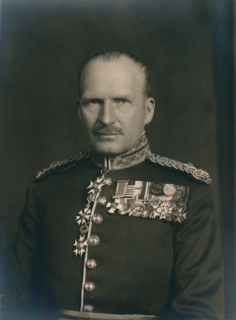
Sir John Greer Dill, senior British Army officer with service in both World War I and World War II, is born on December 25, 1881, at Lurgan, County Armagh. From May 1940 to December 1941, he is the Chief of the Imperial General Staff (CIGS), the professional head of the British Army, and subsequently serves in Washington, D.C., as Chief of the British Joint Staff Mission and then Senior British Representative on the Combined Chiefs of Staff (CCS).

Dill is the only son of John Dill, bank manager, and Jane Dill (née Greer). He is educated at Cheltenham College in England before entering the Royal Military College (RMC), Sandhurst. Commissioned as a second lieutenant, he joins the Prince of Wales’s Leinster Regiment (Royal Canadians) in May 1901 and serves in South Africa for the remainder of the Second Boer War. Promoted to captain in 1911, he is a student at the Staff College, Camberley, at the outbreak of World War I. He holds several important staff appointments during the war, including brigade major of 25th Brigade (8th Division) and General Staff Officer (Grade 2) to the Canadian Corps. Present at the battles of Neuve Chapelle, Aubers Ridge, Arras, and Third Ypres, at the end of the war he is serving as chief of operations branch at GHQ with the temporary rank of brigadier general. He is awarded the Distinguished Service Order (DSO) (1915), the Order of St. Michael and St. George (CMG) (1918), the French Legion of Honour and the Belgian Order of the Crown.

Remaining active during the interwar years, Dill serves as chief assistant to the commandant of the Staff College (1919–22) before commanding the Welsh Border Brigade, TA (1922–23), and 2nd Infantry Brigade at Aldershot (1923–26). In late 1926, he is appointed army instructor at the newly established Imperial Defence College. A period in India follows as general staff officer of the Western Command (1929–31), based at Quetta. On return to England, he is promoted to major general and made commandant of the Staff College. Appointments as commander of the British forces in Palestine and Transjordan (1936–37) and the Aldershot Command (1937–39) follow. During this period, he shows a remarkable ability to both train and inspire those under his command. Most of his colleagues expect him to become the new chief of the Imperial General Staff and are surprised when Major General Lord Gort, junior to Dill in both rank and seniority, is appointed to the post.

At the outbreak of World War II Dill commands I Corps British Expeditionary Force (BEF) in France and is made a full general. In April 1940, he is made vice-CIGS and in May takes over as CIGS. His initial period in office is not a happy one, and he has to inform the public of setbacks in both Norway and France. His workload is enormous, and after the evacuation at Dunkirk in late May he devotes himself to preparing the defences of Britain against invasion. He clashes with Winston Churchill throughout 1941, advocating a more cautious and realistic approach to the situations in North Africa, Greece, and Crete.

The workload begins to affect his health adversely, and in November 1941 it is announced that he will resign as CIGS on reaching the age of 60 and serve as governor-designate of Bombay with the rank of field marshal. He seeks to be more actively involved in the war effort, however, and in December 1941 he visits the United States with Churchill, remaining there as head of the British joint staff mission in Washington, D.C. He plays a significant role in promoting Anglo–American military cooperation and attends the Casablanca, Quebec, and Tehran conferences.

In late 1944 his health again breaks down and he dies from aplastic anemia on November 4, 1944, at the Walter Reed General Hospital, Washington, D.C. After a memorial service at Washington National Cathedral, he is buried with full military honours at Arlington National Cemetery in Arlington County, Virginia. President Franklin D. Roosevelt later pays tribute to him as a great soldier and friend, “the most important figure in the remarkable accord which has been developed in the combined operations of our two countries.”

Dill first marries (1907) Ada Maud Le Mottée, daughter of Col. William Le Mottée of the 18th Regiment. Their son, Major John de Guerin Dill, serves as an artillery officer throughout World War II. In October 1941, Dill marries Nancy Isabelle Charrington, widow of Brigadier Denis Walter Furlong. Dill’s honours include a GCB (1942), an honorary degree from Princeton University (1944), the Howland Memorial Prize of Yale University (1944), and a posthumous Distinguished Service Medal (DSM) from the United States government. There are portraits of him in Cheltenham College and the Imperial War Museum, and a statue in Washington, D.C.

(From: “Dill, Sir John Greer” by David Murphy, Dictionary of Irish Biography, http://www.dib.ie, October 2009 | Pictured: Sir John Greer Dill, bromide print, 1932, by Walter Stoneman, National Portrait Gallery, London)


Leave a comment

Death of Professional Golfer Harry “The Brad” Bradshaw

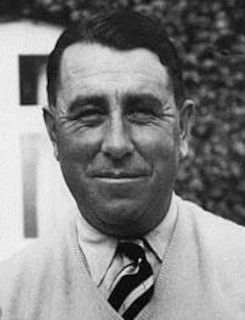
Harry Bradshaw, a leading Irish professional golfer of the 1940s and 1950s, dies on December 22, 1990, in St. Vincent’s hospital, County Dublin.

Bradshaw is born on October 9, 1913, in Killincarrig, County Wicklow, eldest among four sons and two daughters of Edward ‘Ned’ Bradshaw, golf caddie and later golf professional, and Elizabeth Bradshaw (née Walsh) of Killincarrig. He is educated locally. A golf prodigy, he has a hole-in-one at the age of ten on an 80-yard par three at Delgany Golf Club, County Wicklow. He joins Delgany Golf Club, where he progresses from caddie to assisting his father, who is the club’s professional. As a teenager, he tends to hook the ball wildly, before he develops a grip that allows him to hit with great accuracy. Thereafter, he concentrates on honing his peerless approach play from within 100 yards of the hole. Another feature of his game is what is called his “hit and hark” approach to putting: he never lifts his head to follow the ball until he hears it drop.

Bradshaw plays in his first tournament as a professional in 1932, the same year he shoots a course record 68 at Delgany. In 1938, he wins his first professional tournament, the Bromford-Adgey Cup at Skerries Golf Club, County Dublin. In 1941, he is appointed golf professional at Kilcroney, County Wicklow, and in 1950 he begins his long association with Portmarnock Golf Club, County Dublin, when he is appointed golf professional there. By then he has already made his mark on domestic Irish golf, having won the Irish Open in 1947 and 1949. In Ireland he wins the Irish Dunlop Trophy three times, the Willie Nolan Trophy eleven times, the Moran Cup twelve times and the Irish Professional Championship ten times, the last a record later equaled by Christy O’Connor Snr.

Bradshaw is not well known outside of Ireland prior to the famous “bottle” incident at the 1949 Open Championship at Royal St. George’s Golf Club in Sandwich, Kent, England. Having headed the qualifiers and shooting an opening 68, he continues his good form into the second round when his drive at the par four fifth hole just misses the fairway and lands in a beer bottle that is standing upright with the neck and shoulder broken off. The rules are unclear on whether the bottle constitutes a hazard, and he elects to play the ball where it lay, judging (correctly) that he is not entitled to a free drop. Closing his eyes and turning his head away, he swings, shattering the bottle and advancing the ball about twenty-five yards. He is shaken and records a lacklustre round of 77. Back to his best in the next two rounds, he would win the title had his putt on the last not stopped just short. Instead, he ties with the South African Bobby Locke who defeats him by twelve strokes in the thirty-six-hole play-off with superlative rounds of 67 and 68. As a result of his experience with the broken bottle, the rules are changed to cater for the possibility of such an incident recurring. It is the closest a golfer from the Republic of Ireland comes to winning the Open Championship until Pádraig Harrington’s victory in 2007.

Bradshaw subsequently revenges himself on Locke by narrowly beating him to the Irish Open title the following month. He is then one of four British and Irish golfers to participate in a sixteen-week tour of South Africa from December 1950 to March 1951 during which he engages in further jousts with Locke, deepening their new-found friendship.

Establishing himself on the international golf circuit, Bradshaw goes on to win the Dunlop British Masters on two occasions (1953, 1955), and in 1958 he becomes the first Irishman to win the PGA Close Championship. He had also won the Dunbar Open Tournament in Scotland in 1953 and the Gleneagles Hotel Foursomes Tournament pro-am with Joe Carr in 1955. The highlight of his career comes in Mexico City in 1958, when, in partnership with Christy O’Connor Snr, he wins the Canada Cup, later known as the World Cup, for Ireland, also losing a play-off for the individual title. His performance is particularly impressive, given that he is forty-five and carrying weight while competing at altitude in oppressive heat. He and O’Connor are fêted upon their return home, and their victory is considered to play the determining role in popularising golf in Ireland. He caps a memorable year by receiving the Association of Golf Writers’ Trophy for 1958.

Bradshaw appears on three Ryder Cup teams. At the Wentworth Club in 1953, he wins his foursomes match partnering Fred Daly and his singles match against Fred Haas, but in 1955 he loses both his foursomes and singles matches at the Thunderbird Country Club in California. In 1957, he is a member of the side that defeats the American team 7–4 at Lindrick Golf Club in South Yorkshire, only the third victory by the Britain and Ireland side in the twelve matches played up to that time. He holes a five-footer to tie his match with U.S. Open champion Dick Mayer after a classic encounter. In 1963, he takes on Billy Casper, one of America’s top golfers, in a match at Portmarnock televised as part of the prestigious Shell’s Wonderful World of Golf series. Bradshaw’s three-stroke victory earns him $3,000, which is then considered a bonanza in golfing terms.

Bradshaw remains the golf professional at Portmarnock until 1983, latterly spending most of his day in the club shop. Even after his formal retirement, he remains on the payroll at Portmarnock as an informal ambassador for the club. Nicknamed “the Brad,” he is extremely popular with amateur and professional alike, is a great raconteur and tremendous company, and is noted for his lack of rancor towards, or criticism of, other players.

Bradshaw dies on December 22, 1990, at St. Vincent’s hospital, County Dublin, and is buried in St. Fintan’s Cemetery, Sutton, Dublin.

Bradshaw marries Elizabeth Foley from Carlow in 1944 and they have four children. His three brothers, Eddie, Hughie and Jimmy, are all professional golfers.

(From: “Bradshaw, Harry” by Jim Shanahan, Dictionary of Irish Biography, http://www.dib.ie, November 2022)


Leave a comment

Death of Sir James Craig, First Prime Minister of Northern Ireland

James Craig, 1st Viscount Craigavon PC PC (NI) DL, prominent Irish unionist politician, leader of the Ulster Unionist Party and the first Prime Minister of Northern Ireland from 1921 until his death, dies peacefully at his home at Glencraig, County Down, at the age of 69 on November 24, 1940.

Craig is born at Sydenham, Belfast, on January 8, 1871, the seventh of nine children of James Craig (1828–1900), a wealthy whiskey distiller who had entered the firm of Dunville & Co. as a clerk and by age 40 is a millionaire and a partner in the firm. Craig Snr. owns a large house called Craigavon, overlooking Belfast Lough. His mother, Eleanor Gilmore Browne, is the daughter of Robert Browne, a prosperous man who owned property in Belfast and a farm outside Lisburn. Craig is educated at Merchiston Castle School in Edinburgh, Scotland. After school he begins work as a stockbroker, eventually opening his own firm in Belfast.

Craig enlists in the 3rd (Militia) battalion of the Royal Irish Rifles on January 17, 1900, to serve in the Second Boer War. He is seconded to the Imperial Yeomanry, a cavalry force created for service during the war, as a lieutenant in the 13th battalion on February 24, 1900, and leaves Liverpool for South Africa on the SS Cymric in March 1900. After arrival he is soon sent to the front and is taken prisoner in May 1900, but released by the Boers because of a perforated colon. On his recovery he becomes deputy assistant director of the Imperial Military Railways, showing the qualities of organisation that are to mark his involvement in both British and Ulster politics. In June 1901 he is sent home suffering from dysentery, and by the time he is fit for service again the war is over. He is promoted to captain in the 3rd Royal Irish Rifles on September 20, 1902, while still seconded to South Africa.

On his return to Ireland, having received a £100,000 legacy from his father’s will, Craig turns to politics, serving as Member of the British Parliament for East Down from 1906 to 1918. From 1918 to 1921 he represents Mid Down and serves in the British government as Parliamentary Secretary to the Minister for Pensions (1919–20) and Parliamentary Secretary to the Admiralty (1920–21).

Craig rallies Ulster loyalist opposition to Irish Home Rule in Ulster before World War I, organising the paramilitary Ulster Volunteers (UVF) and buying arms from Imperial Germany. The UVF becomes the nucleus of the 36th (Ulster) Division during World War I. He succeeds Edward Carson as leader of the Ulster Unionist Party in February 1921.

In the 1921 Northern Ireland general election, the first ever, Craig is elected to the newly created House of Commons of Northern Ireland as one of the members for Down.

On June 7, 1921, Craig is appointed the first Prime Minister of Northern Ireland by the Lord Lieutenant of Ireland. The House of Commons of Northern Ireland assembles for the first time later that day.

Craig is made a baronet in 1918, and in 1927 is created Viscount Craigavon, of Stormont in the County of Down. He is also the recipient of honorary degrees from Queen’s University Belfast (1922) and the University of Oxford (1926).

Craig had made his career in British as well as Northern Irish politics, but his premiership shows little sign of his earlier close acquaintance with the British political world. He becomes intensely parochial and suffers from his loss of intimacy with British politicians in 1938, when the British government concludes agreements with Dublin to end the Anglo-Irish trade war between the two countries. He never tries to persuade Westminster to protect Northern Ireland‘s industries, especially the linen industry, which is central to its economy. He is anxious not to provoke Westminster, given the precarious state of Northern Ireland’s position. In April 1939, and again in May 1940 during World War II, he calls for conscription to be introduced in Northern Ireland (which the British government, fearing a backlash from nationalists, refuses). He also calls for Winston Churchill to invade Ireland using Scottish and Welsh troops in order to seize the valuable ports and install a Governor-General at Dublin.

While still prime minister, Craig dies peacefully at his home at Glencraig, County Down at the age of 69 on November 24, 1940. He is buried on the Stormont Estate on December 5, 1940, and is succeeded as the Prime Minister of Northern Ireland by the Minister of Finance, J. M. Andrews.

(Pictured: James Craig, 1st Viscount Craigavon, bromide print by Olive Edis, National Portrait Gallery, London)


Leave a comment

Death of Theatrical Producer Hilton Edwards

Hilton Edwards, an English-born Irish actor, lighting designer, and theatrical producer, dies in a Dublin hospital on November 18, 1982, following a short illness.

Edwards is born in London on February 2, 1903. He begins his career acting with the Charles Doran Shakespeare Company in 1920 in Windsor and then joins The Old Vic in London, playing in all but two of Shakespeare‘s plays before leaving the company a few years later. Trained in music, he also sings baritone roles with the Old Vic Opera company.

After touring with various companies in Britain and South Africa, Edwards goes to Ireland in 1927 for a season with Anew McMaster‘s company and meets McMaster’s brother-in-law, Micheál Mac Liammóir. As he tells an interviewer once, both men want a theater of their own. Mac Liammóir wants it to be in Ireland and Edwards does not care. “I don’t care about nationalism, I care about the theater,” he says.

Edwards and Mac Liammóir co-found the Gate Theatre in Dublin in 1928. The two men’s talents are complementary. Mac Liammóir is an actor, designer, and writer. Edwards is a director, actor, producer, and lighting designer. Edwards produces and directs more than 300 plays at the Gate, ranging from the works of Aeschylus and Sophocles, Johann Wolfgang von Goethe and Henrik Ibsen to the comedies of George Bernard Shaw and Richard Brinsley Sheridan and new Irish plays, by such authors as W. B. Yeats, Brian Friel, and Mac Liammóir.

In New York City in 1948 Edwards plays in and directs John Bull’s Other Island and directs The Old Lady Says No and Where Stars Walk. In 1961, Edwards takes a two-year leave from the Gate to become the first Head of Drama at Telefís Éireann. A year later, he wins a Jacob’s Award for his television series Self Portrait.

Edwards appears in 15 films, including Captain Lightfoot (1955), David and Goliath (1960), Victim (1961), and Half a Sixpence (1967). He also writes and directs Orson Welles‘s Return to Glennascaul (1951). However, he is primarily known for his theatre work. He is nominated for a Tony Award in 1966 for Best Director of a Drama for Philadelphia, Here I Come!

Hilton Edwards dies in a Dublin hospital on November 18, 1982. Edwards and Mac Liammóir are the subject of a biography, titled The Boys by Christophor Fitz-Simon.


Leave a comment

Birth of Edward MacLysaght, Genealogist of 20th Century Ireland

Edgeworth Lysaght, later Edward Anthony Edgeworth Lysaght, and from 1920 Edward MacLysaght (Irish: Éamonn Mac Giolla Iasachta), a genealogist of twentieth century Ireland, is born on November 6, 1887, at Flax Bourton, Somerset, England. His numerous books on Irish surnames build upon the work of Rev. Patrick Woulfe’s Irish Names and Surnames (1923).

Lysaght is born to Sidney Royse Lysaght (1856-1941), of Irish origin, a director of the family iron and steel firm John Lysaght and Co. and a writer of novels and poetry, and Katherine (died 1953), daughter of Joseph Clarke, of Waddington, Lincolnshire. His grandfather, Thomas Royse Lysaght, is an architect, and his great-grandfather, William Lysaght, a small landowner distantly connected with the Barons Lisle. He is named “Edgeworth Lysaght” after his father’s friend, the economist Francis Ysidro Edgeworth. He loses the sight in one eye after a childhood accident.

Lysaght is educated at Nash House preparatory school, Bristol, and Rugby School at Rugby, Warwickshire, where he is unhappy, his parents’ frequent absence due to his father’s business responsibilities necessitating travel to South America, South Africa, and Australia contributing to this. He is a contemporary there of Rupert Brooke, whose father is Lysaght’s housemaster. Eighteen months after leaving Rugby, on the advice of Francis Edgeworth, he goes to Corpus Christi College, Oxford, to study law, but, having on his own account “had a wild time as part of the smart set” and anticipating rustication after a drunken incident, he leaves after three terms.

Lysaght takes up residence in a caravan at Lahinch, County Clare, where he had previously holidayed and become friendly with local people. His father, himself strongly connected to his Irish boyhood and wanting to establish himself as a “country gentleman,” recognizes his son’s enthusiasm for Ireland and in 1909 purchases a 600-acre estate at Tuamgraney, at which Lysaght farms until 1913, introducing an electrical generator and other forms of modernization including the development of a lime kiln, nursery, and school where young men of means can learn the basics of farming. This is the beginning of a metamorphosis for him. Although of English upbringing, he dislikes the local gentry, considering them “layabout rentiers,” and prefers to make friendships amongst employees and his neighbours. He seeks to replace his English accent with a Clare accent, eschews his lack of religion of a few years before in favour of Roman Catholicism, and becomes involved in the Gaelic League.

An integral factor in Lysaght’s reinvention is his relationship with Mabel (“Maureen”) Pattison. Five years his senior, they meet when he spends a period at a Dublin hospital. She is born and raised in South Africa, her father a civil servant there, but has Irish family including a local postmistress. His family seeks to avoid what they consider an unsuitable marriage, sending him and his brother Patrick on a world tour, but the couple are nevertheless married at the Brompton Oratory on September 4, 1913. Mabel introduces him to friends in the Arts Club, and he enters Dublin literary society. His father invests £300 in Maunsell’s publishers, who produces Lysaght’s book of poems, Irish Eclogues. As of the early 1930s, he serves on the General Committee of the Munster Agricultural Society.

By 1915, Lysaght’s command of the Irish language has improved dramatically, and in that year he founds the Nua-Ghaeltacht at Raheen, County Clare. He is an independent delegate to the 1917-18 Irish Convention in which he opposes John Redmond‘s compromise on Home Rule. By 1918 his involvement in all aspects of the Irish independence movement have deepened greatly. Although not known if he is actually a member of the Irish Republican Army (IRA), he is very active in the Irish War of Independence as a supporter, financially and otherwise, of the East Clare Brigade of the IRA and its legendary leaders, Michael and Conn Brennan.

In 1920, Lysaght, along with others of the name, changes his name to “MacLysaght,” “so as to emphasise its Gaelic origin.”

MacLysaght’s Raheen office serves as a meeting place for the Volunteers and guns, documents and ammunition are stored there. However, the war leads to a sharp decline in the fortunes of his farm. The execution of close friends such as Conor Clune of Quin in November 1920 and the subsequent devastating raids on his farm result in his playing a far more active role in Sinn Féin as a loyal supporter of the new TD for Clare, Éamon de Valera. For this he is imprisoned following his return from Britain as part of a Sinn Féin delegation which is publicising the Black and Tans atrocities.

MacLysaght is elected to the Free State Seanad Éireann in 1922. He is appointed Inspector for the Irish Manuscripts Commission in 1938. He is elected to the Royal Irish Academy in 1942 and in the same year is awarded a Doctor of Letters (D.Litt). He is appointed Chief Herald of Ireland in 1943 and serves in this post until 1954. He serves as Keeper of Manuscripts at the National Library of Ireland from 1948 to 1954 and is Chairman of the Irish Manuscripts Commission from 1956 to 1973.

MacLysaght dies at the age of 98 on March 4, 1986, and is interred in the graveyard of St. Cronan’s Church, Tuamgraney.


Leave a comment

Death of Major General William Hickie, Irish-Born British Army Officer

Major General Sir William Bernard Hickie, KCB, Irish-born senior British Army officer and Irish nationalist politician dies in Dublin on November 3, 1950. He sees active service in the Second Boer War from 1899 to 1902, is Assistant Quartermaster General in the Irish Command from 1912 to 1914 and serves in World War I from 1914 to 1918. He commands a brigade of the British Expeditionary Force in 1914 and is commander of the 16th (Irish) Division from 1915 on the Western Front.

Hickie is born on May 21, 1865, at Slevoir, Terryglass, near Borrisokane, County Tipperary, the eldest of the eight children of Colonel James Francis Hickie and his wife Lucila Larios y Tashara, originally of Castile. He is educated at St. Mary’s College, Oscott, Birmingham, England, a renowned seminary for training youths of prosperous Roman Catholic families.

Hickie attends the Royal Military College, Sandhurst, from 1882 to 1885. He is commissioned into his father’s regiment, the Royal Fusiliers at Gibraltar, in 1885 and serves with them for thirteen years in the Mediterranean, Egypt, and India, during which time he is promoted to captain on November 18, 1892. In 1899 he graduates as captain at the Staff College, Camberley, and is selected when the Second Boer War breaks out as a Special Service Officer in which capacity he acts in various positions of authority and command. He leaves Southampton for South Africa on board the SS Canada in early February 1900 and is promoted from captain of mounted infantry to battalion command as major on March 17, 1900. He is subsequently in command of a corps until eventually at the end of 1900 he is given command of an independent column of all arms. He holds this position for eighteen months. He serves with distinction at the Battle of Bothaville in November 1900 and receives the brevet promotion to lieutenant colonel on November 29, 1900. He serves in South Africa throughout the war, which ends with the Treaty of Vereeniging in June 1902. Four months later he leaves Cape Town on the SS Salamis with other officers and men of the 2nd battalion Royal Fusiliers, arriving at Southampton in late October, when the battalion is posted to Aldershot Garrison. In December 1902 he is elected a Fellow of the Royal Geographical Society (FRGS).

After the end of the war in South Africa there follows various staff appointments, the first from December 1902 as deputy-assistant adjutant general for district staff in the Cork district. In 1907 Hickie is back in regimental service in Dublin and Mullingar with the 1st Royal Fusiliers, where he is in command of the regiment for the last two years. From 1909 to 1912 is appointed to the Staff of the 8th Infantry Division in Cork where for four years he is well known in the hunting field and on the polo ground. In May 1912, he is promoted to colonel and becomes Quartermaster General of the Irish Command at Royal Hospital Kilmainham for which he is appointed a Companion of the Order of the Bath.

When war is declared, the Staff of the Irish Command becomes automatically the staff of the II Army Corps and accordingly with the outbreak of World War I in August 1914, Hickie is promoted to brigadier general and, as part of the British Expeditionary Force in France, takes charge of the Adjutant and Quartermaster-General’s Department during the retreat of the II Corps after the Battle of Mons, to Paris, and during the First Battle of the Marne. In mid-September 1914, he relieves one of the brigadiers in the fighting line as commander of the 13th Brigade (5th Infantry Division) and then commands the 53rd Brigade (18th Infantry Division) until December 1915, when he is ordered home to assume command of the 16th (Irish) Division at Blackburn.

Promoted to major general, Hickie takes over from Lieutenant General Sir Lawrence Parsons. It is politically a highly sensitive appointment which requires the professionalism and political awareness he, fortunately, possesses as the division is formed around a core of Irish National Volunteers in response to Edward Carson‘s Ulster Volunteers. He is much more diplomatic and tactful than his predecessors and speaks of the pride which his new command gives him but does not hesitate to make sweeping changes amongst the senior officers of the Irish Division. After putting the division through intensive training, it leaves under Irish command of which each man takes personal pride. It arrives in December 1915.

In the next two years and four months during which Hickie commands the 16th (Irish) Division, it earns a reputation for aggression and élan and wins many memorials and mentions for bravery in the engagements during the 1916 Battle of Guillemont and the capture of Ginchy, both of which form part of the Battle of the Somme, then during the Battle of Messines, the Third Battle of Ypres and in attacks near Bullecourt in the Battle of Cambrai offensive in November 1917.

During this period the Division makes considerable progress in developing its operational techniques but at a price in losses. The growing shortage of Irish replacement recruits, due to nationalist disenchantment with the war and the absence of conscription in Ireland, is successfully met by Hickie by integrating non-Irish soldiers into the division.

In February 1918, Hickie is invalided home on temporary sick leave, but when in the hospital the German spring offensive begins on March 21, with the result that after his division moves under the command of General Hubert Gough it is practically wiped out and ceases to exist as a division. Although promised a new command, this does not happen before the Armistice in November. He typifies the army’s better divisional commanders, is articulate, intelligent and is competent and resourceful during the BEF’s difficult period 1916–17, laying the foundations for its full tactical success in 1918. He is advanced to Knight Commander of the Order of the Bath in 1918.

Hickie retires from the army in 1922, when the six Irish line infantry regiments that have their traditional recruiting grounds in the counties of the new Irish Free State are all disbanded. He identifies himself strongly with the Home Rule Act and says that its scrapping is a disaster and is equally outspoken in condemning the activities of the Black and Tans. In 1925, he is elected as a member of Seanad Éireann, the Irish Free State Senate.

Hickie holds his seat until the Seanad is dissolved in 1936, to be replaced by Seanad Éireann in 1937. He is President of the Area Council (Southern Ireland) of the Royal British Legion from 1925 to 1948. He never marries.

Hickie dies on November 3, 1950, in Dublin and is buried in Terryglass, County Tipperary.


Leave a comment

Death of Father Austin Flannery

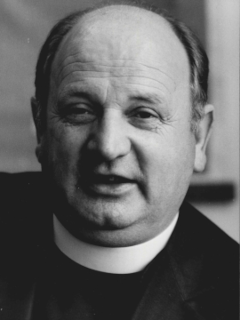
Fr. Austin Flannery OP, was a Dominican priest, scholar, editor, journalist and social justice campaigner, dies of a heart attack at Kiltipper Woods Care Centre, Dublin, on October 21, 2008.

Born William “Liam” Flannery at Rearcross, County Tipperary, on January 10, 1925, he is the eldest of seven children produced by William K. Flannery and his wife Margaret (née Butler), merchants, publicans and hoteliers there and later at New Ross, County Wexford. After national school in Rearcross, he is educated at St. Flannan’s College in Ennis, County Clare, completing his secondary education at Newbridge College, Newbridge, County Kildare, a Dominican institution where he revels in an environment spurring independent thinking.

Flannery joins the Dominican Order in 1943, making his first profession in September 1944. After studies in theology at St. Mary’s Priory, Tallaght, County Dublin, and then at Blackfriars Hall, Oxford, he is ordained a Catholic priest on September 2, 1950, and adopts the forename Austin. He continues his studies at the Pontifical University of Saint Thomas Aquinas in Rome where he is awarded a doctorate in dogmatic theology. After his studies he teaches theology at Glenstal Abbey, County Limerick, for two years in the mid-1950s, before returning to Newbridge College for a year to teach Latin.

Flannery edits the Dominican bi-monthly journal entitled Doctrine and Life from 1958 to 1988, while at St. Saviour’s Priory, Dublin, where he also serves as prior from 1957 to 1960. He also edits the Religious Life Review. During and after the Second Vatican Council he makes available in English all the documents from the event.

Flannery’s campaigning to end apartheid in South Africa leads to involvement with Kader Asmal, and the founding the Irish Anti-Apartheid Movement, of which he serves as chairman and president. In the late sixties his campaigning on behalf of the Dublin Housing Action Committee, due to its association with republicans and left-wing activists, leads him to being accused of being a communist. He is dismissed in the Dáil by the then Minister for Finance, Charles Haughey, as “a gullible cleric.”

From August 1969, Flannery is a member of the executive committee of the Northern Relief Coordination Committee, raising funds on behalf of the families of those interned without trial in Northern Ireland during the early 1970s.

Flannery embodies the post-Vatican II conception of the priest as a social catalyst engaged by the gospel, closer to his flock than to the clerical hierarchy. He has a great gift for friendship, is indefatigably interested in people, and courts religious affairs commentators and journalists at a time when the hierarchy ignores them, magnifying his influence.

Flannery dies of a heart attack on October 21, 2008, at Kiltipper Woods Care Centre, Dublin. Following a funeral mass at St. Saviour’s Priory, he is buried in the Dominican plot at Glasnevin Cemetery, Dublin, on October 24, 2008.