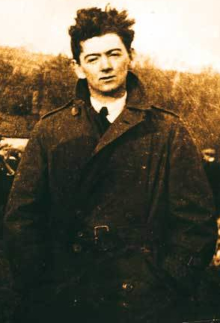
MacCormack (sometimes spelled McCormack) is born in 1892, the daughter of Constance MacCormack, and niece of Evelyn Gleeson. Following the death of her father in 1902, the family lives with Gleeson at her home, at Runnemede, Sandyford Road, Dublin, with her mother and siblings, Grace (1898–1982) and Edward (1889–1906). With her sister, she works in the Dun Emer Guild from a young age, particularly after the Yeats sisters, Lily and Elizabeth, leave Dun Emer to form Cuala Industries.
MacCormack also does some acting, theatre set design and is an author. She appears in Joseph Plunkett‘s 1912 play The Dance of Osiris at the Hardwicke Theatre, and designs the sets. She often acts under the name Catia or Caitia Nic Cormac. She also designs sets for the Irish National Theatre Society, Theatre Company of Ireland and the Dublin Drama League.[5]
Some of MacCormack’s most notable works are the tapestries for the Honan Chapel, Cork, in 1917, the vestments for St. Patrick’s Catholic Church, San Francisco in 1923, and a carpet presented to Pope Pius XI in 1931. The carpet is commissioned in an effort by Ireland’s ambassador to the Vatican, Charles Bewley, to secure Ireland as the host of the 31st International Eucharistic Congress. It is designed by MacCormack and takes workers in the Guild almost four months to hand weave at a cost of £450. As “The Pope’s Carpet” it is exhibited in Clerys department store on O’Connell Street in Dublin from January 19 to 30, 1931.
MacCormack designs the poster for the 1927 “Grand Pageant of Dublin History.” She also develops a set of designs for judicial robes for W. T. Cosgrave in 1924, drawing on the Brehon style sketches of which are held in University College Dublin Archives. In 1911 and 1920, she exhibits at the Oireachtas Art Exhibitions, and with the Water Colour Society of Ireland throughout the 1920s. She is also an illustrator, beginning with Christmas card designs for Dun Emer in the 1910s. She illustrates John Hackett Pollock’s 1919 The wisdom of the world: A book of wonder-tales, published by Colm Ó Lochlainn‘s Candle Press under Pollock’s pseudonym An Philibín. She edits a volume for Ó Lochlainn in 1920, The Book of St Ultan; a collection of pictures and poems by Irish artists and writers, proceeds of which go to Saint Ultan’s Hospital. As well as editing, she contributes illustrations and two poems to the volume.
After her aunt’s death in 1944, MacCormack continues to run Dun Emer Guild until its store on Harcourt Street closes around 1964.
MacCormack dies on June 26, 1975. A large collection of theatre ephemera collected by MacCormack is sold in 2008. The Kitty MacCormack Archive is held by the Jackie Clarke Archive, and the National Library of Ireland also holds a collection of her theatre ephemera and letters. A dress designed by MacCormack for Clare Kennedy, the wife of Hugh Kennedy, is on display as part of The Way We Wore, an exhibition in National Museum of Ireland at Collins Barracks, Dublin.
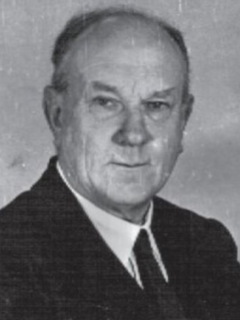
Rice joins the Irish Volunteers in 1913 but does not take part in the 1916 Easter Rising. For a time, he shares lodgings in Rock Street, Tralee, with Austin Stack, and like Stack he is a Gaelic Athletic Association (GAA) member, playing hurling with Kenmare. At the outbreak of the Irish War of Independence (1919-1921), he becomes Officer Commanding of the 5th Battalion of the Kerry No. 2 Brigade. He also holds the post of second in command of that brigade, under Humphrey Murphy. On April 26, 1921, he attends the meeting in Kippagh, County Tipperary, that sees the establishment of the First Southern Division. After the truce, Murphy is transferred to command Kerry No. 1 Brigade, and Rice becomes commanding officer of Kerry No. 2.
Rice opposes the Anglo-Irish Treaty and leads the brigade throughout the Irish Civil War (1922-1923). When Michael Collins comes to Killarney on April 22, 1922, to speak in favour of the agreement, he is met at the train station by a group of fifty men, led by Rice, who attempt to prevent him from speaking. The meeting goes ahead despite several attempts by the group to stop it. During the civil war he leads his men into Limerick, briefly seizing Rathkeale, but for the most part they are on the defensive. In September he commands a force of seventy republicans to take Kenmare. This is a rare and morale-boosting success. When the First Southern Division council meets on February 26-28, 1923, he is one of only two senior officers, among a group of eighteen, who feel that it is worth fighting on.
Shortly after the civil war, Rice marries Nora Aherne, a Cumann na mBan member; they have one son, George. After the war he continues to be active in the Irish Republican Army (IRA) and Sinn Féin. He attends IRA executive meetings in 1923 and is involved in attempts to reorganise the IRA in 1924. He is a delegate to the Sinn Féin ardfheis in 1926, opposing the proposal of Éamon de Valera that abstention be a matter of policy rather than principle. He is elected as a Sinn Féin TD for the Kerry South constituency at the 1957 Irish general election. He does not take his seat in the Dáil due to the Sinn Féin policy of abstentionism. He is one of four Sinn Féin TDs elected at the 1957 Irish general election, the others being Ruairí Ó Brádaigh, John Joe McGirl and Eighneachán Ó hAnnluain. During his time as a TD, he campaigns against the Special Powers Act, which grants the Irish state extra abilities to deal with and punish suspected members of the IRA. He is defeated at the 1961 Irish general election.
In 1966, Rice and fellow Kerry Republican John Joe Sheehy are expelled from Sinn Féin, as are many others, by the new Marxist-Leninist party leadership that had recently come into power. This move both foreshadows and fuels the split in 1969/1970 of both the IRA and Sinn Féin, which leads to the creation of the Marxist-Leninist Official IRA and the more traditional but still left-wing Provisional IRA, and in parallel Sinn Féin – The Workers’ Party and “Provisional” Sinn Féin. Rice gives his support to the Provisionals.
Rice drives an oil lorry for a time and then becomes manager of the Tralee branch of Messrs Nash, mineral water manufacturers and bottlers. He remains in this position until his retirement in 1965. He dies on July 24, 1970, at his son’s residence in Oakview, Tralee.
Rice’s sister, Rosalie, is a member of Cumann na mBan during the 1916 Easter Rising and is arrested for sending a telegram alerting the Irish Republican Brotherhood (IRB) in the United States to the rising. His cousins Eugene and Timothy Ring are members of the IRB and are also involved with the telegram. His grandfather, Timothy Ring, was a Fenian who fought in the uprising. Two of his cousins are members of the Royal Irish Constabulary (RIC) who both help the republican side during the Irish revolutionary period.
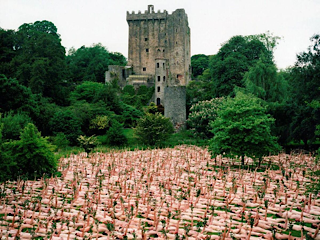
As part of the 2008 Cork Midsummer Festival, 1,100 volunteers gather on the grounds of Blarney Castle in the early hours of Tuesday, June 17, 2008, and strip naked to have their picture taken at the famous location.
The occasion is the first shoot in Ireland by the American photographic artist Spencer Tunick, who has already made quite a name for himself shooting large groups of naked people in public spaces in New York City, Montreal, London and Amsterdam.
Like many of Tunick’s projects, the event in Cork comes about by invitation. “It was Mary McCarthy, the art curator at Dublin Docklands, who contacted me first,” says Tunick, via Zoom from his office in New York, of the organiser who is director of the Crawford Art Gallery in Cork. “Mary thought to make it a two-city project, in Cork and Dublin, and brought Cork Midsummer Festival on board. People think I can choose where I want to work, but it’s not as if I can get up and say, ‘hmm, I want to photograph 1,000 people in a volcanic crater in Hawaii.’ In reality, I need a team on the other side, helping me. And it was Mary who established that team in Ireland.”
McCarthy’s crew works with Tunick on selecting locations for his shoots. Blarney Castle appeals to Tunick. “When you think of a castle, you think of swords, you think of dreams, you think of battle and war,” he says. “But you might also think of the rose. I tried to combine a lot of different ideas or fantasies about the castle and connect them to the body. But there were also a lot of grounds around the castle, so I could have different set-ups and positions to shoot in.”
When Cork Midsummer Festival puts out a call for volunteers, it is inundated with applications. Those chosen are of all ages, and from all walks of life. “I think sometimes people associate my live works with young people. But there’s often a lot of people over 50, and into their 80s, at this great unifying event that touches on the idea of group photo gatherings from the 1920s. When you see a big haul of people lined up, undressed of course, it combines group portraiture with abstraction and the naked body.”
At Blarney Castle, beginning around 5:30 a.m., he shoots the crowd in a variety of poses on the castle lawns, facing toward and away from the camera, then lying on their backs as they each held a single rose aloft (pictured above), red for the women and white for the men. He then photographs a small number on their knees in the river that runs through the grounds, and a smaller number again kissing the Blarney Stone. Some participants see the photo shoot as an opportunity to challenge the general disapproval of nakedness that prevails in the Ireland of their youth. Others see it as a way to make peace with their body image.
Later that morning, Tunick photographs about 50 naked volunteers covered in foam at White Street Carpark in Cork city centre. “As a kid, I was always fascinated by the bubble scene in Willie Wonka and the Chocolate Factory, the film,” says Tunick. “So, I wanted, in a whimsical and surreal way, to amplify my memories of that. But I also wanted to work with the history of the area, so I infused Murphy’s beer into four bubble machines and created a snow globe effect with the nudes. That was beautiful.”
Looking back on the photographs, one is struck by how most of the bodies are white. If it is true that Cork has become far more ethnically diverse city since that day in 2008, one must also wonder if Tunick’s call for volunteers appealed to a certain demographic. “I always ask the organisers to do community outreach in different areas, so we can get more colour and ethnicities into the work,” he says. “But sometimes it doesn’t really resonate, and sometimes the population is not there, you know. And often, where that population exists, it might not be connected to the body in contemporary art. But I’ve always tried, and now I insist that the organisers make an extra effort.”
Tunick’s shoots at Blarney Castle and White Street attract lavish coverage in the media, a reflection perhaps on how they coincide with a change in the public perception of nudity. The project would almost certainly have caused an uproar even twenty years previously. Participants describe a sense of joy and liberation. “This was definitely pre-Instagram, right? And now when we’re on Instagram, we think the whole world is accepting of nudity in public, but back then, there was not that same outlet for my images. But there was that documentation by the press, and through that, I think people realised that something had happened that went against the grain in a positive way.”
Four days later, Tunick photographs 2,500 naked volunteers on the South Wall in Dublin. Again, the event attracts headlines, but already, it seems, the culture has moved on, and there is not quite that same element of surprise and delight as there had been in Cork.
Tunick has done many projects since. Some of his favourites include those in Kingston upon Hull in 2016 and on the Dead Sea in 2011 and again in 2021. “I like working with props. In Cork, I used roses and beer foam. But now I like working with body paint. In Hull, we covered around 4,000 people in four shades of blue. The blues were those of the water I saw in a number of paintings in the Maritime Museum in the city. I asked Pantone to replicate the colours, and those were the blues we used. Not many people know that.”
“My projects in the Dead Sea were partly about showing how the salt in the water could elevate the body. That created a very interesting, otherworldly effect in the photographs. But they also aimed to raise awareness of how the Dead Sea is disappearing because of irrigation to serve the need for drinking water by adjoining countries such as Israel and Jordan. It’s a very difficult situation.”
Many photographers find their work curtailed by pandemic restrictions of the early 2020s. Tunick too is forced to postpone photographing groups of people on location, but he does find a way to go on creating. “An art collective called Studio 333 in Mexico asked me if I wanted to do group works on video chats, and offered to manage it technically. So we started making group works with people from all walks of life, all around the world. We had someone in Saudi Arabia posing with someone in Israel. We had people in Australia, people in Europe, people all over the world. I think the only place we weren’t able to work with was Antarctica, but who knows? Maybe that’s in the future.” The resulting images are published online, on Tunick and Studio 333’s websites and social media accounts, under the collective title ”Stay Apart Together.”
As for the future, Tunick would love to work in Ireland again, he says. “It’s always been my dream to do a work in Northern Ireland, maybe with 100 or 200 people on the Giant’s Causeway? I can’t have too many, because then you wouldn’t see the rocks. Northern Ireland, the Giant’s Causeway… that project’s been on my mind for a long time, so hopefully some museum or curator will invite me to do it.”
(From: “Cork in 50 Artworks, No 49: Spencer Tunick’s nude installation at Blarney Castle” by Marc O’Sullivan, Irish Examiner, http://www.irishexaminer.com, April 11, 2022 | Pictured: Blarney Castle with the crowd assembled by Spencer Tunick)
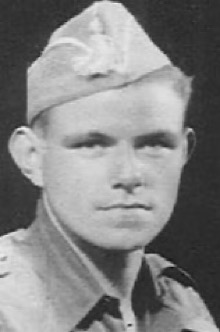
O’Riordan is born at 37 Pope’s Quay, Cork, County Cork, on November 11, 1917, the youngest of five children. His parents come from the West Cork Gaeltacht of Ballingeary–Gougane Barra. Despite his parents being native speakers of the Irish language, it is not until he is interned during World War II that he learns Irish.
As a teenager, O’Riordan joins the republican youth movement, Fianna Éireann, and then the Irish Republican Army (IRA). Much of the IRA at the time is inclined toward left-wing politics. A lot of its activity at the time involves street fighting with the quasi-fascistBlueshirt movement, and he fights the Blueshirts on the streets of Cork in 1933–34. He Is friends with left-wing inclined republicans such as Peadar O’Donnell and Frank Ryan, and in 1934, he follows them into the Republican Congress – a short-lived socialist republican party.
O’Riordan joins the Communist Party of Ireland (1933) in 1935 while still in the IRA and works on the communist newspaper The Irish Workers’ Voice. In 1937, following the urgings of Peadar O’Donnell, several hundred Irishmen, mostly IRA or ex-IRA men, go to fight for the Spanish Republic in the Spanish Civil War with the XVth International Brigade. They are motivated in part by enmity towards the 800 or so Blueshirts, led by Eoin O’Duffy who went to Spain to fight on the “nationalist” side in the Irish Brigade. He accompanies a party led by Frank Ryan. In the Republic’s final offensive of July 25, 1938, he carries the flag of Catalonia across the River Ebro. On August 1 he is severely injured by shrapnel on the Ebro front. He is repatriated to Ireland the following month, after the International Brigades are disbanded.
In 1938, O’Riordan is offered an Irish Army commission by the Irish Free State but chooses instead to train IRA units in Cork. As a result of his IRA activities during World War II, he is interned in the Curragh Camp from 1939 until 1943 where he is Officer Commanding of the Cork Hut and partakes in Máirtín Ó Cadhain‘s Gaelic League classes as well as publishes Splannc (Irish for “Spark”, named after Vladimir Lenin‘s newspaper). He is secretary of the “Connolly group,” composed of leftist internees. Following his release from internment, he terminates his IRA membership.
In 1944, O’Riordan is founding secretary of the Liam Mellows Branch of the Labour Party. This branch becomes infamous for what is regarded during the period as its controversial nature and becomes an intractable enemy of Branch Chair Timothy Quill. The branch is initially established by former members of the Curragh Camp’s Communist Group, including Bill Nagle and Jim Savage. During this time, the Irish Transport and General Workers’ Union (ITGWU) disaffiliates from the Labour Party and the National Labour Party is established on the basis that communists have infiltrated the party. Quill, who is made branch chair by the Labour Party, allegedly has O’Riordan and his fellow members expelled, with the branch being dissolved. O’Riordan later accuses Quill of antisemitism and both Quill and Timothy J. Murphy of “red-baiting.” In 2001, he claims that any attempt to raise the issue of defence of communist Spain “was shouted down at Labour Party Conferences.” In 1945, he is a founding secretary of the Cork Socialist Party.
O’Riordan subsequently works as a bus conductor in Cork and is active in the ITGWU. He stands as a Cork Socialist Party candidate in the 1946 Cork Boroughby-election, placing third behind Fianna Fáil‘s Patrick McGrath and Fine Gael‘s Michael O’Driscoll with 3,184 votes. Afterward, he moves to Dublin where he lives in Victoria Street with his wife Kay, and continues to work as a bus conductor and remains active in the ITGWU.
In 1948, O’Riordan is a founding secretary of the Irish Workers’ League and general secretary thereafter, and of its successor organisation the Irish Workers’ Party from 1962 to 1970.
O’Riordan meets and befriends folk musician Luke Kelly, and the two develop a “personal-political friendship.” Kelly endorses him for election, and holds a rally in his name during campaigning in 1965.
In all O’Riordan runs for election five times, campaigning throughout for the establishment of a socialist republic in Ireland but given Ireland’s Catholic conservatism and fear of communism, he does so without success. He does, however, receive playwright Seán O’Casey‘s endorsement in 1951. O’Casey writes: “Mr. O’Riordan is his own message. He has nothing to sell but his soul. But he hasn’t done that, though he will be told he’ll lose it by holding on to it.”
O’Riordan’s participation in the Spanish Civil War is always an important part of his political identity. In 1966, he attends the International Brigades’ Reunion in Berlin and is instrumental in having Frank Ryan’s remains repatriated from Germany to Ireland in 1979.
O’Riordan is a member of the Irish Chile Solidarity Committee and attends the 1st Party Congress of the Communist Party of Cuba in 1984. He also campaigns on behalf of the Birmingham Six and attends their appeal trial in 1990. He serves between 1970 and 1983 as General Secretary of the Communist Party of Ireland (CPI) and from 1983 to 1988 as National Chairman of the party publishing many articles under the auspices of the CPI. Hus staunchly pro-Soviet direction of the party leads to a number of members leaving to form the EurocommunistIrish Marxist Society.
O’Riordan’s last major public outing is in 2005 at the re-dedication of the memorial outside Dublin’s Liberty Hall to the Irish veterans of the Spanish Civil War. With other veterans, he Is received by President of IrelandMary McAleese. He is also presented with Cuba’s Medal of Friendship by the Cuban Consul Teresita Trujillo to Ireland on behalf of Cuban President Fidel Castro.
In 1969, according to Soviet dissident Vasili Mitrokhin, O’Riordan is approached by IRA leaders Cathal Goulding and Seamus Costello with a view to obtaining guns from the Soviet KGB to defend Irish republican areas of Belfast during the communal violence that marked the outbreak of the Troubles. Mitrokhin alleges that O’Riordan then contacts the Kremlin, but the consignment of arms does not reach Ireland until 1972. The operation is known as Operation Splash.
In the meantime, the IRA has split into the Provisional IRA and the Official IRA and it is the latter faction who receives the Soviet arms. Mitrokhin’s allegations are repeated in Boris Yeltsin‘s autobiography. After the split in the Republican movement, O’Riordan unsuccessfully attempts to bring about a reunification of the two sides.
O’Riordan’s book, Connolly Column: The Story of the Irishmen who fought for the Spanish Republic, 1936–1939, published in 1979, deals with the Irish volunteers of the International Brigade who fought in support of the Spanish Republic against Francisco Franco in the Spanish Civil War (1936–39). An updated version of the book is reprinted in 2005 and is launched by the Lord Mayor of Dublin, Cllr. Michael Conaghan at a book launch at SIPTU headquarters, Liberty Hall. The book is the inspiration for Irish singer-songwriter Christy Moore‘s famous song Viva la Quinta Brigada.
In 1991, O’Riordan’s wife, Kay Keohane of Clonakilty, County Cork dies at their home at the age of 81. He continues to live in their family home before moving to Glasnevin in 2000 to be close to his son Manus who lives nearby. In 1999, he describes himself as an atheist and believes that communism will rise again. He lives there until falling ill in November 2005 and is taken to the Mater Hospital. His health rapidly deteriorates and he quickly develops Alzheimer’s disease. Soon afterward he is moved to St. Mary’s Hospital in the Phoenix Park where he spends the final few months of his life, before his death at the age of 88 on May 18, 2006. Then Labour Party leader Ruairi Quinn praises O’Riordan after his death, saying, “As leader of the Labour Party I had the honour of ensuring he received a special citation at our 2001 national conference. Michael O’Riordan stood out against the tide of Irish conservatism and clerical domination that kept Ireland backward and isolated in the 1930s, 1940s and 1950s.”
O’Riordan’s funeral at Glasnevin Crematorium is attended by over a thousand mourners. Following a wake the previous night at Finglas Road, hundreds turn up outside the house of his son and traffic grinds to a halt as family, friends and comrades – many of whom are waving the red flag of the Communist Party of Ireland – escort O’Riordan to Glasnevin Cemetery. A secular ceremony takes place led by Manus O’Riordan (Head of Research at SIPTU) with contributions from O’Riordan’s family, Communist Party general secretary Eugene McCartan and IBMT representative Pauline Frasier.
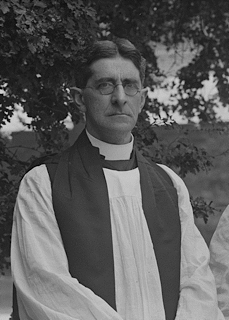
Though Gregg is instinctively conservative, his awareness of contemporary trends make him responsive to demands for change: he supports the resolution for women to hold parochial office and presents a petition to the General Synod in 1914, signed by 1,400 women. Though the motion is lost, he perseveres undaunted, and a bill for the ecclesiastical enfranchisement of women is finally carried in 1920. A unionist, he is also one of three Anglican and seventeen Catholic bishops to sign the declaration against partition in 1917, which is organised by the Catholic Bishop of Derry, Charles McHugh.
From the 1920s the Irish church is dominated by Gregg, first as Archbishop of Dublin (1920–39) and later as Archbishop of Armagh and Primate of All Ireland (1939–59). He provides stability to the church during a turbulent period of political and social change and is outspoken in defence of its interests, pragmatically espousing policies that will lead to the greater integration of the Protestant community into the new Irish state, as in his acceptance of the teaching of compulsory Irish in national schools. Despite a declining Protestant community in the south of Ireland, he maintains the unity of the church, overcoming the political division of the country into two entities. He regrets constitutional change but pledges the loyalty of the church to the Irish Free State. While recognising that the Protestant ethos is different from that of the majority of Irishmen, he maintains that “whatever our religious or political outlook may be, here is our home, and we have a right to be here.” He is elected to the first Irish Free State senate, and is subsequently consulted by Éamon de Valera, who later describes him as “a most learned and kindly gentleman, and . . . a highly valued friend,” in framing the text of the 1937 constitution. In 1949, he adapts, albeit with sadness, the state prayers to fit the republican form of government, observing that “the republic is a fact” and that “in our prayers, above all, there must be reality.”
Gregg is an able administrator, and his courage and integrity in facing difficult situations and his scholarship and devotion to the church earn him respect in the councils of the wider Anglican communion. He is known as “the churchman’s bishop” for his emphasis on doctrinal orthodoxy, ecclesiastical discipline, and loyalty to the clergy. Though conservative in his approach to church unity, he seeks closer relations between the Christian churches and frequently visits the reformed churches of the Iberian Peninsula, where a portrait plaque is unveiled in 1950 in St. John’s Church, Vila Nova de Gaia, Portugal. A baptistry in St. Paul’s Cathedral, Lisbon, is dedicated to his memory. Well known in England as a writer and preacher, he is appointed select preacher at the University of Cambridge (1916, 1930, 1936) and the University of Oxford (1946, 1947) and supports the institution of annual theological lectures at Queen’s University Belfast (QUB). His publications include Epistle of St. Clement of Rome (1899) and The Primitive Faith and Roman Catholic Developments (1909) – a minor classic which is used as a textbook for ordinands of the Church of England. He writes the introduction and notes to the revised version of the Wisdom of Solomon for the Cambridge Bible for Schools (1909) and publishes sermons and articles in religious journals. Elected Member of the Royal Irish Academy (MRIA) in 1914, he is elected to honorary fellowship in 1934 by Christ’s College, Cambridge, is awarded an honorary Doctor of Divinity (DD) in 1949 by QUB, and is created Order of the Companions of Honour (CH) in 1957.
A commanding figure, tall, thin, with raven-black hair, piercing eyes, and fine features, Gregg has an air of sacerdotal austerity, lightened on occasion by his dry sense of humour. He maintains a well regulated daily timetable and keeps a diary, writing his most personal thoughts in Greek. He makes time for recreation, a daily walk of two miles, tennis, and (from 1929) sailing, and holidays in Ireland and on the Continent. He has a great love of English literature and church music. In 1959, he retires to the Woodhouse, Rostrevor, County Down. Though incapacitated by blindness, deafness, and lameness, he never complains, and according to his wife, his life of prayer is enriched. He dies on May 2, 1961, at his home and is buried in Enniskerry, County Wicklow, beside his first wife and son.
Gregg marries Anna Alicia Jennings on November 26, 1902. They have two sons and two daughters. Anna dies in 1945. On January 22, 1947, he marries secondly Leslie Alexandra, daughter of the Rev. T. J. McEndoo, dean of Armagh, who officiates at the marriage of his daughter and of his archbishop.
(From: “Gregg, John Allen Fitzgerald” by Helen Andrews, Dictionary of Irish Biography, http://www.dib.ie, October 2009)
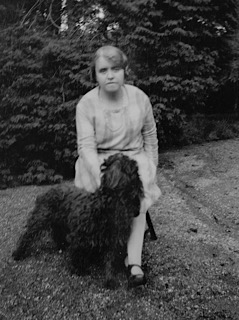
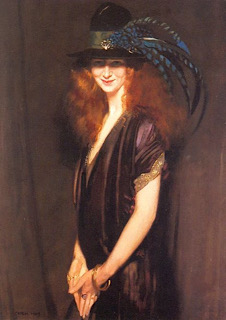
Elvery is the second among seven children of William Elvery , merchant, and Theresa Elvery (née Moss), singer and music teacher, whose parents are English Quakers. Her father’s ancestors were silk merchants from Spain, called Alvarez. Her early childhood is spent in Carrickmines, County Dublin. In 1896 the family moves to Foxrock and she attends the Dublin Metropolitan School of Art. Her mother’s family is artistic – one aunt is the artist Phoebe Anna Traquair – and she and her sisters are talented artists and singers. Her younger sister, Dorothy Kay, becomes a noted portrait painter in South Africa. At the age of sixteen, she wins a three-week scholarship to study at the Royal College of Art in South Kensington, London. Back in Dublin, she models for William Orpen, then teaching in the school. They become friends, and she regrets never studying painting under him. She concentrates on sculpture under John Hughes and has great success, winning the Taylor scholarship three years in a row (1901–03). The first year she wins, the judges, seeking evidence that she had worked unaided, asks her to model a head from life in their presence.
Elvery’s first exhibit in the Royal Hibernian Academy (RHA) is a bronze statuette of a boy in 1902. Thereafter she is a lifelong exhibitor with the RHA, showing almost annually until her death. Friendship with the older Sarah Purser introduces her to Dublin’s artistic milieu and to the arts and crafts movement. In the movement’s 1904 exhibition she shows ten items, including terracotta statuettes, a holy water stoup, and a plaster cast of a lectern, which is cast in bronze in Paris that year and placed in her former parish church in Carrickmines. The movement’s historian, Paul Larmour, calls this lectern “a remarkable piece of organic Art Nouveau . . . There is nothing else like it in Ireland.”
In 1904, after a brief period studying in Paris with her sister and fellow students Estella Solomons and Frances “Cissie” Beckett, Elvery takes lessons in stained glass from Alfred E. Child, and is then persuaded by Purser to join her Tower of Glass (An Túr Gloine) studio. She remains six years, executing windows for St. Stephen’s Church, Mount Street, Dublin; St. Nicholas Church, Carrickfergus; and a war memorial at the Church of Ireland church, Carrickmines. Although her work is generally well received, she does not rate her skill in the medium highly – “I never got the right feeling for glass or the detached, austere quality necessary for ecclesiastical art” – and her window for a Gortconvent leads to a critical review of Purser’s studio by W. B. Yeats. She does not, however, confine herself to glass but also designs for silversmiths and illustrated books for children. For Iosagán agus Sgealta Eile (1907), by Patrick Pearse, she provides a black-and-white frontispiece and four colour illustrations. For the Cuala Press, run by Lily and Elizabeth Yeats, she designs calendars, Christmas cards, and fifteen hand-coloured prints, which continue to be issued until after World War II.
Elvery’s social life in Dublin is busy. An active member of the United Arts Club, she is called by Lady Gregory “the beautiful Miss Elvery,” and Orpen’s portrait, showing her long-necked, graceful, and vivacious, bears out this description. Tiring of glass, and wishing to become a painter, she leaves in 1910 for the Slade School of Fine Art in London. There Henry Tonks is less complimentary than her Dublin teachers. He finds her work facile: “The speed, the slickness, the skill. It is horrible!” Orpen also comes to this view: “her only fault was that the transmission of her thoughts from her brain to paper or canvas, clay or stained glass, became so easy to her that all was said in a few hours. Nothing on earth could make her go on and try to improve on her first translation of her thought.”
Back in Dublin, Elvery takes a studio in Kildare Street and teaches for a time in the Metropolitan School of Art, before her parents arrange a marriage with Charles Henry Gordon Campbell, eldest son of the future Lord Chancellor of Ireland, James Campbell. They marry on August 1, 1912, and move to London where he is called to the English bar. It is not initially a love match but they are well-suited – he likes artistic, Bohemian circles and they become friends with D. H. and Frieda Lawrence, the painter Mark Gertler, the publisher John Middleton Murry, and his wife, the writer Katherine Mansfield, who describes Campbell as “a queer mixture for she is loving and affectionate, and yet she is malicious.”
Campbell’s husband becomes secretary of the Department of Industry and Commerce in the Irish Free State and in 1922 the family moves to Clonard, Terenure, Dublin. His government position means that within six months the house is burned down by anti-Treatyites, who are, however, almost comically accommodating – local men, they express distress at the job and allow her to save the children’s Christmas presents. In 1931 she becomes Lady Glenavy after her husband succeeds to his father’s title, an important member of Dublin’s social and artistic scene. She helps establish the Dublin Drama League and assists Shelah Richards in the production of two plays in 1936. Her friendships are wide and varied and her conversation imaginative and engaged. Dressed in beige – what her son calls “variations on a theme of porridge” – she entertains constantly. Her house has what she terms a “caravanserai” character and is constantly full of people.
Appointed an associate of the RHA in 1932, Campbell becomes a full member in 1934 and takes her turn at teaching. She also joins the more radical Society of Dublin Painters and holds in February 1935 a one-person show at their premises, 7 Stephen’s Green, but she never shows with the Irish Exhibition of Living Art, though her work is more avant-garde than that of most academicians. At its best in still lifes and figure compositions, her work has “a sense of drama and an enigmatic or near-surrealist appearance.” Brian Kennedy notes that she is the first Irish painter to go surrealist (though she never thinks of herself in this way) and although she is serious about her work – taking lessons at an advanced age from Patrick Hennessy – she is also diffident. Her memoir does not trace her development as an artist and mentions only one work with approbation – The Intruder (exhibited at the RHA in 1932). Now in the National Gallery of Ireland, it depicts in bold, rich colours a female centaur beckoning a young man from a group of picnickers. It immediately attracts attention. Richard Orpen wants the academy to buy it, but they think it obscene.
About 1941 the Campbells move to a large Georgian house in Rathfarnham, and twenty years later they transfer to a smaller house in Sandycove. After her husband’s death in 1962, she publishes her memoirs, And Today We Will Only Gossip (1964). The title is well chosen as the book is not self-revelatory but full of characters she encountered. Monk Gibbon calls her a “unique mixture: of talent and diffidence; of gregariousness and contempt for the herd; of gentle consideration and a savage determination to wound. Only those who knew her well knew her at all; and even to them she remained something of a mystery” (The Irish Times, December 2, 1980).
Campbell dies in Dublin on May 21, 1970, and is survived by her two sons, the writer and humorist Patrick Campbell and the novelist Michael Campbell, and predeceased by her daughter, Bridget, an Irish international lacrosse player and talented scientist, who is killed by a bomb during the London blitz.
(From: “Campbell, Beatrice Moss” by Bridget Hourican and Pauric J. Dempsey, Dictionary of Irish Biography, http://www.dib.ie, October 2009 | Pictured: “Bridgit – a picture of Miss Elvery (Beatrice Elvery),” oil on canvas by William Orpen, 1909)
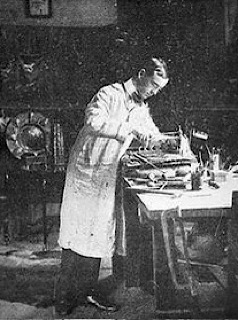
Santry is born in Cork, County Cork, on May 14, 1879, to Denis Santry, Sr., a carpenter and joiner. He studies at the Cork Municipal School of Art from 1894 to 1896 after serving an apprenticeship as a cabinetmaker. In 1895, he also studies at the Crawford School of Art. In 1897, he is articled to architect James Finbarre McMullen. From 1897 to 1898, he studies at the Royal College of Art in London under a Lane scholarship. While he is at the college, he wins the Queen’s prize for freehand drawing. After graduating, he returns to McMullen’s office and works there for the next two years.
Santry comes to South Africa at the end of 1901 due to ill health. He settles in Cape Town and is employed at Tully & Waters, an architectural firm, from 1901 to 1902. He then spends a year working for architect William Patrick Henry Black. In 1903, his cartoons begin to appear in local newspapers and magazines, including the South African Review. He uses the pseudonym “Adam” in his cartoons. He continues to work as an architect until 1910 when he begins working as a cartoonist, as well as a metalworker, sculptor and filmmaker. He then moves to Johannesburg and is employed at the Sunday Times and The Rand Daily Mail as a cartoonist. During World War I, his cartoons are reproduced in several other countries. He becomes a pioneer of animated cartoons in South Africa. He is a member of the Royal Society of Arts and a council member of the South African Society of Artists.
Santry comes to Singapore in 1918 and joins the architectural firm Swan & Maclaren as a partner. While in Singapore, he serves as the architect of several prominent buildings and monuments, including the Sultan Mosque, The Cenotaph, the Maritime Building, the Hongkong and Shanghai Bank Building and the Telok Ayer Chinese Methodist Church. He serves as the first president of the St. Patrick’s Society Singapore, the first president of the Singapore Amateur Boxing Association, the chairman of the Singapore Art Club, a member of the board of control of the Victoria Theatre and Concert Hall, a member of the Censorship Appeal Board and the vice-president of the Straits Settlements Association. He is also a frequent contributor to the Straits Produce, a satirical magazine. He helps to found the Singapore Society of Architects and the Institute of Architects of Malaya and is the founder and the chairman of the Singapore Musical Society. He retires to England in March 1934.
Santry returns to South Africa in 1940. Following the end of World War II, he resumes his practice as a result of lost income caused by the Japanese occupation of Malaya. In 1950, he becomes a member of the Institute of South African Architects. He designs several private houses in Hillcrest, KwaZulu-Natal.
Santry marries Madeline Hegarty in 1904. From 1910 to 1918, he lives in Kleine Schuur on Rhodes Avenue in Johannesburg. The house is designed by prominent architect Herbert Baker. He dies in Durban, South Africa, on April 14, 1960.
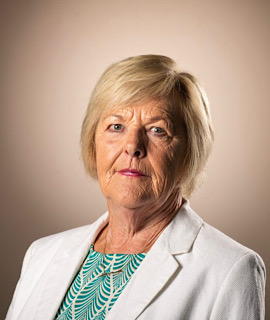
Although born in Cork, Moynihan-Cronin is a native of Killarney, County Kerry. She is educated at St. Brigid’s Secondary School in Killarney, Dominican College Sion Hill in Dublin, and Skerry’s College, Cork. Her father, Michael Moynihan, is a TD for Kerry South from 1981 to 1987 and from 1989 to 1992. She works as a bank official before becoming involved in politics in 1991 when she is elected to Kerry County Council. She is first elected to Dáil Éireann at the 1992 Irish general election as a Labour Party TD for Kerry South, succeeding her father. She is re-elected at every election until 2007.
On October 11, 2005, Moynihan-Cronin announces that she will not stand for re-election at the forthcoming general election due to ill-health. Her decision to retire presents considerable difficulties for the Labour Party to retain her seat, as the party performed poorly at the 2004 Kerry County Council election, failing to elect any councillors within the county. However, on October 28, 2006, she announces that she will stand in the forthcoming general election, having overcome her health difficulties. However, she fails to retain her seat.
In June 2011, Moynihan-Cronin returns to politics when she is co-opted onto Kerry County Council to represent the Killarney area, filling the seat left vacant when Marie Moloney is elected to the 24th Seanad. In 2013, she stands down from the council and is replaced by Sean Counihan.
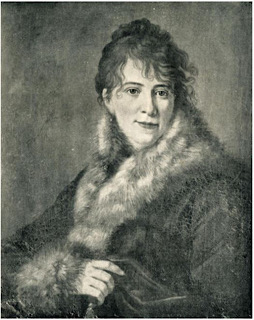
Katherine Wilmot, Irish traveler and diarist, dies in Paris, France, on March 28, 1824. She makes a Grand Tour from 1801 to 1803 and documents her experiences through letters, including encounters with notable figures like Napoleon Bonaparte. She later travels to Russia to join her sister Martha Wilmot and lives there from 1805 to 1807. She later moves to France and dies in Paris in 1824. Her writings, letters, and diaries provide insight into the Napoleonic era, on Russian society and on travel in the 19th century. Her works also include her sister’s transcript of the memoirs of Princess Yekaterina Vorontsova-Dashkova.
Wilmot is born around 1773 in Drogheda, County Louth, to Edward and Martha Wilmot (née Moore). She is the eldest daughter of six daughters and three sons. Her father is the port surveyor in Drogheda, having previously served as captain in the 40th Regiment of Foot. He is transferred to a similar post in County Cork in 1775, where Wilmot is raised. The family settles in Glanmire, near the seat of the Earl Mount Cashell in Moore Park. The earl’s family uses the surname Moore.
Wilmot is friendly with Lady Mountcashell, formerly Margaret King, an early and eager pupil of Mary Wollstonecraft. She is invited to accompany the party of Stephen Moore, 2nd Earl Mount Cashell, and his wife on a grand tour of the continent. Her letters from the time survive, in France from November 1801 to October 1802, and in Italy until July 1803. The Mount Cashells entertain lavishly, especially during the first nine months in Paris, and through them she meets Napoleon Bonaparte, and becomes friends with the Austrian painter Angelica Kauffman. She also meets the French diplomat and politician Charles Maurice de Talleyrand-Périgord, and the Irish republicanRobert Emmet fleetingly. She recounts her meeting in Rome with the English aristocrat Frederick Augustus Hervey, and her audience with Pope Pius VII. She returns to London from Italy in October 1803, via Germany and Denmark, after England and France resume hostilities.
Wilmot then goes to Russia to bring home her sister Martha, and ends up spending two years there. Martha is in the country as a favourite of Princess Dashkova, one of the key figures of the Russian Enlightenment and a close friend of Catherine the Great. Martha is living at the Princess’s estate in Troitskoe on the Oka River, about 100 km from Moscow. Wilmot arrives on August 4, 1805, having set out from Cork on June 5. Her writings from this time record the Russian aristocracy‘s opulence and attitudes to the servile classes (the serfs). The sisters come to know the customs of the Russian elite, as well as the festivals and religious rites of the country people. She leaves Moscow on July 4, 1807, a combination of passport problems, wars and storms at sea, resulting in delays and in her reaching Yarmouth on September 7, 1807, and returning to Ireland in October 1807.
Wilmot moves to France to live in a warmer, drier climate than Ireland. Her health declines when she moves to Paris, and she dies there on March 28, 1824. Her nephew by Martha, Wilmot Henry Bradford, lives to be “Father of the Army.”
Wilmot had taken Martha’s transcript of the memoirs of the Princess Dashkova when she left Russia. These are published by Martha in 1840, as she had burned the original manuscript before her departure from Russia in 1808.
Wilmot’s letters are published a century later, and have been described as a unique portrayal of the Napoleonic period. They describe the social scene, as well as the experience of traveling by coach and ship at that time. The family makes transcriptions of the letters. The collection belonging to Martha is donated to the library of the Royal Irish Academy by Elisabeth van Dedem Lecky, the historian and writer. Among these Russian letters are a number written by Eleanor Cavanagh, who describes the lives of servants. Wilmot’s diaries are published in 1920 by Thomas Sadleir, and later by H. Montgomery Hyde and Edith Vane-Tempest-Stewart, Marchioness of Londonderry.
TheGrand Tours of Katherine Wilmot, France 1801-1803, and Russia 1805-07(Weidenfeld & Nicolson, 1992)
An Irish Peer on the Continent, 1801-03 (1920)
The Russian Journals of Martha and Catherine Wilmot (1934)
More letters from Martha Wilmot; Vienna 1819-29 (1935)
The Clogheen Ambush takes place in the early morning of March 23, 1921, as six members of “C” Company, First Battalion, 1st Cork Brigade of the Irish Republican Army (IRA) are shot by a party of Black and Tans and Royal Irish Constabulary (RIC) at a farm at Ballycannon, Clogheen, just outside Cork, County Cork, during the Irish War of Independence. The IRA believes that they have been betrayed by Patrick ‘Cruxy’ Connor. Connor has returned to Cork after the Coolavokig Ambush, which had taken place on February 25. Once in Cork he is soon arrested by the RIC for the possession of a revolver. The IRA believes that Connors broke down under interrogation and betrayed them.
Cornelius O’Keefe farms 105 acres at Ballycannon, on the road leading from Clogheen to Tower. His house is a known ”safe house” where volunteers can shelter when it is unsafe for them to sleep at home. On the farm there are secure hiding places for the guns and explosives with which they carry out their missions.
At 4:00 a.m on the morning of Wednesday, March 23, O’Keefe is awakened by the arrival of a large force of police. They break down the farm door with blows from their rifle butts. The family is ordered back to the bedrooms and the house is thoroughly searched. The British then search the farmyard, where six volunteers are discovered asleep in a barn.
A local schoolteacher whose house overlooks the two fields outside the barn is awakened by the sound of gunshots at about 4:30 a.m., while it is still quite dark. He watches the lights moving around the farmyard. He hears one voice scream out and another shout “run for it.” He can barely see a man breaking away and running across the field. A volley of shots ring out and the man falls. Another man with a light walks toward the body. After ten minutes there are more shots but this time he sees nobody fall. Later he sees another man fleeing and more shots ring out. As the light increases, he identifies the men with guns as police. Later he watches as the police bring down bodies in blankets and lay them outside the house in the boreen, which leads from the O’Keeffe farmyard to the public road. Around 6:00 a.m. the bodies are placed in lorries which then drive away.
Meanwhile Cornelius O’Keeffe, the farm owner, is brought across the field where he sees five bodies laid out in blankets. He watches as they are placed in the lorries. In his sworn deposition he states that a sixth man is then brought out blindfolded, still alive, and is also put in the lorry. O’Keefe is put in a third lorry, which follows the other two to Victoria Barracks. There the first two lorries speed off and he loses sight of them. He is imprisoned in a cell in the Barracks and is kept there until on April 17, when he is finally released without charge.
The six IRA men killed are:
Daniel Crowley, aged 23. occupation plasterer, of 171 Blarney Street, Cork
William Deasy, aged 20, of Mount Desert , Blarney Road, Cork
Thomas Dennehy, aged 21, of 104 Blarney Street, Cork
Daniel Murphy, aged 24. occupation pig buyer, of Orrery Hill, off Blarney Street , Cork
Jeremiah O’Mullane, aged 23, of 237 Blarney Street, Cork
Michael O’Sullivan, aged 20 of 281 Blarney Street ,Cork
(From: “Ballycannon, Clogheen – IRA ambushed by the British – 23 Mar 1921,” posted on http://www.theauxiliaries.com | Pictured: The Clogheen Ambush Memoral in County Cork)