Mitchel, a writer for The Nation and founder of his own journal, United Irishman, openly preaches rebellion against England. Convicted of treason in 1848, he is sentenced to fourteen years transportation in Van Diemen’s Land (Tasmania). In 1853, he escapes to the United States, where he publishes his Jail Journal. While in the United States, he is editor of the Richmond Examiner and a strong advocate of Confederate rights and champions slavery. He is imprisoned for several months following the end of the American Civil War.
Mitchel’s return visit to Ireland is prompted by political developments in the Irish Parliamentary Party (IPP), which has nominated him for seats in Cork City and Tipperary without informing him. His well-known skepticism toward constitutional “moral force” agitation makes it uncertain whether he will accept the nomination, but the nomination proceeds anyway.
Mitchel’s return is unexpected, yet is met with public acclaim. Upon arriving in Queenstown (now Cobh, County Cork), he is met by a large crowd, and when he reaches Cork, a procession of ten thousand people escorts him to his hotel. This demonstrates the respect and support he still commands among Irish nationalists, despite his exile in the United States since 1853.
Mitchel then goes to Newry, his native town, where he stays for a few months to recuperate his health and await any opportunity to be elected to Parliament. However, no parliamentary vacancy arises during his stay, and he eventually returns to New York City in October 1872.
Mitchel’s return is part of a pattern of political activity in his later years. In 1875, he is again nominated for Tipperary, elected without opposition, and declared an abstentionistMP — but his election is overturned by the British government on the grounds of his previous felony conviction. He dies in March 1875 in Dromolane, County Down, in the same house where he was born.
In summary, July 25, 1872, marks the beginning of a brief but politically charged visit to Ireland for John Mitchel, a figure remembered for his uncompromising republican stance and his role in the Young Ireland movement.
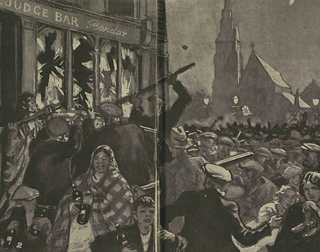
On July 21, 1920, the Belfast Shipyard Expulsions take place as thousands of Catholic workers and socialists in Belfast’s shipyards are attacked and driven from their jobs following Edward Carson’s speech on the Twelfth at Finaghy during the annual industrial holiday. This day marks the first day back at work after the holiday, and the violence erupts in the shipyards, particularly in the Harland & Wolff yards.
The disturbances are part of a wider Belfast pogrom in 1920, rooted in sectarian tensions between unionist and nationalist communities. The Twelfth of July celebrations in Finaghy have been a focal point for nationalist and socialist mobilisation, and Carson’s speech is seen by many Catholic workers as inflammatory, stoking fears of reprisals.
The targeted groups of the expulsions include Catholic workers, trade unionists, and socialist activists, many of whom are from the working class “plebeian” strata. Reports describe beatings, assaults, and intimidation in the shipyards, with workers being pushed out of their posts or forced to leave premises. The expulsions disrupt shipbuilding operations, as skilled labour is removed from the workforce overnight. The events reinforce sectarian divisions, with unionist groups and some employers using the violence to assert control over the workforce.
By July 1920, newspapers are the main source of news, with current affairs often appearing on later pages. Coverage in papers such as the Belfast News Letter, Belfast Telegraph, The Irish Times, and Freeman’s Journaldescribe the expulsions as part of a broader outbreak of violence, but without the front-page headlines typical of later conflicts. The absence of radio broadcasts means that news is spread through print, handbills, and word of mouth.
The July 21, 1920, expulsions are a turning point in the sectarian conflict in Belfast, marking a shift from political mobilisation to direct, violent confrontation in the industrial heart of the city. They reflect the deep entrenchment of sectarianism in the shipbuilding industry and foreshadow further violence in the years leading up to the Irish Civil War.
On July 14, 1910, the Irish Socialist Federation (ISF) in New York City hosts a farewell dinner for James Connolly, marking the end of his time as its leader. This event is a significant moment in his career, as he had been instrumental in founding the Federation on March 29, 1907, and has been its driving force in organizing Irish socialist and trade union activity in the United States.
By 1910, Connolly has been active in the socialist movement in the United States for several years. He initially joins the Socialist Labor Party of America but becomes a full-time organizer for the Industrial Workers of the World (IWW) from 1905 to 1910, aligning with its syndicalist approach. His work with the Irish Socialist Federation has been central to building a network of Irish workers in America, linking them to socialist principles and Irish nationalist aspirations.
The July 14, 1910, dinner is a public acknowledgment of Connolly’s contributions and a symbolic send-off as he prepares to return to Ireland. Upon his return, he takes on a major role in the Irish Transport and General Workers Union (ITGWU), first in Belfast and then in Dublin, and later becomes acting General Secretary and Commandant of the Irish Citizen Army (ICA).
The political and labor impact of the event underscores Connolly’s growing influence in both the Irish socialist movement abroad and the domestic labor struggle. It reflects the Federation’s commitment to supporting Irish socialist leaders and their work in the United States and Ireland. It is also remembers as a key moment in Connolly’s transition from U.S. organizer to a central figure in the Irish labor and republican movements.
In short, the July 14, 1910, farewell dinner is both a personal farewell and a political milestone, highlighting Connolly’s role as a bridge between Irish socialism in the United States and the emerging labor and republican movements in Ireland.
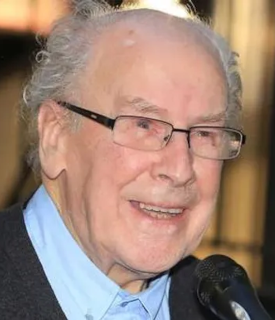
Wilson begins his priestly career as a hospital chaplain, where he becomes aware of the systemic neglect and exploitation of women. This experience shapes his later advocacy for marginalized groups. In 1966, he is assigned to St. John’s parish in Ballymurphy, a heavily working class and nationalist area. Confronted with poverty, deprivation, and social neglect, he rejects a purely clerical role and chooses to live among his parishioners, earning deep community trust.
Wilson facilitates grassroots initiatives such as the Springhill Community House and the Conway Education Centre, establishing spaces for alternative education, vocational training, small business incubators, and cultural engagement. These efforts emphasize the empowerment of local communities, adult education, and economic development, drawing inspiration from liberation theology and Worker Priest models.
Wilson’s ministry coincides with some of the most violent years of the Northern Ireland Troubles. He provides support to families affected by violence, offers shelter and practical assistance, and maintains dialogue channels between republican and loyalist communities. He criticizes the Catholic Church for its detachment from the struggles of working class Catholics and refuses to condemn paramilitary groups acting as “alternative police and armies,” reflecting his nuanced approach to community protection and justice. Alongside figures like Fr. Alec Reid, he is instrumental in mediating discussions that contribute toward the peace process.
Wilson’s work earns widespread admiration for his courage, humanity, and commitment to justice. He hosts Mother Teresa in west Belfast, helping to establish charitable outreach in the community. Despite periods of estrangement with his bishop and being barred from celebrating Mass in churches, he continues his ministry at home and through community projects.
Wilson is also a prolific writer, recording diaries, pamphlets, and weekly columns, later commemorated in the documentary “Fr. Des – The Way He Saw It” narrated by Stephen Rea, and in theatre productions celebrating his life. PresidentMichael D. Higgins and countless individuals recognize his significant role in civil rights, education, and peacemaking.
Wilson dies in Belfast on November 5, 2019, at the age of 94, leaving a lasting impact on Belfast and a model for socially committed clergy worldwide. His approach to ministry stands as a testament to living faith in solidarity with marginalized communities, emphasizing education, dialogue, and justice over institutional authority.
The institutions Wilson helps create, notably the Springhill Community House and Conway Mill, continue to support education, enterprise, and community engagement in Belfast, embodying Wilson’s vision of an empowered, inclusive society. His life remains an inspiration for those committed to social justice, peacebuilding, and community-centered ministry.
Wilson is remembered as a priest,educator, community activist, and mediator, whose dedication to the underprivileged and commitment to peace has left an indelible mark on Northern Ireland.
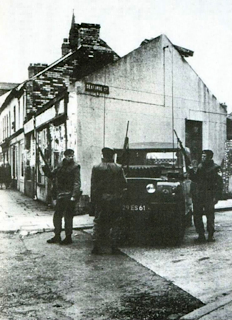
The unrest was triggered by the Orange Order’s permission to march its traditional route through the Garvaghy Road in Portadown, County Armagh, a Catholic/nationalist area, as part of the annual Drumcree parading dispute. The Orange Order, a Protestant fraternal organization, has marched this route since 1807 to commemorate the Battle of the Boyne. For decades, Catholic residents object to the route, seeing it as a sectarian provocation.
The decision to allow the march comes after death threats from loyalistparamilitaries to target Catholics if the parade is stopped. This concession outrages nationalists, who also resent the Royal Ulster Constabulary (RUC)’s aggressive policing of protesters.
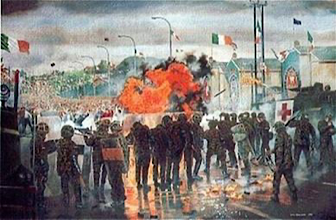
On July 6, around 1,000 Orangemen march under a sealed-off Garvaghy Road, with about 1,500 RUC and British Army personnel present. The next day, mass protests erupt in areas like North Belfast, Lurgan, and west Belfast’s Lenadoon district. Rioters hurl stones, petrol bombs, and other projectiles at security forces, while Republican paramilitaries engage in gun battles with police.
Security forces responded with plastic bullets and other riot control measures, firing over 2,500 plastic bullets at rioters. A 13-year-old boy is critically injured after being struck by one. Hundreds of vehicles are hijacked, set on fire, and used to block roads in Belfast, Newry, Armagh, and Dungannon. The RUC and British Army have to withdraw entirely from some nationalist areas of Belfast.
One civilian is killed in the rioting and over 100 people are injured, including 62 RUC officers and at least three soldiers. One hundred seventeen arrests are made and some armoured vehicles are either damaged or destroyed. An indirectly related incident sees a loyalist Ulster Defence Association (UDA) member killed by a pipe bomb he is handling.
The riots highlight the fragility of peace efforts and deepen divisions over parading rights. The episode leads Secretary of State for Northern IrelandMo Mowlam to urge Orange leaders to reroute future marches. For the Provisional Irish Republican Army, the riots are its last major action in a 27-year campaign. It declares its final ceasefire on July 19, 1997.
The 1997 riots are the last widespread sectarian violence in Northern Ireland before the Good Friday Agreement, underscoring the unresolved nature of the Drumcree dispute and the challenges of achieving lasting peace.
(Pictured: “Drumcree, The Garvaghy Road July 1997” by military artist David Rowlands, oil on canvas, owned by the 1st Battalion (The Cheshires) The Mercian Regiment which depicts British soldiers during the rioting on Garvaghy Road)
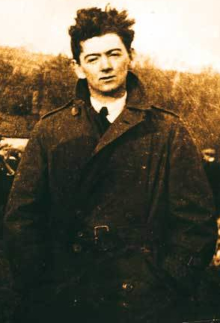
Barry returns to Bandon in early 1919. He describes in his guerilla days in Ireland a Damascus-like conversion to Irish nationalism on hearing of the Easter Rising while with the Mesopotamian expeditionary force, but he is only accepted into the IRA with considerable caution. Initially tested in intelligence and training work, in mid-1920 he takes charge of the new brigade flying column, which is used both to train officers and to stage offensive actions.
Barry adapts his military experience successfully to the demands of guerrilla warfare, becoming the most famed of column leaders during the Irish War of Independence. In his memoirs, he pours scorn on the obsession of many with military titles and orthodox procedure, complaining of a “paper army.” He stresses the need for spontaneity, initiative, and knowledge of local conditions. “The reality,” he writes, “was a group of fellows, mostly in caps and not-too-expensive clothing, wondering how to tackle their job and where they would sleep that night or get their supper.” (The Reality of the Anglo–Irish War (1974)). He well realises that the war’s character does not permit any close control from the IRA’s GHQ in Dublin, hence increasing the importance of local leaders. His tactics put strong emphasis on speed of movement and on the need to attack the enemy at his weakest point. The column’s ambush successes are small in number but among the best-remembered of the war. He admits, however, that his own and his column’s lack of experience with mines frequently weakened their offensives.
The column’s first successful ambush is at Tooreen on October 22, 1920, followed on November 28 by the dramatic ambushing of a patrol of auxiliaries at Kilmichael while traveling from their Macroom base. A column of thirty-six men, divided into three sections, kill sixteen auxiliaries, with one captured and later shot, suffering two fatalities of their own. Controversy has raged since over whether a false surrender by the British force caused the brutality of some of the deaths. Together with the Bloody Sunday killings of a week earlier in Dublin, Kilmichael has a profound effect on the British military and political establishment, with the declaration in December of martial law for much of Munster and the implementation of wide-ranging internment, together with the authorisation of official reprisals.
After a short period in hospital with a heart condition, in early 1921 Barry leads unsuccessful attacks on Kilbrittain, Innishannon, Drimoleague, and Bandon barracks. The seizure of Burgatia House, outside Rosscarbery, in early February, and the successful resistance made there to British troops, wins much publicity but has little military significance. He is a leading figure in the brutal final stage of the war in the first six months of 1921, which sees widespread shooting of suspected spies and destruction of loyalist property. By March 1921, his flying column, with 104 men, is easily the largest in Ireland, and an explosives expert, Capt. McCarthy, has joined them.
The protracted engagement between Barry’s column and encircling British forces at Crossbarry on March 19, 1921, comes at a time when large-scale sweeps are making life increasingly difficult for the IRA. It consists of a daring and courageous breakout. Crossbarry is the largest action of the war, and Barry is to regard it as even more important than Kilmichael. Soon afterwards, Rosscarbery barracks is successfully attacked by a Barry-led party, representing one of the few successful such initiatives in 1921. Isolated triumphs, however, cannot hide the fact that pressure is increasing on the column, and he becomes increasingly critical of inactive regions. He is later to say that all County Kerry does during the war is to shoot one decent police inspector at Listowel Racecourse and a colleague of his. He is strongly critical also of the lack of assistance from GHQ and of the divisionalisation policy. He visits Dublin in May, travels around with Michael Collins, and is present when two American officers demonstrate the Thompson submachine gun. He is more aware than most of his 1st Southern Division colleagues of the scarcity of arms and ammunition at the war’s end.
During the truce, Barry becomes liaison officer for Munster, riling the British by insisting on his military rank, and criticising the IRA liaison men in Dublin for being overly deferential. He joins the overwhelming majority of the Cork IRA in opposing the Anglo–Irish Treaty but plays a characteristically maverick role throughout the treaty split. His independent attitude is heightened by his dislike of Liam Lynch, the republican IRA’s Chief of Staff, and his continuing respect for Michael Collins. He shows impatience at the long-drawn-out peace initiatives. In March 1922, therefore, he advocates armed confrontation with pro-treaty units over the occupation of barracks in Limerick, and on June 18 he submits a resolution, which only narrowly fails, at the army convention, giving British troops seventy-two hours to leave Dublin.
At the beginning of the Irish Civil War, Barry is arrested entering the Four Courts disguised as a woman. He escapes from an internment camp at Gormanston in early September 1922. For the rest of the war his actions mirror its confused nature. In late October 1922, he leads successful raids on the small towns of Ballineen and Enniskean, and later on Inchigeelagh and Ballyvourney. In December his column takes Carrick-on-Suir, demonstrating the weakness of the Free State army, but his talk of advancing on the Curragh and of large-scale actions does not materialise. There is no evidence that he is acting in accordance with any coordinated plan. By February 1923, he realises that the Republican IRA cause is hopeless and he is involved with Fr. Tom Duggan in efforts to get 1st Southern Division to declare a ceasefire. He journeys to Dublin to put pressure on the intransigent Lynch in this connection, telling Lynch, “I did more fighting in one week than you did in your whole life.”
Barry avoids capture in roundups after the war, remaining on the run until 1924. Unlike many republicans, he does not turn to constitutionalism, remaining strongly militaristic. He is always an unreconstructed republican, though by no means a naive one. In 1924 he becomes attached to Cleeves Milk Co., based in Limerick and Clonmel, and from 1927 to retirement in 1965 is general superintendent with the Cork harbour commissioners. He strongly advocates preserving the independence of the IRA army executive during the republican split of 1925–27. He is instrumental in continuing the drilling of IRA members and is a strong supporter of armed opposition to the Blueshirts.
During the 1930s Barry is arrested at various times for possession of arms and seditious utterances. He promotes an attack against a Freemasons’ meeting in Cork in 1936 and gives the orders for the killing on March 4 of that year of Vice-AdmiralHenry Boyle Somerville. He is opposed to the use by Frank Ryan of IRA volunteers to support the republican cause in the Spanish Civil War and to the proposals of Seán Russell for a bombing campaign in England. To maintain the link with traditional republicanism, he is elected IRA chief of staff in 1937. His plan, however, for the seizure of Armagh city, as part of a direct northern offensive, quickly collapses due to a leak of information, and he soon resigns his position. He forcefully attacks the bombing of English cities in 1938, regarding attacks on innocent civilians as immoral and counterproductive. He enlists in the National Army on July 12, 1940, only to be demobilised a month later. In 1946, he stands as an independent candidate in a by-election in the Cork Borough constituency, finishing at the bottom of the poll. He is more comfortable the following year touring the United States on an anti-partition platform.
In 1949 his Guerilla Days in Ireland is published. It proves a best-seller and has frequently been reprinted. It is well written in a forceful and direct style, one memoir needing no assistance from a ghost writer. Age does not mellow him: lawyers and bank managers are threatened by him over matters relating to his own column, and in 1974 he publishes a fierce pamphlet, angry at perceived slights in the Irish War of Independence memoir of Liam Deasy. He does strive to achieve a public reconciliation with Collins’s memory by unveiling the memorial to Collins at Sam’s Cross in 1966. On the outbreak of the Northern Ireland crisis in the late 1960s, he takes a militant line, castigating the argument that the Six Counties can be brought into the Republic by peaceful means, and asking when had peaceful means existed there. At the memorial meeting in Carrowkennedy, County Mayo, in 1971, he claims that there is a perfect right at the opportune time to take the Six Counties by force. He remains opposed to IRA bombing of civilian targets.
Barry dies in Cork on July 2, 1980. He is buried in St. Finbarr’s Cemetery, Cork. Early in the truce of 1921 he marries Leslie Price, one of the most active of Cumann na mBan members during and after the rising. They have no children.
While Barry always remains an influential figure in republican circles, he will be remembered best as the pioneer of guerrilla warfare, the hero of Kilmichael and Crossbarry. His military flair, individualism, and ruthlessness are well suited to the 1919–21 conflict. After that, his strained relations with colleagues and his lack of flexibility reduce his importance. While his life after the revolutionary era appears anti-climactic, he retains much of his charisma. In later years, he is ever willing to remind politicians and historians how far Ireland has retreated from republican ideals. He is often prickly and autocratic yet could be generous to old colleagues of either side of the treaty split. He is arguably the most intelligent but also the most intolerant of the revolutionary leaders.
(From: “Barry, Thomas Bernadine (‘Tom’)” by M. A. Hopkinson, Dictionary of Irish Biography, http://www.dib.ie, October 2009)
The Battle of St. Matthew’s, also known as the Battle of Short Strand, is a gun battle that takes place on the night of June 27-28, 1970, in Belfast, Northern Ireland. It is fought between the Provisional Irish Republican Army (IRA), and Ulster loyalists in the area around St. Matthew’s Roman Catholic church. This lies at the edge of the Short Strand, a Catholic enclave in a mainly-Protestant part of the city. Violence erupts there, and in other parts of Belfast, following marches by the Orange Order. The battle lasts about five hours and ends at dawn when loyalists withdraw. The British Army and police are deployed nearby but do not intervene. Three people are killed and at least 26 wounded in the fighting, while another three are killed in north Belfast.
The battle is the Provisional IRA’s first major action during the Troubles, and a propaganda victory for the Irish nationalist organization. It presents itself as successfully defending a vulnerable Catholic enclave from armed loyalist mobs. Loyalists, however, argue that the IRA lured them into a carefully prepared trap.
During the Northern Ireland riots of August 1969 in Belfast, Catholic Irish republicans clash with Protestant Ulster loyalists and the mainly-Protestant Royal Ulster Constabulary (RUC), Northern Ireland’s police force. Catholics believe that they are about to become “victims of a Protestant pogrom” and Protestants believe they are on the “eve of an IRA insurrection.” Hundreds of Catholic homes and businesses are burned out and more than 1,000 families, mostly Catholic, are forced to flee. The Irish Republican Army (IRA) has few weapons or members and is unable to adequately defend the Catholic areas. The rioting ends with the deployment of British troops. In December 1969, the IRA splits into the Official Irish Republican Army and the Provisional Irish Republican Army—with the Provisionals vowing to defend Catholic areas in future.
The Short Strand is a Catholic/nationalist enclave in East Belfast, a mainly Protestant/Ulster unionist part of the city. In the early years of the Troubles, Catholics in Short Strand number about 6,000, while their Protestant neighbours total about 60,000.
On Saturday, June 27, 1970, a large march by the Orange Order takes place in west Belfast, which is joined by loyalist bands from other parts of the city. Violence breaks out as the march enters the Catholic Springfield Road area on its way to Whiterock Orange Hall. Missiles are thrown by both sides, a bakery is set ablaze, and the British Army fires CS gas to disperse crowds. The riot sparks violence in other parts of Belfast.
In north Belfast, another Orange march proceeds along the Crumlin Road, the boundary between the Catholic Ardoyne and the Protestant Shankill areas. According to Crown prosecutors, a crowd emerges from Ardoyne throwing bottles and stones. As the riot descends into a gun battle, the IRA—who according to Gerry Adams were “ready and waiting”—kill three Protestants: William Kincaid (28), Daniel Loughins (32) and Alexander Gould (18). Others are wounded, including a Royal Navypetty officer who is shot in the jaw while driving a field ambulance. Earlier in the month, British troops divert an Orange march away from Ardoyne, leading to serious rioting by Protestants in the Shankill.
In the predominantly Protestant east of the city, an Orange parade also takes place along the Newtownards Road. At the bottom of the road is the Catholic enclave of the Short Strand, and here a gun battle breaks out between the IRA and Protestants, though the cause of it is disputed by both sides.
Violence erupts at St. Matthew’s Catholic church on the evening of June 27. It begins after a loyalist band and supporters march through the area on their return from the main parade. Rival groups gather, taunting leads to stone-throwing, and eventually, shots are fired.
As the situation worsens, Catholic residents fear that the gathering crowds of loyalists will attempt to invade the Short Strand and burn them from their homes. Local IRA members retrieve weapons from arms dumps. A young resident, Jim Gibney, recalls, “I saw neighbours, people I knew, coming down the street carrying rifles. I was just dumbstruck by this experience. I’d never seen such a thing before.”
The battle begins at about 10:00 p.m. and continues for the next five hours. Loyalists begin attacking the church and surrounding property with petrol bombs. A small house on the church grounds, where the sexton lives with his family, is set ablaze. A nearby Catholic pub is also looted and burned.
A small group of IRA members and members of the Citizens’ Defence Committee take up positions in the church grounds and in adjoining streets. The IRA members are armed with M1 carbines and are led by Billy McKee, commander of the IRA’s Belfast Brigade. Also present is Billy Kelly, commander of the Belfast Brigade’s 3rd Battalion. The IRA members fire at the loyalists, some of whom are positioned on the roofs opposite. Jim Magee, a local loyalist, sees wounded people lying on the road and asks the police (RUC) for help. According to Magee, “[they] said ‘if you have anything, get it out and protect your people.’ So we got an old rifle and went into Frazer Street and started firing back.”
The security forces are deployed in the area at the time but do not intervene to end the fighting. Shortly after the shooting begins, StormontMPPaddy Kennedy goes with Short Strand residents to the local RUC base and demands protection for their homes. Across the River Lagan, in the Markets area, other IRA members assemble and prepare to reinforce the Short Strand should it be invaded. British soldiers eventually arrive in armoured vehicles and cordon off the roads around the Short Strand, which denies the IRA “any hope of reinforcement.” At the time, the British Army says that its soldiers fired no shots because “owing to the confused situation, it was impossible to identify targets.” British Army Colonel Mike Dewar later says, “The whole incident had taken its course because the Army was so chronically overstretched that night in Belfast. The one spare platoon in the whole of west Belfast was not able to get through rioting Protestants to the Short Strand.” JournalistTony Geraghty writes that sometimes “The gunfire eased long enough to allow an occasional British Army personnel carrier (a ‘Pig‘) to whine past, illuminated by the flames in a token gesture of law-and-order.”
Another journalist who witnesses the battle, Peter Taylor, later says, “The shooting intensified but the soldiers still declined to intervene and separate the two sides – either because they felt they were not numerically strong enough or because they did not wish to get caught up in the middle of a sectarian fight, in the darkness, with shots being fired by both sides.”
Liz Maskey, who is a volunteer nurse that night, says that the Short Strand is surrounded by loyalists and claim they attacked her ambulance as it tried to leave the area.
The loyalists withdraw after about five hours, as dawn breaks. IRA leader Billy McKee claims that his unit had fired 800 rounds during the battle.
Three people are killed in the fighting. At least 26 are wounded, including Billy McKee, who is shot five times.
Robert Neill, a 38-year-old Protestant, died instantly when a shot fired from the church bounced off the pavement and hit him in the spine.
James McCurrie, a 34-year-old Protestant, is shot dead on Beechfield Street.
Henry McIlhone, a 33-year-old Catholic, is helping to defend Short Strand when he is accidentally shot from the republican side. He dies on June 29. However, McKee maintains that McIlhone is shot by loyalists. Tírghrá, the IRA’s official list of its fallen, lists McIlhone as a “volunteer” but adds “although not a member of the IRA, Henry McIlhone was included in the republican roll of honour as a mark of respect for this great Irishman by republican comrades he fought alongside.”
Republicans and loyalists disagree over who started the violence and fired the first shots. Republicans claim that the violence was started by a mob of loyalists returning from an Orange march. They say that the loyalists tried to set the church alight and invade Short Strand, with the intention of burning the residents from their homes. Hence, republicans argue that they were defending the Short Strand from a loyalist attack. Loyalists claim the violence was begun by republicans, allegedly when the returning Orangemen and supporters were attacked on Newtownards Road. They argue that republicans attacked Protestants to lure them into “a carefully prepared trap.”
The following day, loyalists expel 500 Catholic workers from the nearby Harland & Wolff shipyard. Shortly after, the British government’s representative at Stormont says that the decision to allow Orange marches to go ahead on that day was “the greatest single miscalculation I have ever seen made in the course of my life.”
Many Catholics and nationalists believe that the IRA had been unable to defend them during the August 1969 riots. However, it is argued that the IRA’s defence of Short Strand redeemed it in the eyes of many Catholics and nationalists. Prior to the gun battle, the IRA had been waiting for an opportunity to portray themselves as defenders of the Catholic community. Among republicans, the battle is seen as a key event in the growth of the Provisional IRA.
Less than a week later, the British Army seizes a large haul of Official IRA weapons during a three-day operation in west Belfast. Nationalists see this as a confiscation of their defences.
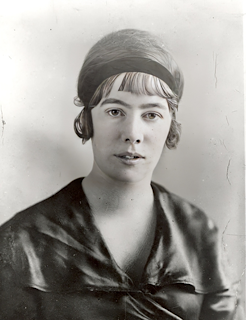
Born Helen Ruth Gifford on November 9, 1880, in Phibsborough, Dublin, to Frederick Gifford, a solicitor, and Isabella Julia Gifford (née Burton), Gifford is the fifth child and second eldest daughter of the family of six daughters and six sons. Her father is a Catholic while her mother, a niece of the painter Frederic Burton, is rigorously Protestant. All the children are brought up in the Church of Ireland. The men, emigrate and remain unionist while the women are active nationalists. Most famous are the two youngest, the artistGrace Gifford, and the journalist and broadcaster Sidney Czira.
Gifford grows up in Rathmines and goes to school at Alexandra College. She trains as a domestic economy teacher and works for seven years at a series of positions in County Meath.
Gifford experiences the living conditions of the landless rural poor while lodging in labourers’ cottages during this time. As a result, she becomes a supporter of the campaigns of the land agitator and nationalist MPLaurence Ginnell.
During the 1913 Dublin lock-out Gifford assists James Larkin enter the Imperial Hotel, on August 31 to address the crowd. He enters in disguise, that of an elderly and infirm clergyman. She poses as his niece. She speaks to the hotel staff to prevent Larkin’s strong Liverpool accent giving away his identify. This is the speech which precipitates the “Bloody Sunday” police baton charge. Gifford goes on to be a founding member of the Irish Citizen Army (ICA). This group is attractive to many women due to the feminist beliefs of James Connolly.
Gifford gives lessons on camp cookery in Liberty Hall and finds jobs for recruits coming in from abroad. As a result of this work she, very fatefully, introduces Michael Collins to her future brother-in-law Joseph Plunkett who go on to serve together in the 1916 Easter Rising. Collins is Plunkett’s aide-de-camp.
Gifford is the only one of her sisters to actively participate in the rising itself. She is with the ICA’s St. Stephen’s Green contingent alongside Countess Markievicz. Throughout the week she supervises the garrison’s provisions in the Royal College of Surgeons building, commandeering food from shops and bread vans, and by courier from other garrisons. She also ensures the delivery of provisions to troops both in the college with her and in outlying posts. She is one of the women arrested at the surrender and jailed in Kilmainham Gaol. At the same time, in the same prison her sister Grace marries Joseph Plunkett hours before his execution. Only twelve women are detained after the main release of women prisoners on May 8, 1916. Gifford is one of those transferred to Mountjoy Prison until her release on June 4, 1916. Afterward she continues to be as involved in the campaigns.
After her time in prison, Gifford travels through England to the United States where she and other women veterans of Easter week lecture throughout America. While there she marries Joseph Donnelly, of Omagh, County Tyrone in 1918. In 1921 she and their year-old daughter Maeve leave him to return to Ireland.
Frederick Gifford dies in September 1917 and leaves Gifford £800. However, she is was not well off. She becomes a broadcaster and journalist for the national radio and the Irish press. Holding to her upbringing, she remains a staunch Protestant, unlike four of her sisters, who had married Catholics.
Gifford becomes devoted to preserving the historical record of the independence movement. Noticing the huge number of visitors for the 1932 Eucharistic Congress, she organises a small exhibition there of 1916 memorabilia for the National Museum of Ireland. She is irritated by the display of Catholic religious artifacts there. She campaigns for a permanent exhibition of recent Irish nationalist history. She coordinates a substantial body of material pertinent to nationalist organisations, the Easter Rising, and the Irish War of Independence, which now forms the core of the present collection.
Over the years Gifford is secretary of the Old IRA Association, a member of the Old Dublin Society, and a founder of the Kilmainham Gaol Restoration Society. She also looks after stray and neglected dogs and cats. She dies at the age of 90 on June 23, 1971, at the Gascoigne nursing home in Rathmines, Dublin.
(Pictured: Irish nationalist Nellie Gifford taken in Boston in 1917)
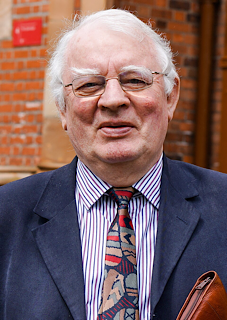
Currie becomes an active member in the Northern Ireland Civil Rights Association (NICRA). He later speaks about the effect of partition on Catholics in Northern Ireland: “Partition was used to try to cut us off from the rest of the Irish nation. Unionists did their best to stamp out our nationalism and, the educational system, to the extent it could organise it, was oriented to Britain and we were not even allowed to use names such as Séamus or Seán. When my brothers’ godparents went to register their birth, they were told no such names as Séamus or Seán existed in Northern Ireland and were asked for the English equivalent.”
Currie contests the 1979 United Kingdom general election and 1986 by-election in the Fermanagh and South Tyrone seat, but is unsuccessful on both attempts. He also is elected to the Northern Ireland Assembly in 1982 for the same seat. That Assembly, which is an attempt by the Government of the United Kingdom to reintroduce devolved power-sharing, collapses in 1986 without executive ministerial functions ever being transferred to it from the UK Secretary of State for Northern Ireland as no political agreement can be reached on power-sharing between the parties owing to nationalists abstentionism over the constituency boundaries used to elect members, and unionist opposition to the Anglo-Irish Agreement of 1985.
Following his decision to quit Northern Ireland politics, and relocate his family to County Kildare, Currie becomes actively involved in politics in the Republic of Ireland. Partly due to his long-standing doubts about the commitment of politicians in the Republic to the plight of northern nationalists, he join the Fine Gael party in 1989. He is elected as a Fine Gael TD for Dublin West at the 1989 Irish general election.
In 1990, Fine Gael selects Currie as their candidate for the 1990 Irish presidential election, running against Tánaiste and Fianna Fáil TD, Brian Lenihan Sr, and Senator Mary Robinson for the Labour Party. The 1990 election is the first contested election for the Irish Presidency in 17 years. Currie receives 267,902 first-preference votes (approximately 17%) and is eliminated on the first count. The distribution of his votes sees Mary Robinson elected as Ireland’s first female president on the second count, beating Lenihan by more than 86,000 votes.
In his 2004 autobiography All Hell will Break Loose, Currie writes about his experience of running in the presidential election, and the prejudice he faced as a nationalist from Ulster in southern politics: “What annoyed, indeed angered me most was the suggestion that because I came from the North, I was not a real Irishman … what I called the partitionist mentality … [during the election campaign] the [then Fianna Fáil] Minister for Justice [Ray Burke] said Fine Gael leader Alan Dukes ‘had to go to Tyrone to find a candidate for the presidency’ … it was hard to take, particularly from so-called republicans.”
Following his defeat in the presidential election, Currie holds his Dáil seat in Dublin West at the 1992 and 1997 Irish general elections. Following the formation of the so-called Rainbow Coalition between Fine Gael, Labour and Democratic Left, on December 20, 1994, newly appointed TaoiseachJohn Bruton appoints him as a Minister of State with responsibility for Children’s Rights at the Departments of Health, Education and Justice, becoming the first ever minister in an Irish Government with dedicated responsibility for children. He holds this post until the appointment of a new Irish Government on June 26, 1997, following the 1997 Irish general election.
At the 2002 Irish general election Currie contests the new constituency of Dublin Mid-West, and fails to be elected. He immediately announces his retirement from electoral politics. He continues to speak and campaign for civil rights across the island of Ireland and for causes he believes in, such as justice for the families of the Disappeared during the Troubles. He and his wife and family are personal friends of the family of one of the Disappeared, Columba McVeigh, from Donaghmore, County Tyrone. His daughter Emer Currie is elected in his former constituency of Dublin West at the 2024 Irish general election.
Following the deaths of Seamus Mallon and John Hume in January and August 2020 respectively, Currie becomes the last surviving founder of the SDLP.
Currie dies on November 9, 2021, at the age of 82 at his residence in Derrymullen, County Kildare. Following an initial funeral mass in Allentown, County Kildare, his remains are transferred to his original family home in Edendork, near Dungannon, County Tyrone, where a second funeral mass was celebrated at St. Malachy’s Church, Edendork. He is buried alongside his parents in the cemetery adjoining the church.
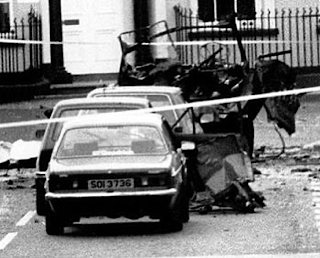
On June 15, 1988, an unmarked military van carrying six British Army soldiers is blown up by the Provisional Irish Republican Army (IRA) at Market Place in Lisburn, County Antrim, Northern Ireland. The explosion takes place at the end of a charity marathon run in which the soldiers had participated. All six soldiers are killed in the attack – four outright, one on his way to hospital and another later on in hospital.
Lisburn is the headquarters of the British Army in Northern Ireland. Four of the dead are from the Royal Corps of Signals while the other two are from the Green Howards and the Royal Army Ordnance Corps. A booby trap bomb is hidden under the Ford Transit van in which the soldiers are traveling, and is designed in such a way that the blast goes upward to cause maximum damage to the vehicle. Eleven civilian bystanders are injured, including a two-year-old child and 80-year-old man. The bombing is sometimes referred to as the Lisburn “Fun Run” bombing.
On Wednesday, June 15, 1988, at 8:50 p.m., an unmarked blue Ford Transit van carrying six off-duty British soldiers in civilian clothes drives off from a leisure centre carpark in Lisburn. The soldiers have just taken part in the “Lisburn Fun Run”, a 13-mile (21 km) charity half marathon held in the town. They leave the van unattended in the car park, which is the start and finish point for the run. It is there that an IRA active service unit (ASU), who has been following the van, hides a bomb underneath the vehicle. The half marathon and shorter “fun runs” are organised by Lisburn Borough Council, together with the YMCA, to raise funds for the disabled. There are 4,500 participants that day and at least 200 British Army personnel have been given leave to participate in the event.
Nine minutes later, the van stops at traffic lights at Market Place, in Lisburn’s town centre. As the van moves on, the seven-pound (3.2 kg) bomb detonates, turning the van into a massive fireball and instantly killing four of the soldiers as the vehicle disintegrates with the force of the blast. The Semtex device has been designed in a cone shape to channel the blast upward, thereby causing maximum damage to the vehicle and the soldiers inside. The area around Market Place is crowded with onlookers, including many teenagers and families with young children, although the biggest crowd is at the carpark. In all, about 10,000 onlookers have attended the charity run. There is pandemonium as frightened parents search for their children, while others rush to give aid to the dead and dying soldiers before fire engines and ambulances arrive.
Eleven civilian bystanders are injured in the attack, including a two-year-old child and an 80-year-old man. Another soldier dies on the way to hospital while a sixth soldier dies later that night after undergoing surgery for severe head injuries. The dead soldiers are stationed at Ebrington Barracks in Derry and are returning to base when the bomb goes off. Four of the men – Sergeant Michael Winkler (31), Signalman Mark Clavey (24), Lance Corporal Graham Lambie (22), and Corporal William Patterson (22) – are from the Royal Corps of Signals, while the other two – Corporal Ian Metcalf (36) and Lance Corporal Derek Green (20) – are from the Green Howards and Royal Army Ordnance Corps respectively.
Lisburn is a mainly Ulster Protestant town, 14 miles (23 km) southwest of Belfast. It serves as the garrison headquarters of the British Army in Northern Ireland. Six months before the van bombing, a booby trap bomb planted by the IRA kills Ulster Defence Association (UDA) leader John McMichael in the town.
The van bombing results in the greatest loss of life suffered by the British Army since eleven soldiers were killed in the Droppin Well Disco bombing on December 6, 1982.
On June 16, the Provisional IRA Belfast Brigade claims responsibility for the bombing, promising to wage “unceasing war” against the British security forces in Northern Ireland. Sinn Féin president Gerry Adams allegedly says that the IRA’s killing of the six soldiers is “vastly preferable” to killing members of the (locally recruited) Ulster Defence Regiment (UDR) or Royal Ulster Constabulary (RUC). The leisure centre is forced to remain shut for a time after the loyalistProtestant Action Force (a cover-name of the UVF) issues a warning that they regard Catholic staff working there as “legitimate targets,” inferring that they may have had a hand in the bombing. Lisburn mayor Councillor William Bleakes condemns the threats by the PAF.
That same day, Tom King, then Secretary of State for Northern Ireland, travels to Lisburn where he holds a meeting with Lieutenant General Sir John Waters, the British Army Commander in Northern Ireland, and senior RUC officers. They discuss the attack and proposals for heightened security. The soldiers had failed to follow proper security procedures, as they had left their vehicle unguarded for over two hours and had then driven off without having checked under it beforehand. After the Lisburn meeting, King flies to London where he reports directly to British Prime MinisterMargaret Thatcher, who describes the attack as a “terrible atrocity.” However, she rejects demands from Conservative members of Parliament to bring back internment, regarding the proposal as “a very serious step.”
In his statement to the House of Commons, Tom King suggests that there would have been a much higher death toll had the bomb exploded in the carpark, where thousands of people had gathered after the run.
The Republic of Ireland‘s government also strongly condemns the killings and extends its sympathy to the families of the dead soldiers. The bombing is a topic of debate in the Seanad Éireann on June 16, 1988. Bishop Cahal Daly of the Roman Catholic Diocese of Down and Connor denounces the bombers and the killings in the “strongest possible terms.”
Questions are raised as to how the IRA knew the soldiers were attending the charity run in Lisburn, how they recognised their unmarked van, and how the unit was able to plant a bomb in the predominantly loyalist town without being spotted, despite the number of people in the carpark. The RUC believes that the bombers may have been wearing sports gear as they mingled with the crowd that evening. They appeal to onlookers who had attended the event to hand over any film they may have taken of the “fun run” in an attempt to identify the IRA bombers.
The following Saturday, between 1,000 and 2,000 people gather in Lisburn town centre to attend a remembrance service for the six soldiers. A book of condolences is also opened.