seamus dubhghaill

Promoting Irish Culture and History from Little Rock, Arkansas, USA


Leave a comment

Death of Dorothy Macardle, Writer, Playwright, Journalist

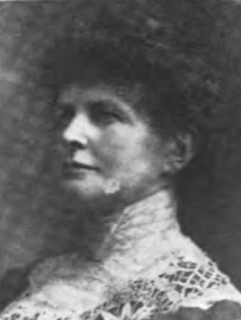
Dorothy Macardle, Irish writer, novelist, playwright, journalist and non-academic historian, dies in Drogheda, County Louth, on December 23, 1958. Associated throughout her life with Irish republicanism, she is a founding member of Fianna Fáil in 1926 and is considered to be closely aligned with Éamon de Valera until her death, although she is vocal critic of how women are represented in the 1937 constitution created by Fianna Fáil. She is also unable to respect de Valera’s attitudes adopted during World War II. Her book, The Irish Republic, is one of the more frequently cited narrative accounts of the Irish War of Independence and its aftermath, particularly for its exposition of the anti-treaty viewpoint.

Macardle is born in Dundalk, County Louth, on March 7, 1889, into a wealthy brewing family famous for producing Macardle’s Ale. Her father, Sir Thomas Callan Macardle, is a Catholic who supports John Redmond and the Irish Home Rule movement, while her mother, Lucy “Minnie” Macardle, comes from an English Anglican background and is politically a unionist. Lucy converts to Catholicism upon her marriage to Thomas. Macardle and her siblings are raised as Catholics, but Lucy, who is politically isolated in Ireland, “inculcated in her children an idealised view of England and an enthusiasm for the British empire“. She receives her secondary education in Alexandra College, Dublin—a school under the management of the Church of Ireland—and later attends University College Dublin (UCD). Upon graduating, she returns to teach English at Alexandra where she had first encountered Irish nationalism as a student. This is further developed by her first experiences of Dublin’s slums, which “convinced her that an autonomous Ireland might be better able to look after its own affairs” than the Dublin Castle administration could.

Between 1914 and 1916, Macardle lives and works in Stratford-upon-Avon in Warwickshire, England. There, her encounters with upper-class English people who express anti-Irish sentiment and support keeping Ireland in the British Empire by force further weakens her Anglophilia. Upon the outbreak of World War I, she supports the Allies, as does the rest of her family. Her father leads the County Louth recruiting committee while two of her brothers volunteer for the British Army. Her brother, Lieutenant Kenneth Callan Macardle, is killed at the Battle of the Somme, while another brother, Major John Ross Macardle, survives the war and earns the Military Cross. While Macardle is a student, the Easter Rising occurs, an experience credited for a further divergence of her views regarding republicanism and her family.

Macardle is a member of the Gaelic League and later joins both Sinn Féin and Cumann na mBan in 1917. In 1918, she is arrested by the Royal Irish Constabulary (RIC) while teaching at Alexandra.

On January 19, 1919, Macardle is in the public gallery for the inaugural meeting of the First Dáil and witnesses it declare unilateral independence from the United Kingdom, which is ultimately the catalyst for the Irish War of Independence.

By 1919 Macardle has befriended Maud Gonne MacBride, the widow of the 1916 Easter Rising participant John MacBride, and together the two work at the Irish White Cross, attending to those injured in the war. It is during this period she also becomes a propagandist for the nationalist side.

In December 1920, Macardle travel to London to meet with Margot Asquith, the wife of the former British prime minister H. H. Asquith, hoping to establish a line of communication between the Irish and British governments. It is during this trip that she comes into contact with Charlotte Despard, sister of the Lord Lieutenant of Ireland John French. Despard takes the pro-Irish side in the war and returns with Macardle to Dublin.

Following the signing of the Anglo-Irish Treaty in December 1921, Macardle takes the anti-treaty side in the ensuing Irish Civil War. Alongside Gonne MacBride and Despard, she helps found the Women Prisoners’ Defence League, which campaigns and advocates for republicans imprisoned by the newly established Irish Free State government. It is also during this same time that she begins working alongside Erskine Childers in writing for anti-treaty publications An Phoblacht and Irish Freedom.

In October 1922, Despard, Gonne MacBride and Macardle are speaking at a protest on O’Connell Street, Dublin against the arrest of Mary MacSwiney, a sitting Teachta Dála, by the Free State when Free State authorities move to break it up. Rioting follows and Free State forces open fire, resulting in 14 people being seriously wounded while hundreds of others are harmed in the subsequent stampede to flee. Following the event, Macardle announces she is going to pursue support of the Anti-treaty side full-time in a letter to Alexandra College, which ultimately leads to her dismissal on November 15, 1922. In the following days Macardle is captured and imprisoned by the Free State government and subsequently serves time in both Mountjoy Prison and Kilmainham Gaol, with Rosamond Jacob as her cellmate. During one point at her time in Kilmainham, Macardle is beaten unconscious by male wardens. She becomes close friends with Jacob and shares a flat with her in Rathmines later in the 1920s.

The Irish Civil War concludes in the spring of 1923, and Macardle is released from prison on May 9.

Following the Irish Civil War, Macardle remains active in Sinn Féin and is drawn into the camp of its leader Éamon de Valera and his wife Sinéad. She travels alongside the de Valeras as they tour the country and she is a frequent visitor to their home. As the trust between Macardle and de Valera develops, de Valera asks her to travel to County Kerry to investigate and document what later becomes known as the Ballyseedy massacre of March 1923, in which a number of unarmed republican prisoners are reportedly killed in reprisals. She obliges, and by May 1924 she has compiled a report that is released under the title of The Tragedies of Kerry.” Immediately upon the release of the report, the Minister for Defence Richard Mulcahy sets up an inquiry in June 1924 to carry out a separate investigation by the government. However, the government’s inquiry comes to the conclusion there had been no wrongdoing committed. Her book The Tragedies of Kerry remains in print and is the first journalistic historical account of the Irish Civil War from those on the republican side detailing Ballyseedy, Countess Bridge and various other incidents that occur in Kerry during this time.

In 1926, Éamon de Valera resigns as President of Sinn Féin and walks out of the party following a vote against his motion that members of the party should end their policy of abstentionism against Dáil Éireann. De Valera and his supporters, including Macardle, form the new political party Fianna Fáil in May 1926, with Macardle immediately elected to the party’s National Executive|Ard Chomhairle, one of six female members out of twelve on the original party National Executive, the others being Hanna Sheehy-SkeffingtonKathleen Clarke, Countess Constance Markievicz and Linda Kearns. Macardle is made the party’s director of publicity. However, she resigns from Fianna Fáil in 1927 when the new party endorses taking their seats in Dáil Eireann. Nevertheless, her views remain relatively pro-Fianna Fáil and pro-de Valera.

Macardle recounts her civil war experiences in Earthbound: Nine Stories of Ireland (1924). She continues as a playwright for the next two decades. In her dramatic writing, she uses the pseudonym Margaret Callan. In many of her plays a domineering female character is always present. This is thought to be symbolic of her own relationship with her own mother. Her parents’ marriage had broken up as her mother returned to England and her father raised the children with servants in Cambrickville and they were sent away for school. This female character holds back the growth and development of the younger female character in Dorothy’s plays and writings. 

By 1931, Macardle takes up work as a writer for The Irish Press, which is owned by de Valera and leans heavily toward supporting Fianna Fáil and Irish republicanism in general. In addition to being a theatre and literary critic for the paper, she also occasionally writes pieces of investigative journalism such as reports on Dublin’s slums. In the mid-1930s she also becomes a broadcaster for the newly created national radio station Radio Éireann.

In 1937, Macardle writes and publishes the work by which she is best known, The Irish Republic, an in-depth account of the history of Ireland between 1919 until 1923. Because of the book, political opponents and some modern historians consider her to have been a hagiographer toward de Valera’s political views. In 1939 she admits, “I am a propagandist, unrepentant and unashamed.” Overall, however, the book is well-received, with reviews ranging from “glowing” to measured praise. She is widely praised for her research, thorough documentation, range of sources and narration of dramatic events, alongside reservations about the book’s political slant. The book is reprinted several times, most recently in 2005. Éamon de Valera considers The Irish Republic the only authoritative account of the period from 1916 to 1926, and the book is widely used by de Valera and Fianna Fáil over the years and by history and political students. She spends seven years writing the book in a cottage in DelganyCounty Wicklow, and it is a day-by-day account of the history of the events in Ireland from 1919 to 1923 recorded in painstaking detail together with voluminous source material.

In 1937, de Valera’s Fianna Fáil government is able to create a new Constitution of Ireland following a successful referendum. However, there is widespread criticism of the new Constitution from women, particularly republican women, as the language of the new Constitution emphasises that a woman’s place should be in the home. Macardle is among them, deploring what she sees as the reduced status of women in this new Constitution. Furthermore, she notes that the new Constitution drops the commitment of the 1916 Proclamation of the Irish Republic to guarantee equal rights and opportunities “without distinction of sex” and writes to de Valera questioning how anyone “with advanced views on the rights of women” can support it. DeValera also finds her criticising compulsory Irish language teaching in schools.

The entire matter of the new Constitution leads Macardle to join Hanna Sheehy-Skeffington’s Women’s Social and Progressive League.

While working as a journalist with the League of Nations in the late 1930s, Macardle acquires a considerable affinity with the plight of Czechoslovakia being pressed to make territorial concessions to Nazi Germany. Believing that “Hitler‘s war should be everybody’s war,” she disagrees with de Valera’s policy of neutrality. She goes to work for the BBC in London, develops her fiction and, in the war’s aftermath, campaigns for refugee children – a crisis described in her book Children of Europe (1949). In 1951, she becomes the first president of the Irish Society of Civil Liberties.

Macardle dies of cancer on December 23, 1958, in a hospital in Drogheda, at the age of 69. Though she is somewhat disillusioned with the new Irish State, she leaves the royalties from The Irish Republic to her close friend Éamon de Valera, who had written the foreword to the book. De Valera visits her when she is dying. She is accorded a state funeral, with de Valera giving the oration. She is buried in Sutton, Dublin.


Leave a comment

Founding of Traditional Unionist Voice

The Traditional Unionist Voice (TUV), a unionist political party in Northern Ireland, is founded on December 7, 2007, by Jim Allister after he and others had resigned from the Democratic Unionist Party (DUP) in March of that year. In common with all other Northern Irish unionist parties, the TUV’s political programme has as its sine qua non the preservation of Northern Ireland’s place within the United Kingdom. A founding precept of the party is that “nothing which is morally wrong can be politically right.”

At the time of his resignation, Allister is a prominent figure in the DUP and holds the position of Member of the European Parliament (MEP) for the party having been elected to the European Parliament in 2004. The reason for the split is DUP leader Ian Paisley’s March 2007 consent to the St. Andrews Agreement and his willingness to become First Minister of Northern Ireland alongside a deputy First Minister from the Irish republican party Sinn Féin.

Prior to the St. Andrews Agreement, the DUP presents itself as an “anti-Agreement” unionist party opposed to numerous aspects of the Good Friday Agreement, e.g., the release of paramilitary prisoners before the end of their jail sentences, and the participation of Sinn Féin in the Northern Ireland government without complete decommissioning of Provisional Irish Republican Army (IRA) weapons and cessation of all IRA activity. The TUV has been an exception among Northern Irish unionist parties in consistently opposing the presence of Sinn Féin in the Northern Ireland government. After Allister’s resignation from the DUP, he continues to occupy his European Parliament seat, sitting as an Independent MEP until the 2009 European Parliament election in the United Kingdom, when he is not re-elected.

In terms of electoral success and financial income, Traditional Unionist Voice is the third largest unionist party in Northern Ireland, behind the Democratic Unionist Party and the Ulster Unionist Party (UUP). It is usually considered by political commentators to be a small party and characterised as being more hardline than other Northern Irish unionist parties.

Since 2011, the TUV has occupied one seat in the Northern Ireland Assembly. In 2024, they win their first seat in the United Kingdom House of Commons. The party also holds some seats on local councils in Northern Ireland. Its most prominent elected representative and best-known figure remains Jim Allister whose North Antrim constituency is the heartland of the party.

Since 2008, the party president has been former East Londonderry Westminster MP William Ross.

In March 2024, the party forms an electoral pact with Reform UK, stating that the two parties will stand mutually agreed candidates in Northern Ireland constituencies in the 2024 United Kingdom general election. In this election, the party wins its first Westminster Member of Parliament (MP), electing Jim Allister as MP for North Antrim.

An opinion poll, released by LucidTalk in August 2025, shows the TUV as the third most popular party for the first time, coming ahead of both the Alliance Party and Ulster Unionists, with 13%.


Leave a comment

Death of Sir William Moore, Member of Parliament & Judge

Sir William Moore, 1st BaronetPC (NI)DL, a Unionist member of the British House of Commons from Ireland and a Judge of Ireland, and subsequently of Northern Ireland, dies in Ballymoney, County Antrim, Northern Ireland, on November 28, 1944. He is created a Baronet of Moore Lodge, Ballymoney, in 1932.

Moore is the eldest son of Queen Victoria‘s honorary physician in Ireland, Dr. William Moore of Rosnashane, Ballymoney, and Sidney Blanche Fuller. His ancestors came to Ulster during the Plantation of Ulster, settling at Ballymoney, at which time they were Quakers. The Moore Lodge estate is inherited from a relative. The family owns several other houses: Moore’s Grove and Moore’s Fort. He goes on to become a Deputy Lieutenant for County Antrim and a Justice of the Peace.

Moore is schooled at Marlborough College, then attends Trinity College Dublin (TCD), where he is president of the University Philosophical Society. He marries Helen Gertrude Wilson, the daughter of a Deputy Lieutenant of County Armagh, in 1888. The marriage produces three children. His eldest son, William, inherits his title on his father’s death.

Moore is called to the Irish Bar in 1887, to the English bar in 1899, and becomes an Irish Queen’s Counsel the same year.

In 1903, Moore is one of the first landowners of Ireland to sell off their estates under the land acts. By the early 1920s he owns a Belfast pied-à-terre called “Glassnabreedon,” in the village of Whitehouse, four miles north of Belfast. This house is once owned by the son of Nicholas Grimshaw, Ireland’s first cotton pioneer.

Moore becomes a member of the General Synod of the Church of Ireland and is a founder member of the Ulster Council. He is a passionate Orangeman: his vehemence in defending Ulster’s right to oppose Irish Home Rule is said to alarm even those who share his views. Speaking in England on March 10, 1913, he makes his feelings clear on the possibility of Irish Home Rule: “I have no doubt, if Home Rule is carried, its baptism in Ireland will be a baptism in blood.” He shows little respect for English politicians, and has nothing but contempt for Southern Unionists. The eventual political settlement in 1921 meets with his approval.

Moore is a Member of Parliament, representing North Antrim from 1899 to 1906. From 1903 to 1904, he is an unpaid secretary to the Chief Secretary for Ireland. Having lost his Parliamentary seat in the 1906 United Kingdom general election, he is elected for North Armagh at the 1906 North Armagh by-election in November. He sits for this seat until he is appointed a judge of Ireland’s High Court.

Moore is a Justice of the High Court from 1917 to 1921. He is sworn of the Privy Council of Ireland in the 1921 Birthday Honours, entitling him to the style “The Right .” Following the partition of Ireland, he becomes a Lord Justice of Appeal in the Northern Irish Court of Appeal (1921–25). He is sworn of the Privy Council of Northern Ireland in 1922 and becomes the Lord Chief Justice of Northern Ireland, succeeding Sir Denis Henry. He holds the position until he retires in 1937.

Moore dies at his home, Moore Lodge, in Ballymoney on November 28, 1944, less than a week after his 80th birthday. He is buried in the family burial ground, “Lamb’s Fold,” two days later.


Leave a comment

Birth of Arthur Clery, Politician & University Professor

Arthur Edward CleryIrish republican politician and university professor, is born at 46 Lower Leeson Street in Dublin on October 25, 1879.

Clery is the son of Arthur Clery (who also uses the names Arthur Patrick O’Clery and Arthur Ua Cléirigh), a barrister, and Catherine Moylan. His father, who practises in India, publishes books on early Irish history.

Clery is brought up to a considerable extent by a relative, Charles Dawson. A cousin, William Dawson, who uses the pen-name “Avis,” becomes his closest friend and associate. He is educated at the Catholic University School on Leeson Street (where he acquires the confirmation name “Chanel” in honour of the Marist martyr Peter Chanel, which he often uses as a pseudonym), at Clongowes Wood College, and University College Dublin in St. Stephen’s Green. He is a university contemporary of James Joyce.

Clery’s principal themes include the difficulties of Roman Catholic graduates seeking professional employment, dramatic criticism (he hails Lady Gregory‘s play Kincora as the Abbey Theatre‘s first masterpiece but is repulsed by the works of John Millington Synge), Catholic-Protestant rivalry, tension within the Dublin professional class, and the vagaries of the Gaelic revival movement.

Clery advocates partition on the basis of a two nations theory, first advanced in 1904–1905, possibly in response to William O’Brien‘s advocacy of securing Home Rule through compromise with moderate Unionists. Several of his articles on the subject are reprinted in his 1907 essay collection, The Idea of a Nation.

Clery derives this unusual view for a nationalist from several motives, including a belief that arguments for Irish nationalists’ right to self-determination can be used to justify Ulster Unionists’ right to secede from Ireland, fear that it might be impossible to obtain Home Rule unless Ulster is excluded, and distaste for both Ulster Protestants and Ulster Catholics, whom he sees as deplorably anglicised. He remains a partitionist for the rest of his life. He is not particularly successful as a barrister, but on the establishment of University College Dublin (UCD) in 1909, he is appointed to the part-time post of Professor of the Law of Property.

After 1914, Clery moves from unenthusiastic support for John Redmond‘s Irish Parliamentary Party to separatism. Before the 1916 Easter Rising he is an inactive member of the Irish Volunteers, and is defence counsel at the court-martial of Eoin MacNeill. During the 1918 United Kingdom general election in Ireland he campaigns for Sinn Féin. As one of the few barristers prepared to assist the Sinn Féin Court system, he is appointed to the Dáil Supreme Court in 1920.

Clery opposes the Anglo-Irish Treaty because he believes it will lead to re-Anglicisation and the eventual return of the Union. He is elected to Dáil Éireann as an abstentionist independent Teachta Dála (TD) for the National University of Ireland constituency at the June 1927 Irish general election.

Clery does not take his seat and does not contest the September 1927 Irish general election since new legislation obliges candidates to pledge in advance that they will take their seat. He is one of the lawyers who advises Éamon de Valera that the Irish Free State is not legally obliged to pay the Land Annuities which had been agreed in the Anglo-Irish Treaty of 1922.

Clery was a close friend of Tom Kettle, with whom he founds a dining club, the “Cui Bono.” Hugh Kennedy is also a lifelong friend. As Auditor of the L & H, he tries to prevent James Joyce from reading a paper praising Henrik Ibsen, asserting that “the effect of Henrik Ibsen is evil,” but Joyce succeeds in reading it after he argues his case with the college president. The principal influence on Clery is the Irish Ireland editor D. P. Moran, to whose weekly paper, The Leader, Clery becomes a frequent contributor. In addition to The Idea of a Nation, he publishes Dublin Essays (1920) and (as Arthur Synan) The coming of the king.

Clery dies, unmarried, on November 20, 1932, in Dublin from heart failure caused by pneumonia. He is buried in Dean’s Grange Cemetery, Deansgrange, County Dublin.


Leave a comment

Death of R. M. “Bertie” Smyllie, Editor of “The Irish Times”

Robert Maire Smyllie, known as Bertie Smyllie, editor of The Irish Times for twenty years, dies on September 11, 1954.

Smyllie is born on March 20, 1893, at Hill Street, ShettlestonGlasgowScotland. He is the eldest of four sons and one daughter of Robert Smyllie, a Presbyterian printer originally from Scotland who is working in Sligo, County Sligo, at the time, and Elisabeth Follis, originally from Cork, County Cork. His father marries in Sligo on July 20, 1892, and later becomes proprietor and editor of the unionist Sligo Times. Smyllie attends Sligo Grammar School in 1906 and enrolls at Trinity College Dublin (TCD) in 1911.

After two years at TCD, Smyllie’s desire for adventure leads him to leave university in 1913. Working as a vacation tutor to an American boy in Germany at the start of World War I, he is detained in Ruhleben internment camp, near Berlin, during the war. As an internee, he is involved in drama productions with other internees. Following his release at the end of the war, he witnesses the German revolution of 1918–1919. During this period, he encounters revolutionary sailors from Kiel who temporarily make him a representative of the Workers’ and Soldiers’ Council, and he observes key events including the looting of the Kaiser’s Palace and violent clashes between rival factions in Berlin. It is also during this period that he secures a personal interview with David Lloyd George at the Paris Convention of 1919. This helps Smyllie gain a permanent position with The Irish Times in 1920, where he quickly earns the confidence of editor John Healy. Together, they take part in secret but unsuccessful attempts to resolve the Irish War of Independence.

Smyllie contributes to the Irishman’s Diary column of the paper from 1927. In 1927, he publishes an exclusive report outlining a draft government including both Labour Party and Fianna Fáil TDs, signaling the volatile politics of the early state years.

Smyllie’s knowledge of languages (particularly the German he had learned during his internment) led to numerous foreign assignments. His reports on the rise of National Socialism in 1930s Germany are notably prescient and instill in him a lasting antipathy towards the movement.

When Healy dies in 1934, Smyllie becomes editor of The Irish Times and also takes on the role of Irish correspondent for The Times (London), a position that brings significant additional income. Under Healy’s leadership, The Irish Times shifted from representing the Anglo-Irish ascendancy to becoming an organ of liberal, southern unionism, and eventually becomes a critical legitimising force in the Irish Free State. Smyllie enthusiastically supports this change. He establishes a non-partisan profile and a modern Irish character for the erstwhile ascendancy paper. For example, he drops “Kingstown Harbour” for “Dún Laoghaire.” He also introduces the paper’s first-ever Irish-language columnist. He is assisted by Alec Newman and Lionel Fleming, recruits Patrick Campbell and enlists Flann O’Brien to write his thrice-weekly column “Cruiskeen Lawn” as Myles na gCopaleen. As editor, he introduces a more Bohemian and informal style, establishing a semi-permanent salon in Fleet Street’s Palace Bar. This becomes a hub for journalists and literary figures and a source of material for his weekly column, Nichevo.

One of Smyllie’s early political challenges as editor concerns the Spanish Civil War. At a time when Irish Catholic opinion is strongly pro-Franco, he ensures The Irish Times coverage is balanced and fair, though advertiser pressure eventually forces the withdrawal of the paper’s young reporter, Lionel Fleming, from the conflict. His awareness of the looming European crisis earns him the Order of the White Lion of Czechoslovakia in 1939. However, during World War II, he clashes with Ireland’s censorship authorities, especially under Minister Frank Aiken. He challenges their views both publicly and privately, though his relationship with the editor of the Irish Independent, Frank Geary, is cold, reducing the effectiveness of their joint opposition to censorship.

During the 1943 Irish general election, Smyllie uses the paper to promote the idea of a national government that could represent Ireland with authority in the postwar world. He praises Fine Gael’s proposal for such a government and criticises Éamon de Valera for dismissing it as unrealistic. This leads to a public exchange between de Valera and Smyllie, with the latter defending The Irish Times’s role as a constructive voice for Ireland’s future rather than a partisan interest.

Following the war, Smyllie’s editorial stance shifts toward defending Ireland’s neutrality and diplomatic position. When Winston Churchill accuses de Valera of fraternising with Axis powers, Smyllie counters by revealing Ireland’s covert collaboration with the Allies, such as military and intelligence cooperation, despite official neutrality. In the same period, he continues to oppose censorship, particularly the frequent banning of Irish writers by the Censorship of Publications Board. This opposition features prominently in a controversy on The Irish Times letters page in 1950, later published as the liberal ethic. The paper also adopts a critical stance toward the Catholic Church, notably during the 1951 resignation of Minister for Health Noël Browne amid opposition from bishops and doctors to a national Mother and Child Scheme. His editorials suggest the Catholic Church is effectively the government of Ireland, though he maintains a cordial relationship with Archbishop of DublinJohn Charles McQuaid, who invites him annually for dinner.

Smyllie is also wary of American foreign policy, showing hostility particularly during the Korean War. American diplomats in Dublin allege that Smyllie is “pro-communist“. Despite growing readership among an educated Catholic middle class, The Irish Times’s circulation in 1950 remains under 50,000, far below the Irish Independent and the Fianna Fáil-aligned The Irish Press.

In later years, Smyllie’s health declines, prompting a quieter lifestyle. He moves from his large house in Pembroke Park, Dublin, to DelganyCounty Wicklow. As he does not drive, he becomes less present in the newspaper office in D’Olier Street, contributing to a decline in the paper’s dynamism. His health deteriorates further, resulting in frequent absences from his editorial duties, though he retains his position despite management attempts to limit his authority, especially over finances. He dies of heart failure on September 11, 1954.

In 1925, Smyllie marries Kathlyn Reid, eldest daughter of a County Meath landowner. They have no children.

Smyllie is an eccentric: he hits his tee shots with a nine iron, speaks in a curious mix of Latin phrases and everyday Dublin slang, and weighs 22 stone (308 lbs.; 140 kg) yet still cycles to work wearing a green sombrero.


Leave a comment

Founding of the Football Association of Ireland

The Football Association of Ireland (Irish: Cumann Peile na hÉireann), the governing body for association football in the Republic of Ireland, is founded on September 2, 1921.

In the 19th century, association football outside of Ulster is largely confined to Dublin and a few provincial towns. The British Army teams play a role in the spread of the game to these areas, especially in Munster, as local clubs are initially reliant on them to form opposition teams, leading to the nickname “the garrison game.” Association football is played in relatively few Catholic schools as middle-class schools favour rugby union while others favour Gaelic games. The Irish Football Association (IFA) had been founded in 1880 in Belfast as the football governing body for the whole of Ireland, which was then a part of the United Kingdom and considered a Home Nation. The Leinster Football Association was an affiliate, founded in 1892 to foster the game in Leinster, outside of the Ulster heartlands. This was followed by the establishment of the Munster Football Association in 1901.

By 1913, the Leinster FA becomes the largest divisional association within the IFA, displacing the North East Ulster Football Association, yet all but two clubs in the 1913–14 Irish League are based in Ulster. While this largely reflects the balance of footballing strength within Ireland, southern members feel the IFA is doing little to promote the game outside of the professional clubs in its northern province. In the other provinces, association football is also under pressure from the Gaelic Athletic Association (GAA), which has banned members from playing or watching the sport as it is considered a “foreign” game. Furthermore, there is a growing feeling in Dublin of alleged Belfast bias when it comes to hosting matches and player selection for internationals. This view is not helped by the composition of the IFA’s sub-committees, with over half of the membership consisting of delegates hailing from the North-East, and the International Committee, who chooses the national team, containing just one member from Leinster. The Belfast members are mainly unionist, while the Dublin members are largely nationalistWorld War I increases the gulf between the northern teams and the clubs in the south as the Irish League is suspended and replaced by regional leagues, foreshadowing the ultimate split. Tensions are then exacerbated by the Irish War of Independence of 1919–21, which disrupts contact between northern and southern clubs further and prevents resumption of the Irish League. The security situation prompts the IFA to order the March 1920-21 Irish Cup semi-final replay between Glenavon and Shelbourne to be replayed in Belfast, rather than in Dublin as convention dictates. This proves to be the final straw and the Leinster FA confirms their decision to disaffiliate from the IFA at a meeting on June 8, 1921.

The Football Association of Ireland (FAI) is formed in Dublin on September 2, 1921, by the Leinster FA. The Free State League (originally the Football League of Ireland and now the League of Ireland) is founded in June of that year when the Leinster FA withdraws from the IFA. This is the climax of a series of disputes about the alleged Belfast bias of the IFA. Both bodies initially claim to represent the entire island. The split between Southern Ireland (which becomes the Irish Free State in December 1922) and Northern Ireland (which comes into existence as a jurisdiction in 1921) does not produce a split in the governing bodies of other sports, such as the Irish Rugby Football Union (IRFU). The Munster Football Association, originally dominated by British Army regiments, falls into abeyance on the outbreak of World War I, and is re-established in 1922 with the help of the FAI, to which it affiliates. The Falls League, based in the Falls Road of nationalist West Belfast, affiliates to the FAI, and from there Alton United wins the FAI Cup in 1923. However, when the FAI applies to join FIFA in 1923, it is admitted as the Football Association of the Irish Free State (FAIFS) based on a 26-county jurisdiction. (This jurisdiction remains, although Derry City, from Northern Ireland, are given an exemption, by agreement of FIFA and the IFA, to join the League of Ireland in 1985.) Attempts at reconciliation followed. At a 1923 meeting, the IFA rejects an FAIFS proposal for it to be an autonomous subsidiary of the FAIFS. A 1924 meeting in Liverpool, brokered by the English FA, almost reaches agreement on a federated solution, but the IFA insists on providing the chairman of the International team selection committee. A 1932 meeting agrees on sharing this role, but founders when the FAIFS demands one of the IFA’s two places on the International Football Association Board (IFAB). Further efforts to reach agreement are made through a series of conferences between the IFA and FAI from 1973 to 1980 during the height of the Troubles in Northern Ireland.

The IFA does not feel obliged to refrain from selecting Free State players for its international team. The name Football Association of Ireland is readopted by the FAIFS in 1936, in anticipation of the change of the state’s name in the pending Constitution of Ireland, and the FAI begins to select players from Northern Ireland based on the Constitution’s claim to sovereignty there. A number of players play for both the FAI “Ireland” (against FIFA members from mainland Europe) and the IFA “Ireland” (in the British Home Championship, whose members had withdrawn from FIFA in 1920). Shortly after the IFA rejoins FIFA in 1946, the FAI stops selecting Northern players. The IFA stops selecting southern players after the FAI complains to FIFA in 1950.

From the late 1960s, association football begins to achieve more widespread popularity. Donogh O’MalleyTD and then Minister for Education, begins a new programme of state-funded schools in 1966, many with association football pitches and teams. The Gaelic Athletic Association’s ban on members playing “foreign” games is lifted in 1971.  RTÉ television, founded in 1962, and British television (available nearly everywhere on cable or microwave relay from the 1970s), broadcast association football regularly. Above all, the increasing success of the international side from the late 1980s gives increased television exposure, more fans, and more funds to the FAI.

However, increased media exposure also highlights some inadequacies of its hitherto largely amateur organisation. In January 1999, the FAI announces a planned national association football stadium, to be called Eircom Park after primary sponsors Eircom. This is to be a 45,000-seat stadium in City West, modeled on the GelreDome in Arnhem. It gradually becomes apparent that the initial forecasts of cost and revenue have been very optimistic. FAI and public support for the project is also undermined by the announcement of the Stadium Ireland in Abbotstown, which would have 65,000 seats and be available free to the FAI, being funded by the state. The Eircom Park project is finally abandoned in March 2001, amid much rancour within the FAI.

During preparation for the 2002 FIFA World Cup, the captain of the senior football team, Roy Keaneleaves the training camp and returns to his home. He is critical of many aspects of the organisation and preparation of the team for the upcoming games, and public opinion in Ireland is divided. As a result of the incident, the FAI commissions a report from consultants Genesis into its World Cup preparations. The “Genesis Report” makes a number of damning criticisms regarding corruption and cronyism within the association, but is largely ignored. The complete report is never published for legal reasons. The FAI subsequently produces its own report of itself titled “Genesis II” and implements a number of its recommendations.

In 2002, the FAI announces a deal with British Sky Broadcasting to sell broadcasting rights to Ireland’s international matches, as well as domestic association football, to be televised on its satellite subscription service. The general public feels it should be on RTÉ, the free-to-air terrestrial service, in spite of their offering much lower rates. Faced with the prospect of the government legislating to prevent any deal, the FAI agrees to accept an improved, but still lower, offer from RTÉ.

In 2002, the FAI makes an unsuccessful bid with the Scottish Football Association to host UEFA Euro 2008.

Following the respectable performance of the national team in the 2002 FIFA World Cup, the team’s fortunes decline under the management of Mick McCarthyBrian Kerr and Steve Staunton.

In September 2006, Lars-Christer Olsson, CEO of UEFA, is quoted as anticipating that Lansdowne Road in Dublin (actually owned by the Irish Rugby Football Union) will stage the UEFA Cup Final in 2010, and that the FAI and the IFA will co-host the 2011 UEFA European Under-21 Championship. The 2010 final is ultimately awarded to Hamburg, but in January 2009, UEFA nameS Lansdowne Road as the host stadium for the renamed 2011 UEFA Europa League Final. In August 2010, an FAI spokesman says they will have repaid all of their stadium debt of €46 million within 10 years despite the disastrous sale of 10-year tickets for premium seats at the Aviva Stadium.

In November 2007, the FAI moves to new headquarters at the National Sports Campus in Abbotstown. Its headquarters since the 1930s had been a Georgian terraced house at 80 Merrion Square, which is sold for a sum variously reported as “in excess of €6m” and “almost €9m.”


Leave a comment

Birth of Desmond Boal, Unionist Politician & Barrister

Desmond Norman Orr Boalunionist politician and barrister, is born on August 8, 1928, in St. Columb’s Court, Derry, County Londonderry, Northern Ireland.

Boal is the third of five children (and only son) of James Boal, cashier and bakery manager, and his wife Kathleen (nèe Walker). Brought up in the Church of Ireland, he is educated at First Derry Primary School, Cathedral Primary School (Derry), Foyle College (Derry), Portora Royal School In Enniskillen, County Fermanagh, and Trinity College Dublin (TCD), where he graduates BA and Bachelor of Laws (LLB).

During his studies Boal founds an Orange lodge at TCD. He is called to the bar in 1952 at the Inner Temple, London. He travels extensively during his summers, visiting Afghanistan, South America and even China during the Cultural Revolution.

Around 1956, Boal makes the acquaintance of Ian Paisley through friendships with ultra-protestant activists, and for the next half-century is one of Paisley’s closest friends and advisers. He has a legal career before he enters politics in 1960. He was the Ulster Unionist Party (UUP) Member of the Parliament of Northern Ireland for the Belfast Shankill constituency between 1960 and 1972. He is very critical of the leadership under Captain Terence O’Neill, then Prime Minister of Northern Ireland. He opposes the manner, if not the substance, of O’Neill’s attempts at improving relations with both the Irish government and the Roman Catholic/Irish nationalist minority in Northern Ireland, along with many backbenchers.

Discontented with James Chichester-Clark and Brian Faulkner who come to government after O’Neill’s 1969 fall from power, Boal resigns from the UUP in 1971 and joins Ian Paisley in establishing the Democratic Unionist Party (DUP) in order to provide dissident unionist opinion with a viable political alternative. He works as the first chairman and one of the first public representatives of the DUP and continues to sit in Stormont during the years of 1971–1972. He later resumes his practice as a barrister.

While Boal’s interest in federalism diminishes after the 1970s, the federalist Boal scheme of January 1974 is again put forward by liberal protestants such as John Robb as late as 2007. His friendship with Paisley finally breaks when the DUP agrees to enter government with Sinn Féin in 2007. He tells Paisley, who takes the breach very hard, that he had betrayed everything he ever advocated.

Boal dies at his home in Holywood, County Down, on April 23, 2015, aged 86. His funeral is held at Roselawn Crematorium in Belfast.


Leave a comment

The Bachelor’s Walk Massacre

The Bachelor’s Walk massacre occurs in Dublin on July 26, 1914, when a column of troops of the King’s Own Scottish Borderers is accosted by a crowd on Bachelor’s Walk following the Howth gun-running operation. After some verbal baiting, the troops attack “hostile but unarmed” protesters with rifle fire and bayonets, resulting in the deaths of four civilians and injuries to in excess of 30 more. The four killed are Mary Duffy (50), Patrick Quinn (50), James Brennan (18) and Sylvester Pidgeon (40) who succumbs to his wounds on September 24. One of those shot is Luke Kelly, the father of folk singer Luke Kelly.

The events follow the landing of 1,500 rifles and ammunition, purchased for the Irish Volunteers in Hamburg, Germany, in May 1914. In a counter operation to the Unionists running guns into UlsterErskine Childers lands the cargo in Howth, County Dublin, and a thousand rifle-carrying Irish Volunteers marched into Dublin. The quantity is negligible when compared to the far greater numbers of weapons landed and distributed by the Ulster Volunteers, completely without hindrance, but the reaction this time is severe from the British ruling authorities.

The incident proves a moment of political opportunity for Irish nationalists as it sharply brings out the different treatment for the Unionists and for unarmed Dublin civilians. Patrick Pearse declares, “The army is an object of odium, and the Volunteers are the heroes of the hour. The whole movement, the whole country, has been re-baptised by bloodshed for Ireland.”


Leave a comment

Birth of James Kilfedder, Northern Ireland Unionist Politician

Sir James Alexander Kilfedder, Northern Irish unionist politician usually known as Sir Jim Kilfedder, is born on July 16, 1928, in KinloughCounty Leitrim, in what is then the Irish Free State. He is the last unionist to represent Belfast West in the House of Commons.

Kilfedder’s family later moves to Enniskillen in neighbouring County Fermanagh in Northern Ireland, where he is raised. He is educated at Portora Royal School in Enniskillen and at Trinity College, Dublin (TCD). During his time at TCD, he acts as Auditor of the College Historical Society (CHS), one of the oldest undergraduate debating societies in the world. He becomes a barrister, called to the Irish Bar at King’s Inns, Dublin, in 1952 and to the English Bar at Gray’s Inn in 1958. He practises law in London.

At the 1964 United Kingdom general election, Kilfedder is elected as an Ulster Unionist Party (UUP) Member of Parliament for Belfast West. During the campaign, there are riots in Divis Street when the Royal Ulster Constabulary(RUC) remove an Irish flag from the Sinn Féin offices of Billy McMillen. This follows a complaint by Kilfedder in the form of a telegram to the Minister of Home Affairs, Brian McConnell. It reads, “Remove tricolour in Divis Street which is aimed to provoke and insult loyalists of Belfast.” Kilfedder loses his seat at the 1966 United Kingdom general election to Gerry Fitt. He is elected again in the 1970 United Kingdom general election for North Down, and holds the seat until his death in 1995.

Kilfedder is elected for North Down in the 1973 Northern Ireland Assembly election, signing Brian Faulkner‘s pledge to support the White Paper which eventually establishes the Sunningdale Agreement, but becoming an anti-White Paper Unionist after the election. In 1975, he stands for the same constituency in the Northern Ireland Constitutional Convention election, polling over three quotas as a UUP member of the United Ulster Unionist Council (UUUC) although he refuses to sign the UUUC’s pledge of conduct.

Kilfedder leaves the UUP in 1977 in opposition to the party’s policies tending to integrationism, preferring to advocate the restoration of the Stormont administration. For a time he sits as an “Independent Ulster Unionist.” He contests the 1979 European Parliament election under that label, finishing fourth in the count for the three seats, having overtaken the UUP leader Harry West on transfers.

In 1980, Kilfedder forms the Ulster Popular Unionist Party (UPUP) and is re-elected under that label in all subsequent elections. He again tops the poll in the 1982 Northern Ireland Assembly election and is elected as Speaker of the Assembly, serving in the position until 1986. He generally takes the Conservative whip at Westminster. While Speaker, he is paid more than the Prime Minister.

On March 20, 1995, while traveling by train into London from Gatwick Airport, Kilfedder dies of a heart attack. This is the same day that the Belfast Telegraph carries a front-page story saying that an Ulster MP has been targeted as one of twenty MPs invited by the LGBT rights organisation OutRage! in a letter to come out. He dies unmarried and is survived by two sisters.

Kilfedder is described by Democratic Unionist Party MLA Peter Weir as “the best MP North Down ever had.”

The UPUP does not outlive Kilfedder, and the by-election for his Commons seat is won by Robert McCartney, standing for the UK Unionist Party (UKUP). McCartney had fought the seat in the 1987 United Kingdom general election as a “Real Unionist” with the backing of the Campaign for Equal Citizenship. At the 1987 election count, in his victory speech, Kilfedder “attacked his rival’s supporters as ‘a rag tag collection of people who shame the name of civil rights.’ He said they included communists, Protestant paramilitaries and Gay Rights supporters and he promised to expose more in future.” McCartney loses North Down in 2001 to Sylvia Hermon of the UUP.

Kilfedder’s personal and political papers (including constituency affairs) are held at the Public Record Office of Northern Ireland, reference D4127.

Kilfedder is buried in Roselawn Cemetery in East Belfast.


Leave a comment

Birth of James G. Douglas, Businessman & Politician

James Green Douglas, Irish businessman and politician, is born July 11, 1887, at 19 Brighton Square, Dublin. In 1922, he serves as the first-ever Leas-Chathaoirleach (deputy chairperson) of Seanad Éireann, the upper house of the newly independent Irish parliament. He goes on to serve in the Seanad for 30 years.

Douglas is the eldest of nine children of John Douglas, proprietor of John Douglas & Sons Ltd, drapers and outfitters of Wexford Street and originally of Grange, County Tyrone, and his wife, Emily, daughter of John and Mary Mitton of Gortin, Coalisland, County Tyrone. The genealogy of the Douglas family to which he belongs can be traced to Samuel Douglas of Coolhill, Killyman, County Tyrone.

Douglas attends (1895–98) a small school for Quaker children and is a boarder (1898–1902) in the Friends’ School, Lisburn. In 1902, he begins a three-year apprenticeship in his father’s business.

On February 14, 1911, Douglas marries Georgina (Ena) Culley (1883–1959), originally of Tirsogue, LurganCounty Armagh, whom he meets during his apprenticeship. Their children are John Harold Douglas, who succeeds to the family business and replaces his father as senator, and James Arthur Douglas, who becomes a well-known architect.

From an early age Douglas is fascinated by politics and influenced by the newspapers edited by Arthur Griffith. He becomes a member of the Dublin Liberal Association, whose members for the most part are Protestant home rulers. After the 1916 Easter Rising, with George Russell and others, who also regard themselves as neither unionists nor nationalists, he sets out to promote what they term “full dominion status” for Ireland. This paves the way for the Irish Convention (1917–18), which, however, fails to reconcile the polarised political attitudes of the time.

On February 1, 1921, Douglas, with the help of Sinn Féin, sets up the Irish White Cross. As honorary treasurer and trustee he almost singlehandedly runs the White Cross in 1921. He is appointed by Michael Collins as chairman of the committee to draft the Constitution of the Irish Free State following the Irish War of Independence.

Douglas goes on to become a very active member of Seanad Éireann between 1922 and 1936 under the constitution he had helped to prepare. In 1922, he is elected as the first vice-chairman of the Senate. The Senate is abolished in 1936 and re-established under the terms of the 1937 Constitution of Ireland. He is again an active Senator between 1938 and 1943, and from 1944 to 1954. The topics most associated with him during his work as Senator are international refugees and the League of Nations.

For some thirty years he runs the family business, and is also a director of Aspro (Ireland) Ltd, Nugent & Cooper Ltd, Philips Lamps (Ireland) Ltd, and the Greenmount & Boyne Linen Co. Ltd. In addition, he serves as president of the Linen and Cotton Textile Manufacturers Association and as a member of the council of the Federated Union of Employers.

Douglas dies on September 16, 1954.